

1 Mark – Sweden
Sweden

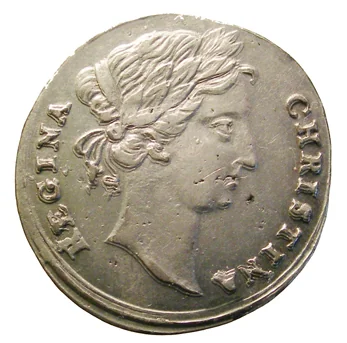
Obverse
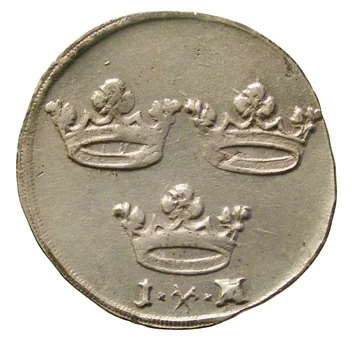
Reverse
Edge
Mints
| Name | Mark |
|---|---|
| Stockholm | — |
Mintings
| Year | Mint Mark | Mintage | Quality | Collection |
|---|---|---|---|---|
| 1651 | — | — |
Historical background
In 1651, Sweden was grappling with a severe monetary crisis rooted in decades of aggressive foreign policy. The costs of maintaining a large army and funding the Thirty Years' War (1618–1648) had drained the treasury. To finance these ambitions, the state, under Queen Christina, had repeatedly debased the copper coinage, which alongside silver formed the basis of Sweden's unique dual-metallic system. This resulted in a flood of low-value coins, rampant inflation, and a crippling loss of public confidence in the currency.
The situation was exacerbated by Sweden's heavy reliance on copper as a monetary metal. Large, cumbersome copper plates (plåtmynt) were officially minted, but their intrinsic value was often less than their face value. This disconnect, combined with an over-issuance of credit by the state-run Riksens Ständers Bank (precursor to the Riksbank), created a complex web of debt and devaluation. Prices soared, and the economy suffered from monetary instability, harming both trade and the crown's ability to fund its ongoing military engagements in the Polish-Lithuanian Commonwealth.
Consequently, 1651 found the Swedish government in a precarious position, attempting to stabilize a fractured system. Discussions and proposals for a thorough monetary reform were underway, aiming to restore trust by standardizing the coinage and addressing the crown's debts. These efforts would culminate in the major reforms of 1652, which introduced new silver-based riksdaler coins and sought to retire the discredited copper money, marking a pivotal step toward modernizing Sweden's finances after the ruinous expense of its imperial era.
The situation was exacerbated by Sweden's heavy reliance on copper as a monetary metal. Large, cumbersome copper plates (plåtmynt) were officially minted, but their intrinsic value was often less than their face value. This disconnect, combined with an over-issuance of credit by the state-run Riksens Ständers Bank (precursor to the Riksbank), created a complex web of debt and devaluation. Prices soared, and the economy suffered from monetary instability, harming both trade and the crown's ability to fund its ongoing military engagements in the Polish-Lithuanian Commonwealth.
Consequently, 1651 found the Swedish government in a precarious position, attempting to stabilize a fractured system. Discussions and proposals for a thorough monetary reform were underway, aiming to restore trust by standardizing the coinage and addressing the crown's debts. These efforts would culminate in the major reforms of 1652, which introduced new silver-based riksdaler coins and sought to retire the discredited copper money, marking a pivotal step toward modernizing Sweden's finances after the ruinous expense of its imperial era.


✨ Legendary