

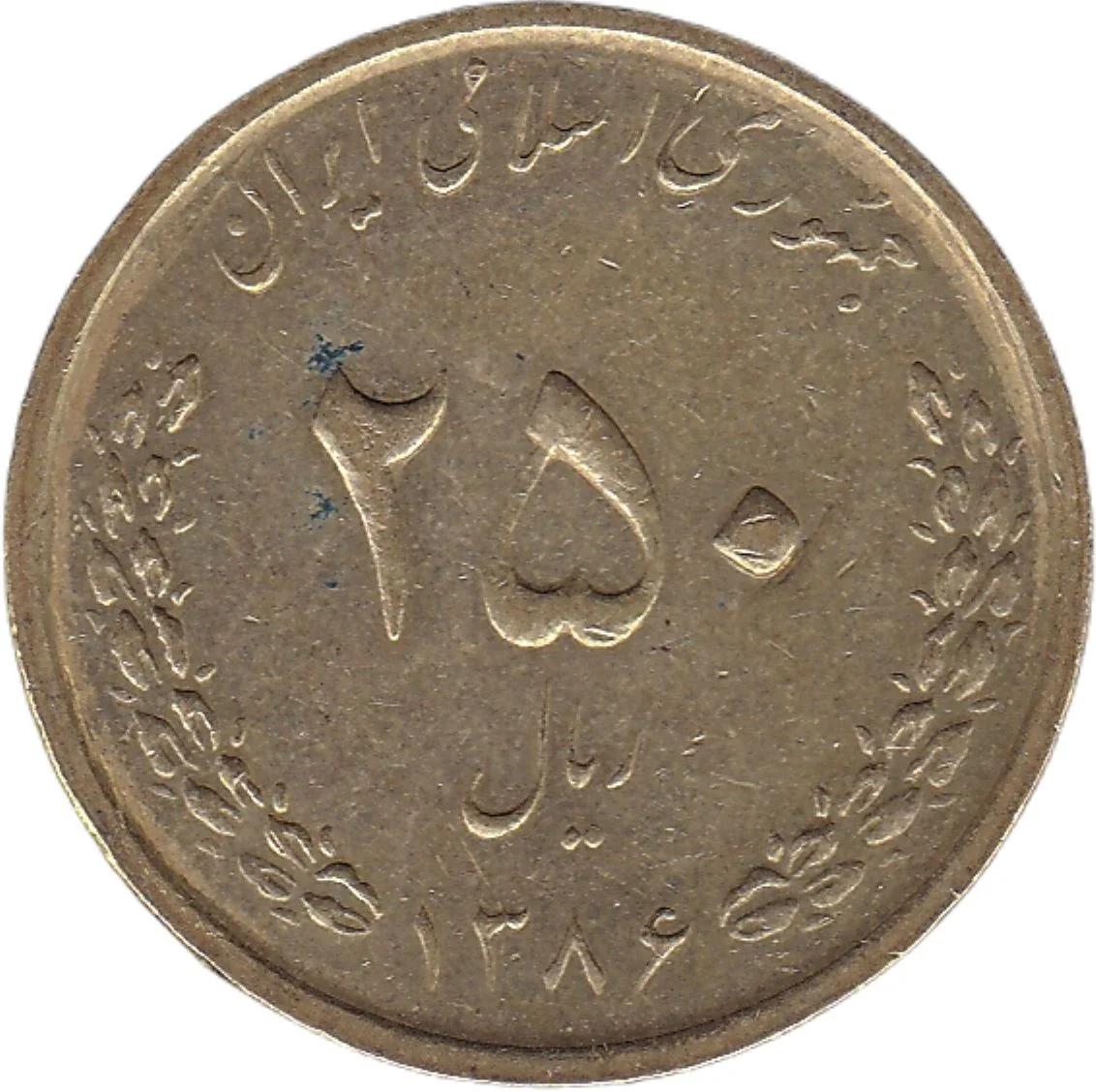

250 rials – Iran
Add to wishlist
Iran
Context
Year: 2007
Iranian - Persian Year:: 1386
Issuer: Iran
Period:
(since 1979)
Currency:
(since 1932)
Demonetized: Yes
Material
Diameter: 24.6 mm
Weight: 5.1 g
Thickness: 1.5 mm
Shape: Round
Composition: Aluminium bronze
Magnetic: No
Technique: Milled
Alignment: Coin alignment
flip

References
KM: #
Numista: #12225
Value
Exchange value: 250 IRR
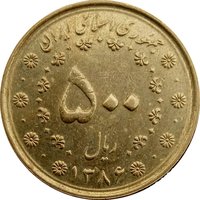
Obverse
Inscription:
جمهوری اسلامی ايران
۲۵۰
ریال
۱۳۸۶
۲۵۰
ریال
۱۳۸۶
Translation:
Islamic Republic of Iran
250
Rials
1386
250
Rials
1386
Language: Persian
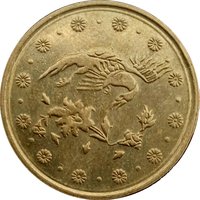
Reverse
Description:
Grenadine Blossom Wreath.
Edge
Reeded
Mintings
| Year | Mint Mark | Mintage | Quality | Collection |
|---|---|---|---|---|
| 2007 | — | — |
Historical background
In 2007, Iran's currency situation was characterized by mounting external pressures and significant internal economic distortions. The country was under escalating international sanctions, primarily due to concerns over its nuclear program, which began to severely restrict its access to global financial systems and foreign investment. Despite high oil prices, which provided substantial government revenue, these sanctions fueled economic instability and contributed to a growing gap between the official and unofficial exchange rates for the Iranian rial. The government maintained a complex multi-exchange rate system, with a heavily subsidized official rate for essential imports and a much weaker market rate for other transactions, creating opportunities for corruption and arbitrage.
Internally, President Mahmoud Ahmadinejad's populist economic policies, including massive subsidies on fuel and basic goods, combined with high levels of government spending, stoked inflationary pressures. This inflation, officially reported at around 17% but widely believed to be higher in practice, steadily eroded the rial's purchasing power. The Central Bank of Iran struggled to manage the currency's value, frequently intervening in the market to defend the official rate while burning through foreign reserves. This environment created a persistent sense of anxiety among businesses and the public, leading to a strong preference for holding hard currencies like the US dollar as a store of value, further weakening domestic confidence in the rial.
Overall, 2007 represented a pivotal year where the underlying vulnerabilities of Iran's economy became more pronounced. The structural problems of the multi-tier exchange rate regime, coupled with the early but intensifying effects of financial sanctions and rampant inflation, set the stage for a more severe currency crisis in the coming years. The situation highlighted the regime's challenge in shielding the economy from external political pressures while managing inefficient domestic policies, with the currency market serving as a clear barometer of this growing strain.
Internally, President Mahmoud Ahmadinejad's populist economic policies, including massive subsidies on fuel and basic goods, combined with high levels of government spending, stoked inflationary pressures. This inflation, officially reported at around 17% but widely believed to be higher in practice, steadily eroded the rial's purchasing power. The Central Bank of Iran struggled to manage the currency's value, frequently intervening in the market to defend the official rate while burning through foreign reserves. This environment created a persistent sense of anxiety among businesses and the public, leading to a strong preference for holding hard currencies like the US dollar as a store of value, further weakening domestic confidence in the rial.
Overall, 2007 represented a pivotal year where the underlying vulnerabilities of Iran's economy became more pronounced. The structural problems of the multi-tier exchange rate regime, coupled with the early but intensifying effects of financial sanctions and rampant inflation, set the stage for a more severe currency crisis in the coming years. The situation highlighted the regime's challenge in shielding the economy from external political pressures while managing inefficient domestic policies, with the currency market serving as a clear barometer of this growing strain.
🌱 Common