

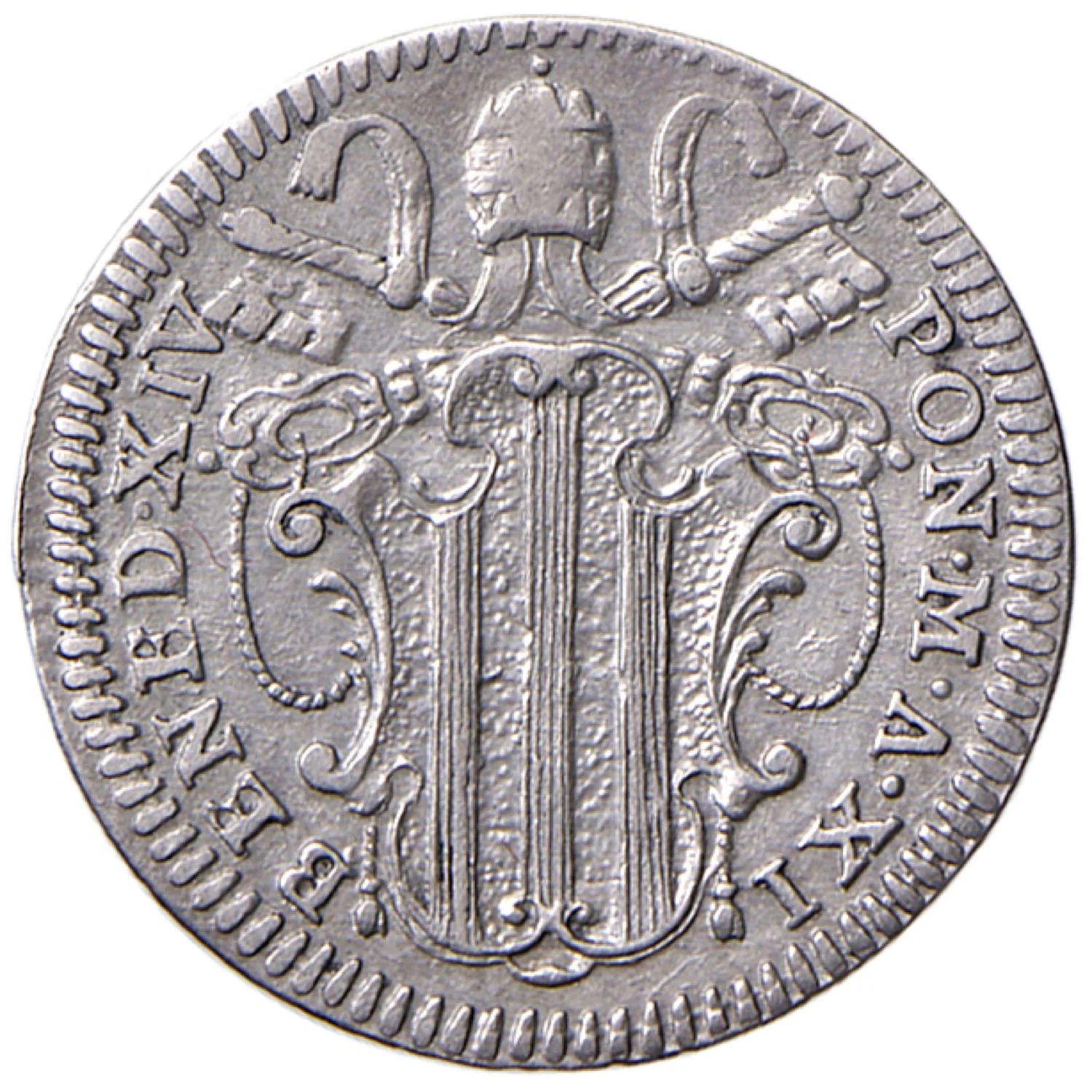
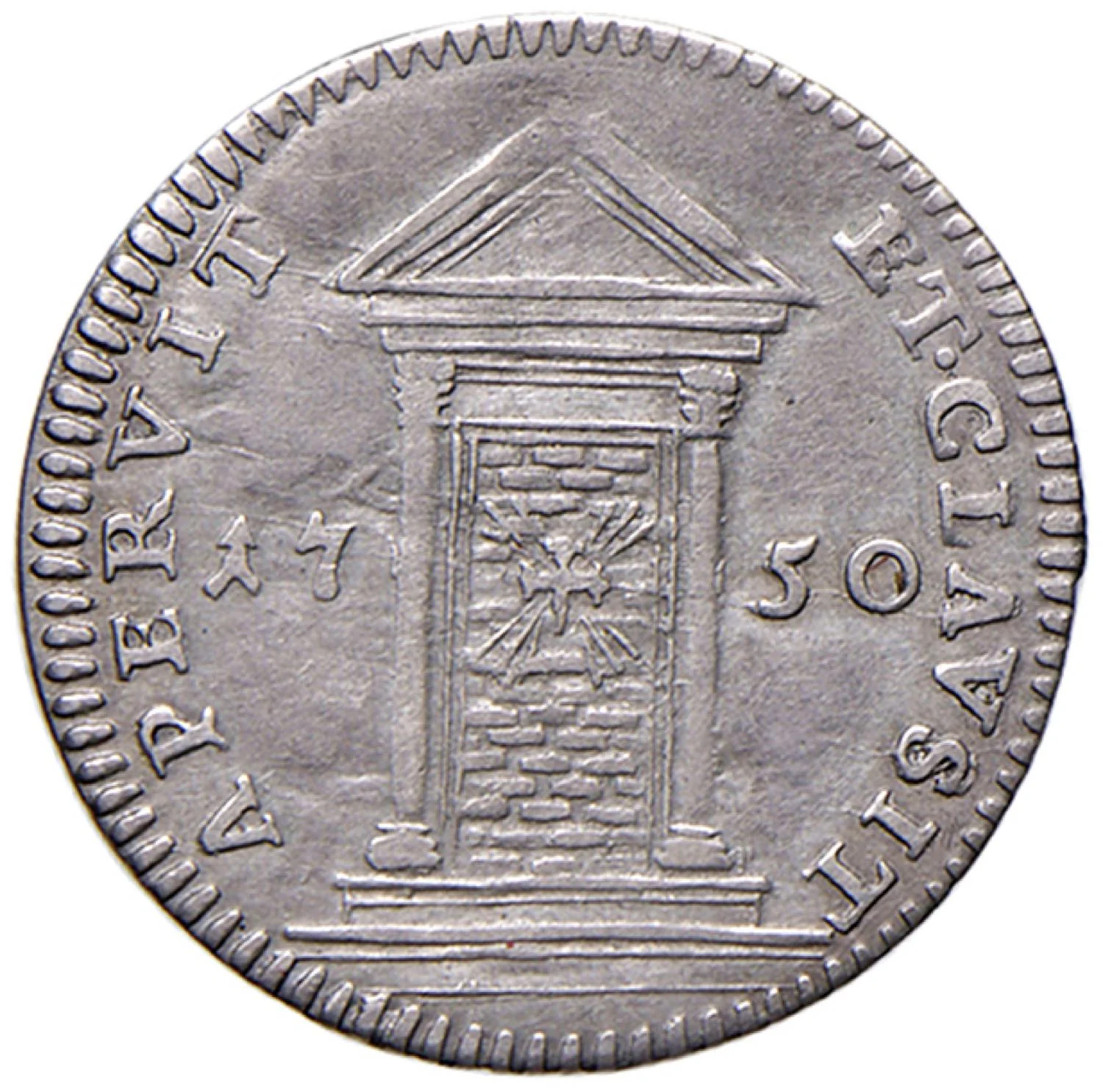
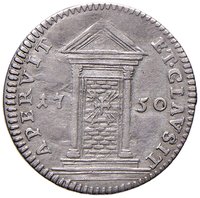
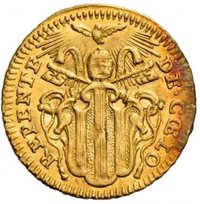
1 Grosso – Papal States
Circulating commemorative coins
Commemoration: Holy Year
Vatican City
Context
Year: 1750
Country: Vatican City 
Issuer: Papal States
Ruler: Benedict XIV
Currency:
(1534—1835)
Demonetized: Yes
Material
References
KM: #Click to copy to clipboard968
Numista: #175755
Value
Bullion value: $3.48
Obverse
Reverse
Edge
Mintings
| Year | Mint Mark | Mintage | Quality | Collection |
|---|---|---|---|---|
| 1750 | XI | — | ||
| 1750 | XII | — |
Historical background
In the mid-18th century, the Papal States operated within a complex and fragmented monetary system, typical of pre-unification Italian states. There was no single, unified Papal currency. Instead, the primary circulating coin was the Papal Scudo, divided into 100 Baiocchi, with each Baiocco further divided into 10 Quattrini. However, this official system coexisted with a multitude of foreign coins, particularly Spanish silver pieces-of-eight and gold coins like the zecchino from Venice or the doppia from other Italian mints. This created a constant challenge of exchange rates and valuation, managed by money-changers whose tables were a common sight in Roman markets.
The monetary situation was further complicated by chronic fiscal pressures. The Papal government, financing both spiritual administration and temporal governance, often faced budget deficits. This led to periodic debasement of the coinage—reducing the precious metal content in silver coins like the giulio and grosso—to generate seigniorage revenue. While providing short-term relief, this practice eroded public trust in the currency, spurred inflation in local prices, and disrupted commerce. Furthermore, the numerous papal mints (in Rome, Bologna, and other major cities) sometimes produced coins of slightly varying standards, adding to the confusion.
Economically, the Papal States in 1750 were largely agrarian and struggled with outdated infrastructure and trade barriers between its own provinces. The unreliable currency acted as a drag on commercial development, hindering both internal trade and financial transactions with foreign merchants, who preferred more stable foreign specie. While not in a state of monetary crisis, the system was inefficient and reflected the broader administrative and economic conservatism of the period. It would remain largely unchanged until the upheavals of the French Revolutionary and Napoleonic eras, which forcibly introduced modern monetary concepts to the region.
The monetary situation was further complicated by chronic fiscal pressures. The Papal government, financing both spiritual administration and temporal governance, often faced budget deficits. This led to periodic debasement of the coinage—reducing the precious metal content in silver coins like the giulio and grosso—to generate seigniorage revenue. While providing short-term relief, this practice eroded public trust in the currency, spurred inflation in local prices, and disrupted commerce. Furthermore, the numerous papal mints (in Rome, Bologna, and other major cities) sometimes produced coins of slightly varying standards, adding to the confusion.
Economically, the Papal States in 1750 were largely agrarian and struggled with outdated infrastructure and trade barriers between its own provinces. The unreliable currency acted as a drag on commercial development, hindering both internal trade and financial transactions with foreign merchants, who preferred more stable foreign specie. While not in a state of monetary crisis, the system was inefficient and reflected the broader administrative and economic conservatism of the period. It would remain largely unchanged until the upheavals of the French Revolutionary and Napoleonic eras, which forcibly introduced modern monetary concepts to the region.
✨ Legendary