

½ Liard – Duchy of Luxembourg
Luxembourg
Context
Years: 1783–1789
Country: Luxembourg 
Issuer: Duchy of Luxembourg
Ruler: Joseph II
Demonetized: Yes
Total mintage: 4,405,803
Material
References
KM: #Click to copy to clipboard10
Numista: #17483
Obverse
Description:
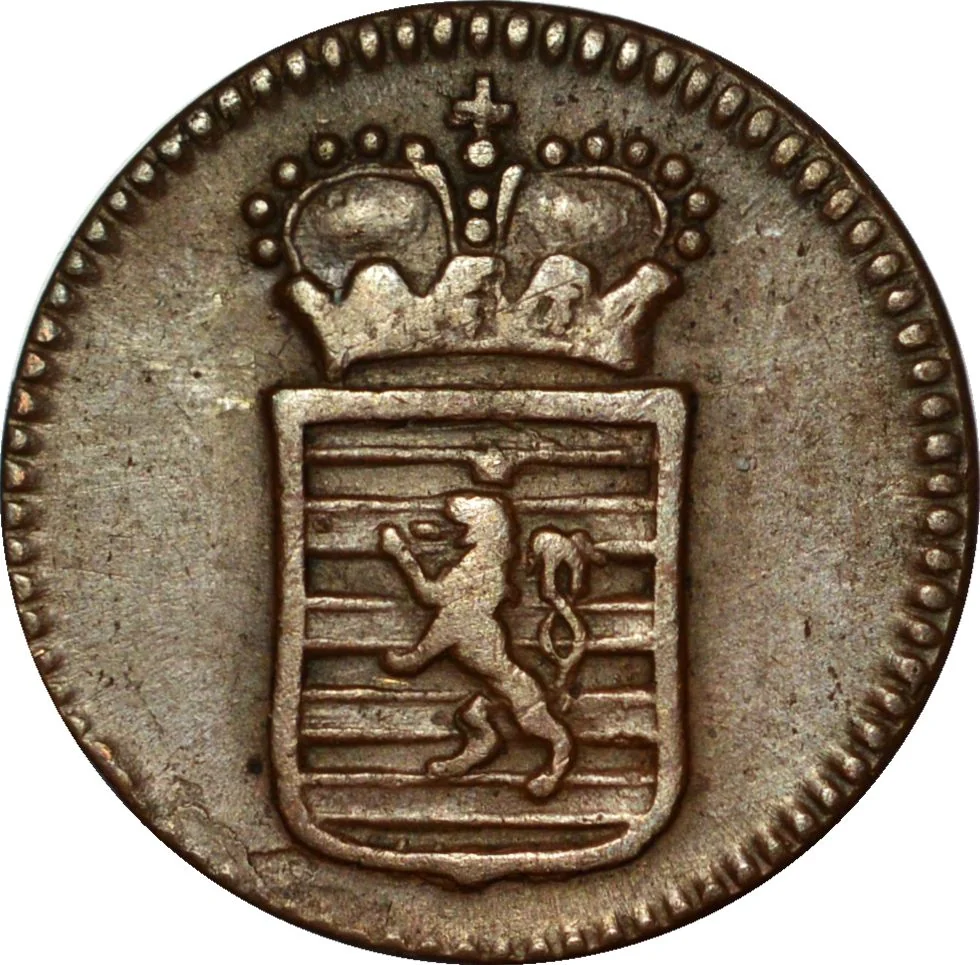
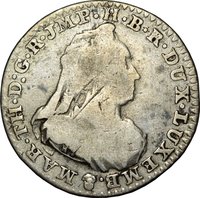
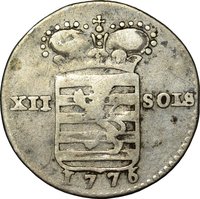
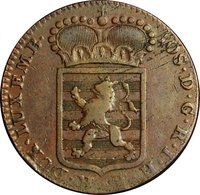
Lion rampant left on ten burels within a toothed shield.
Inscription:
Anépigraphe
Reverse
Description:
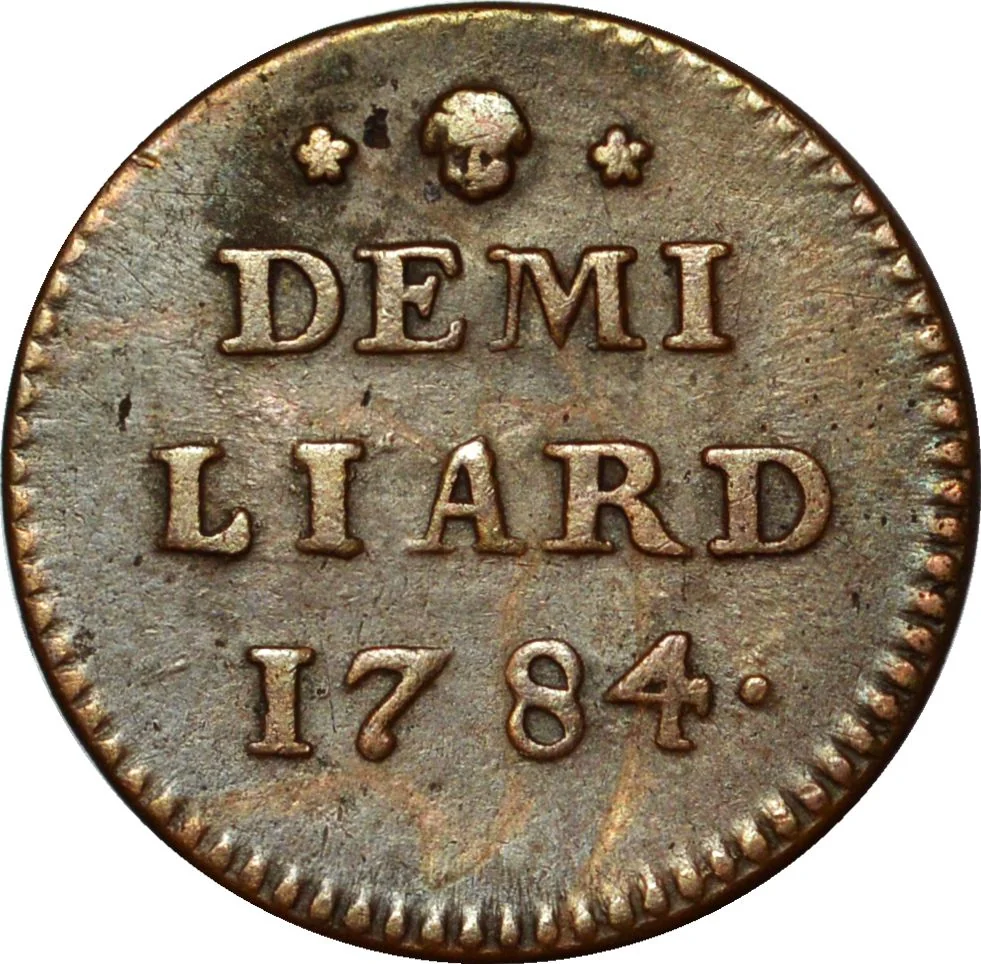
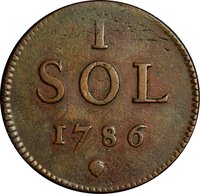
Angel's head between rosettes, value, and mint year with a point. Reeded edge.
Inscription:
DEMI
LIARD
1784•
LIARD
1784•
Script: Latin
Edge
Plain
Mints
| Name | Mark |
|---|---|
| Royal Mint of Belgium | — |
Mintings
| Year | Mint Mark | Mintage | Quality | Collection |
|---|---|---|---|---|
| 1783 | — | 1,362,346 | ||
| 1784 | — | 1,466,464 | ||
| 1789 | — | 1,576,993 |
Historical background
In 1783, the Duchy of Luxembourg, then part of the Austrian Netherlands under Habsburg rule, was mired in a complex and debilitating currency crisis. The monetary system was a chaotic patchwork of over 800 different coin types in circulation, stemming from both domestic minting and the influx of foreign currencies from neighboring France, the Dutch Republic, and various German states. This proliferation, combined with widespread clipping and counterfeiting, destroyed public confidence, as the intrinsic metal value of coins often differed wildly from their nominal face value, making trade and taxation profoundly difficult.
The core of the problem lay in the discrepancy between the Konventionsmünzfuss (the official Austrian monetary standard) and the stronger Kronentaler standard used in the region. Government attempts to fix exchange rates between the myriad coins failed, as they were consistently set above market value, leading to Gresham's Law in action: "good" full-value coins were hoarded or exported, while "bad" debased coins flooded the market. This created a severe shortage of sound money, crippling everyday commerce and state finances alike, as debts could be repaid with depreciated currency.
Despite recognizing the crisis, the Habsburg administration in Vienna was slow to enact effective reform. Local petitions from merchants and officials pleaded for a uniform, stable currency, but comprehensive action would not come until the later Kronentaler ordinance of 1786. Therefore, in 1783, Luxembourg remained trapped in a state of monetary anarchy, which stifled its economy and highlighted the practical challenges of imperial governance in a fragmented financial landscape on the eve of the Brabant Revolution.
The core of the problem lay in the discrepancy between the Konventionsmünzfuss (the official Austrian monetary standard) and the stronger Kronentaler standard used in the region. Government attempts to fix exchange rates between the myriad coins failed, as they were consistently set above market value, leading to Gresham's Law in action: "good" full-value coins were hoarded or exported, while "bad" debased coins flooded the market. This created a severe shortage of sound money, crippling everyday commerce and state finances alike, as debts could be repaid with depreciated currency.
Despite recognizing the crisis, the Habsburg administration in Vienna was slow to enact effective reform. Local petitions from merchants and officials pleaded for a uniform, stable currency, but comprehensive action would not come until the later Kronentaler ordinance of 1786. Therefore, in 1783, Luxembourg remained trapped in a state of monetary anarchy, which stifled its economy and highlighted the practical challenges of imperial governance in a fragmented financial landscape on the eve of the Brabant Revolution.
🌟 Uncommon