

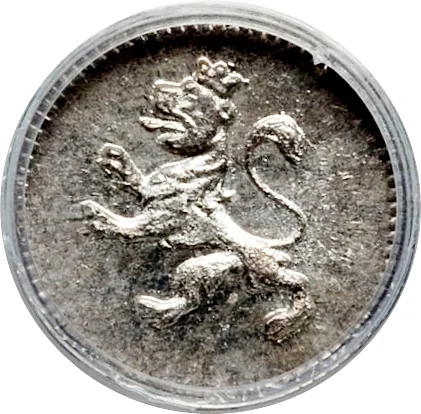
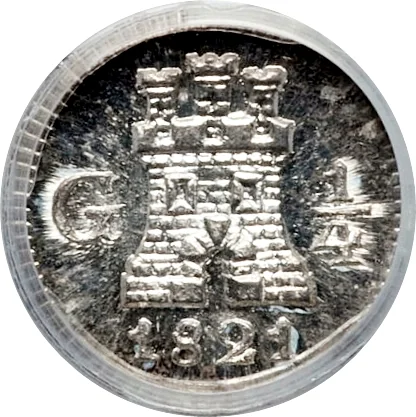
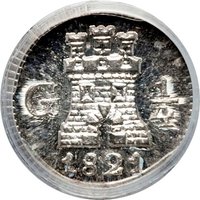
Obverse
Description:
Rampant left-facing lion
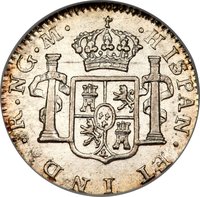
Reverse
Edge
Categories
| Animal> Feline |
| Building> Castle or fortification |
Mints
| Name | Mark |
|---|---|
| Casa de Moneda de Guatemala | G |
Mintings
Historical background
In 1796, Guatemala, as the Captaincy General of Guatemala within the Spanish Empire, operated under a monetary system dictated by Madrid and plagued by chronic scarcity. The official currency was the Spanish colonial real, with eight reales equaling one peso. However, the economy suffered from a severe shortage of minted coinage, as the region lacked a local mint (the Casa de Moneda de Guatemala would not be established until 1733, and even then production was often insufficient). This scarcity was exacerbated by the colony's negative trade balance, which caused hard currency, especially high-value silver pesos and gold escudos, to consistently flow out to Spain and other commercial partners, leaving the local economy starved for circulating medium.
To facilitate everyday transactions, the economy relied heavily on macacos or tlacos—crude, often irregularly cut pieces of silver cobs (cobs were early, hand-struck coins). These were accepted by weight and assay, creating a cumbersome and inefficient system for commerce. Furthermore, the widespread use of cacao beans as a supplementary currency, a practice dating back to the Maya, persisted in rural and indigenous markets, highlighting the disconnect between the official Spanish monetary policy and the on-the-ground economic realities of the population. This dual system created complexity and opportunities for fraud.
The monetary situation was a significant constraint on economic growth and a point of administrative frustration. Colonial authorities struggled to collect taxes and pay troops and officials in sound currency, while merchants faced difficulties in conducting large-scale trade. The year 1796 falls within a period of increasing administrative effort by the Bourbon reforms to better integrate and profit from the colonies, making the dysfunctional currency system a salient economic problem. This persistent scarcity and complexity underscored the challenges of administering a distant colonial economy and laid bare the structural weaknesses that would contribute to financial instability in the years leading up to independence.
To facilitate everyday transactions, the economy relied heavily on macacos or tlacos—crude, often irregularly cut pieces of silver cobs (cobs were early, hand-struck coins). These were accepted by weight and assay, creating a cumbersome and inefficient system for commerce. Furthermore, the widespread use of cacao beans as a supplementary currency, a practice dating back to the Maya, persisted in rural and indigenous markets, highlighting the disconnect between the official Spanish monetary policy and the on-the-ground economic realities of the population. This dual system created complexity and opportunities for fraud.
The monetary situation was a significant constraint on economic growth and a point of administrative frustration. Colonial authorities struggled to collect taxes and pay troops and officials in sound currency, while merchants faced difficulties in conducting large-scale trade. The year 1796 falls within a period of increasing administrative effort by the Bourbon reforms to better integrate and profit from the colonies, making the dysfunctional currency system a salient economic problem. This persistent scarcity and complexity underscored the challenges of administering a distant colonial economy and laid bare the structural weaknesses that would contribute to financial instability in the years leading up to independence.
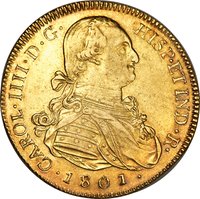
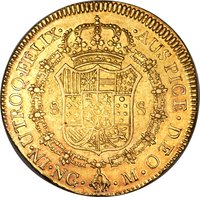
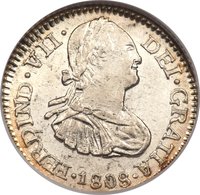
💎 Very Rare