

1 Witten – Swedish dominion of Pomerania
Sweden
Context
Year: 1707
Country: Sweden 
Issuer: Swedish dominion of Pomerania
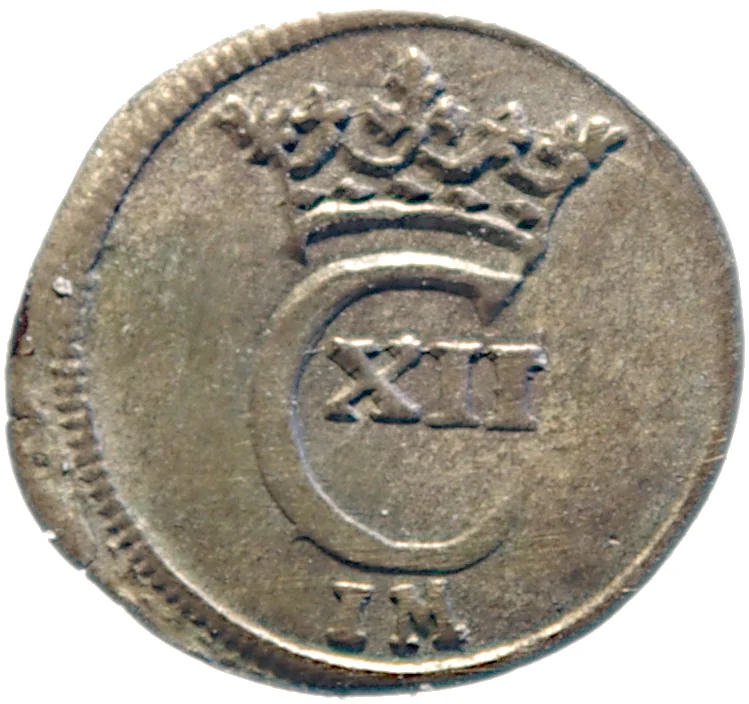
Ruler: Charles XII
Currency:
(1630—1815)
Demonetized: Yes
Material
References
KM: #Click to copy to clipboard363
Numista: #169922
Value
Bullion value: $1.27
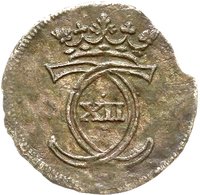
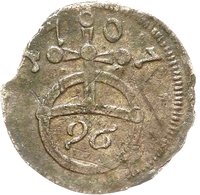
Obverse
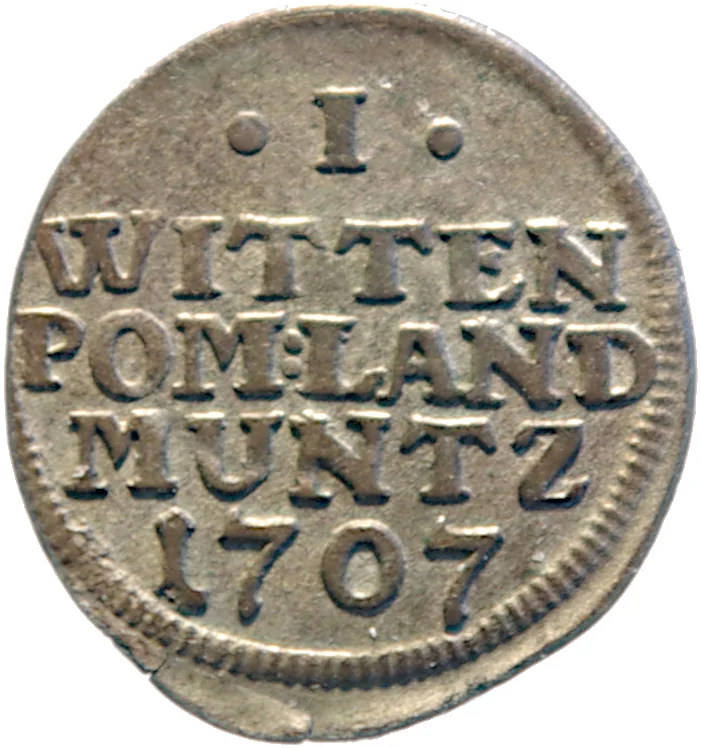
Reverse
Description:
Denomination above date on four lines.
Inscription:
*I*
WITTEN
POM:LANDE
MUNTZ
1707
WITTEN
POM:LANDE
MUNTZ
1707
Script: Latin
Edge
Plain
Mintings
| Year | Mint Mark | Mintage | Quality | Collection |
|---|---|---|---|---|
| 1707 | IM | — |
Historical background
During the Great Northern War (1700–1721), the Swedish dominion of Pomerania faced severe monetary instability by 1707. The primary cause was the massive debasement of the local currency, the Pomeranian klippe, ordered by King Charles XII to fund his ongoing military campaigns. Swedish authorities drastically reduced the silver content of the coinage, leading to a rapid and sharp inflation. This policy, while filling the war chest in the short term, eroded public trust and disrupted all local commerce, as the coins' intrinsic value plummeted.
The situation was exacerbated by the broader economic context of the war. Pomerania, as a Swedish bridgehead on the continent, was constantly burdened with troop quartering, requisitions, and contributions, draining its real economy. The circulation of debased Swedish coins alongside older, higher-value currencies and various foreign coins created a chaotic monetary environment. Creditors suffered heavy losses, prices became unpredictable, and the population effectively retreated to barter trade for basic goods, as the official currency became unreliable.
Swedish administrators in Stettin struggled to manage the crisis, but their hands were tied by the crown's relentless financial demands. Attempts to set fixed exchange rates between the new debased coins and the older Reichsthaler failed, as the market simply rejected the artificial valuations. Consequently, by 1707, Pomerania's monetary system was in a state of collapse, reflecting the wider strain of Swedish imperial overreach during the war and causing significant hardship for its German subjects.
The situation was exacerbated by the broader economic context of the war. Pomerania, as a Swedish bridgehead on the continent, was constantly burdened with troop quartering, requisitions, and contributions, draining its real economy. The circulation of debased Swedish coins alongside older, higher-value currencies and various foreign coins created a chaotic monetary environment. Creditors suffered heavy losses, prices became unpredictable, and the population effectively retreated to barter trade for basic goods, as the official currency became unreliable.
Swedish administrators in Stettin struggled to manage the crisis, but their hands were tied by the crown's relentless financial demands. Attempts to set fixed exchange rates between the new debased coins and the older Reichsthaler failed, as the market simply rejected the artificial valuations. Consequently, by 1707, Pomerania's monetary system was in a state of collapse, reflecting the wider strain of Swedish imperial overreach during the war and causing significant hardship for its German subjects.
✨ Legendary