


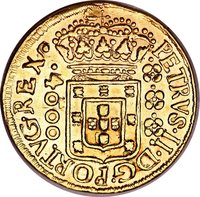
Obverse
Description:
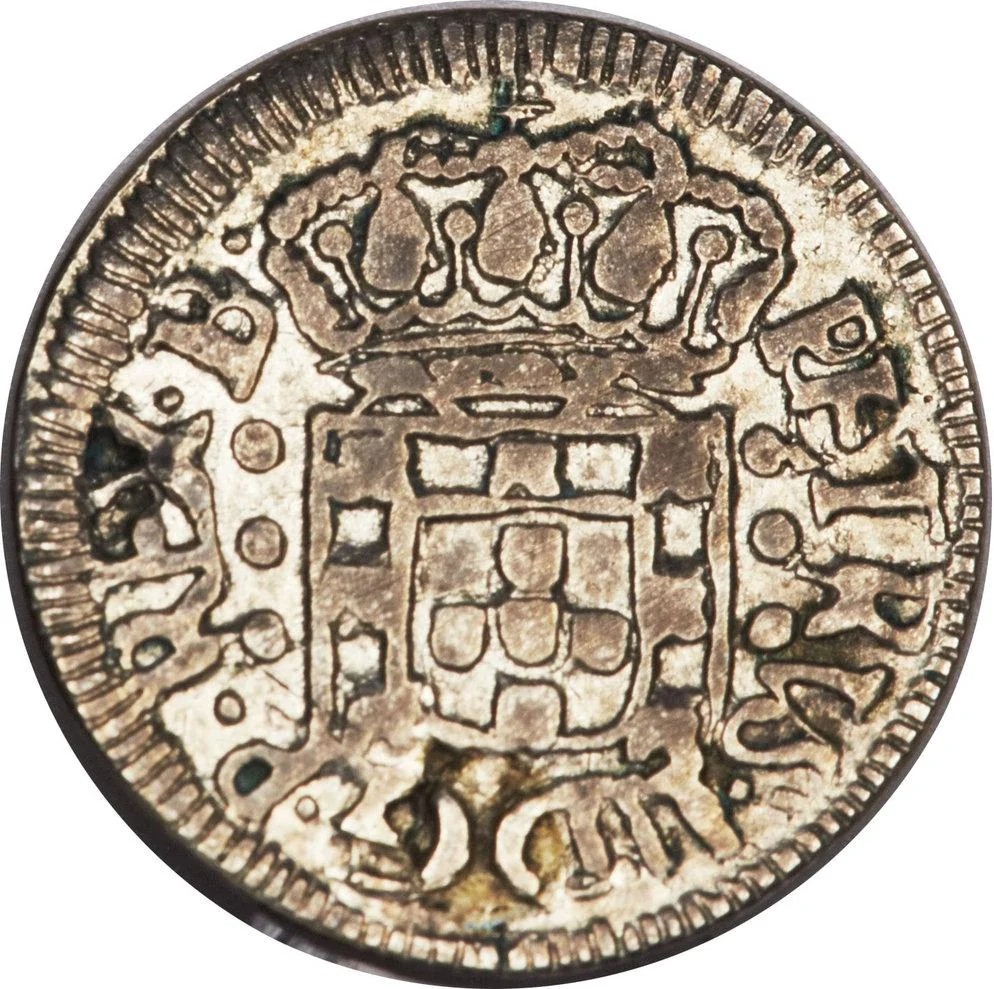
Portuguese arms crowned, dots flanking, no face value, legend encircling.
Inscription:
PETRVS . II . DG . P . REX . B .
Script: Latin
Engraver: Amaro de Barros
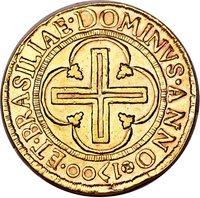
Reverse
Description:
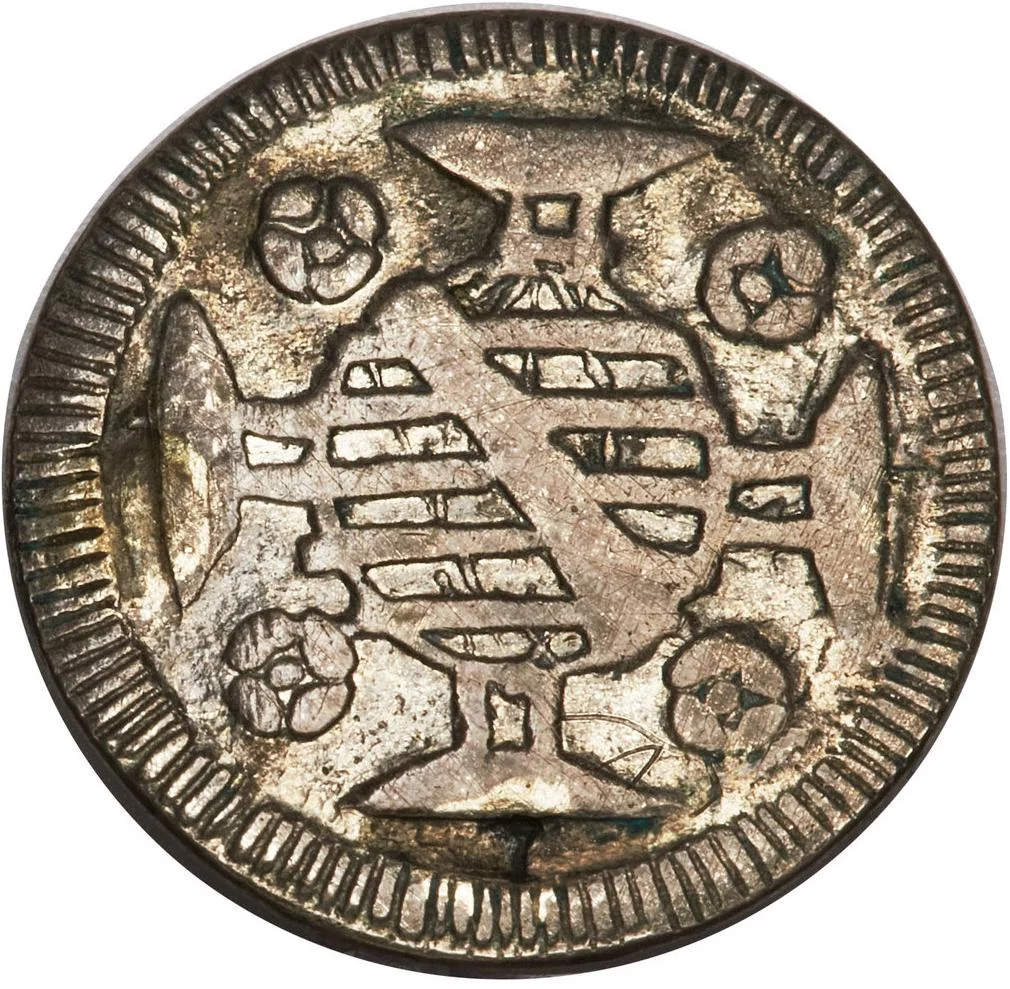
An armillary sphere before the Order of Christ cross, flanked by four flowers.
Engraver: Amaro de Barros
Edge
Plain
Categories
| Symbol> Cross |
| Symbol> Armillary sphere |
| Symbol> Crown |
| Plants> Flower |
| Symbols> Coat of Arms |
Mints
| Name | Mark |
|---|---|
| Casa da Moeda de Pernambuco | — |
Mintings
| Year | Mint Mark | Mintage | Quality | Collection |
|---|---|---|---|---|
| — | — | — | BU |
Historical background
In the early 18th century, Brazil's currency situation was chaotic and directly tied to its colonial status under Portugal. The primary circulating medium was not a standardized, minted coin but rather a commodity money: sugar. As the engine of the colonial economy, bags of sugar (and later, tobacco) served as official units of account for large transactions and tax payments. Alongside this, a wide variety of foreign coins circulated, particularly Spanish silver reales (often cut into pieces for smaller denominations) and Portuguese coins from the metropolis. This created a complex and unstable system where values fluctuated based on the commodity's market price and the wear and tear of physical coinage.
The discovery of vast gold deposits in Minas Gerais in the 1690s began to transform this system, though change was gradual. Gold dust itself became a new, highly valued form of currency, measured by weight in oitavas and dobrões. To assert royal control and capture wealth, the Portuguese Crown established official smelting houses (Casas de Fundição) starting in 1702, where mined gold was taxed, cast into bars, and later, beginning in the 1720s, minted into coins like the moeda in Portugal. However, much gold continued to circulate informally or was smuggled out, undermining official efforts.
Consequently, 1700s Brazil operated with a fragmented monetary system. The coastal sugar economy still relied on commodity money, the booming interior mining region operated on gold dust and bars, and all areas saw circulation of fragmented foreign silver. This lack of a unified, trustworthy currency hindered commerce and made the economy vulnerable to fraud and severe price inflation, especially in the mining zones where gold abundance devalued the existing media of exchange. The situation reflected the colony's extractive nature, serving to funnel wealth—primarily gold—back to Lisbon rather than to foster a stable internal economy.
The discovery of vast gold deposits in Minas Gerais in the 1690s began to transform this system, though change was gradual. Gold dust itself became a new, highly valued form of currency, measured by weight in oitavas and dobrões. To assert royal control and capture wealth, the Portuguese Crown established official smelting houses (Casas de Fundição) starting in 1702, where mined gold was taxed, cast into bars, and later, beginning in the 1720s, minted into coins like the moeda in Portugal. However, much gold continued to circulate informally or was smuggled out, undermining official efforts.
Consequently, 1700s Brazil operated with a fragmented monetary system. The coastal sugar economy still relied on commodity money, the booming interior mining region operated on gold dust and bars, and all areas saw circulation of fragmented foreign silver. This lack of a unified, trustworthy currency hindered commerce and made the economy vulnerable to fraud and severe price inflation, especially in the mining zones where gold abundance devalued the existing media of exchange. The situation reflected the colony's extractive nature, serving to funnel wealth—primarily gold—back to Lisbon rather than to foster a stable internal economy.

✨ Legendary