

200 lire – Vatican City
Add to wishlist
Circulating commemorative coins
Commemoration: The Christianity and New Europe
Vatican City
Context
Year: 1990
Issuer: Vatican City
Ruler: John Paul II
Currency:
(1929—2001)
Demonetization: 1 March 2002
Total mintage: 48,000
Material
References
KM: #
Numista: #12212
Value
Exchange value: 200 VAL
Obverse
Description:
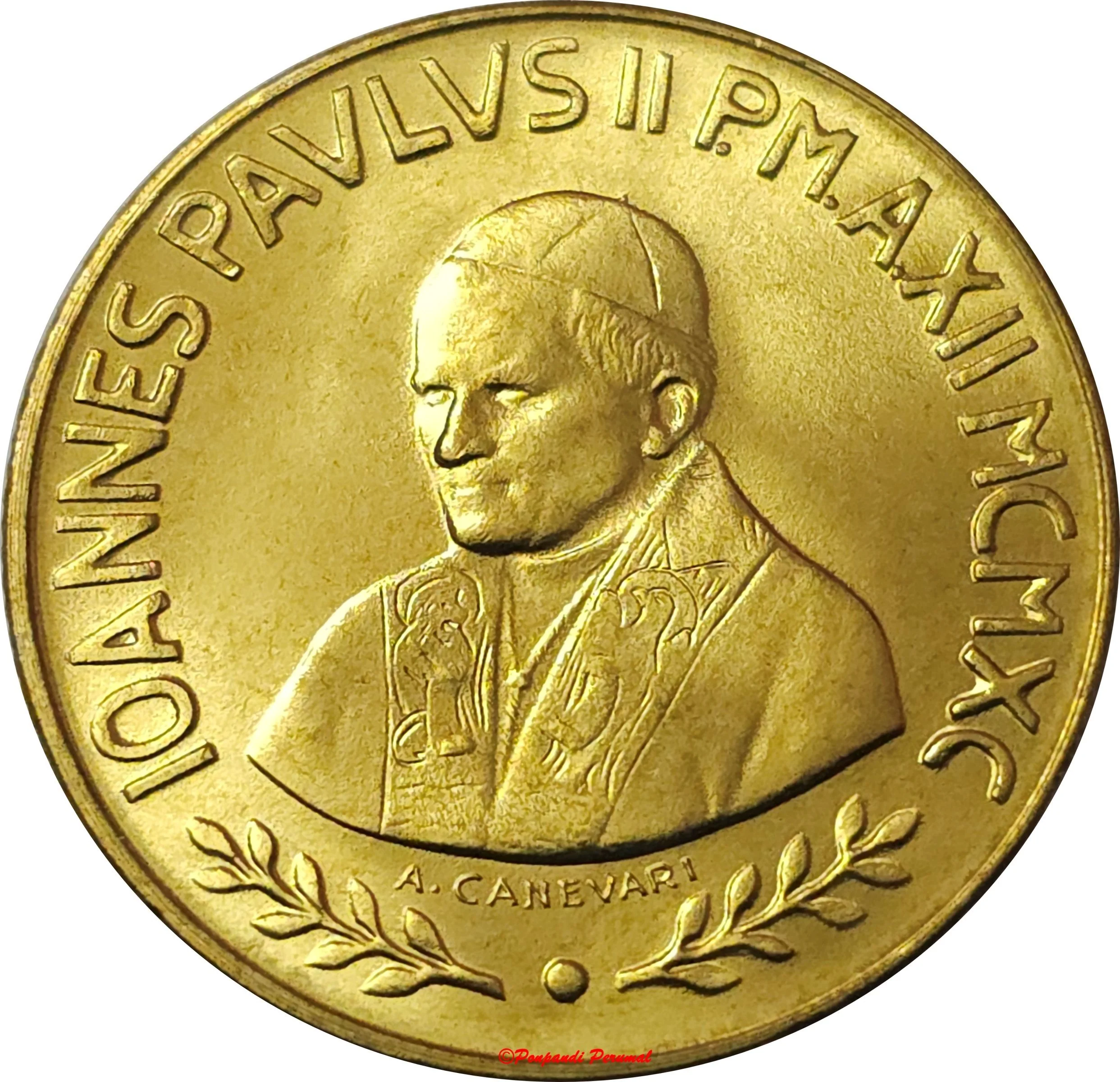
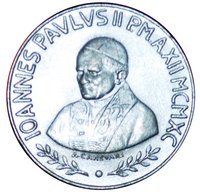
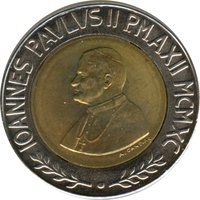
Three-quarter left bust
Inscription:
IOANNES PAVLVS II P.M. A.XII MCMXC
A.CANEVARI
A.CANEVARI
Translation:
John Paul II, Supreme Pontiff, Year 12, 1990
A. Canevari
A. Canevari
Script: Latin
Language: Latin
Engraver: Angelo Canevari
Reverse
Description:
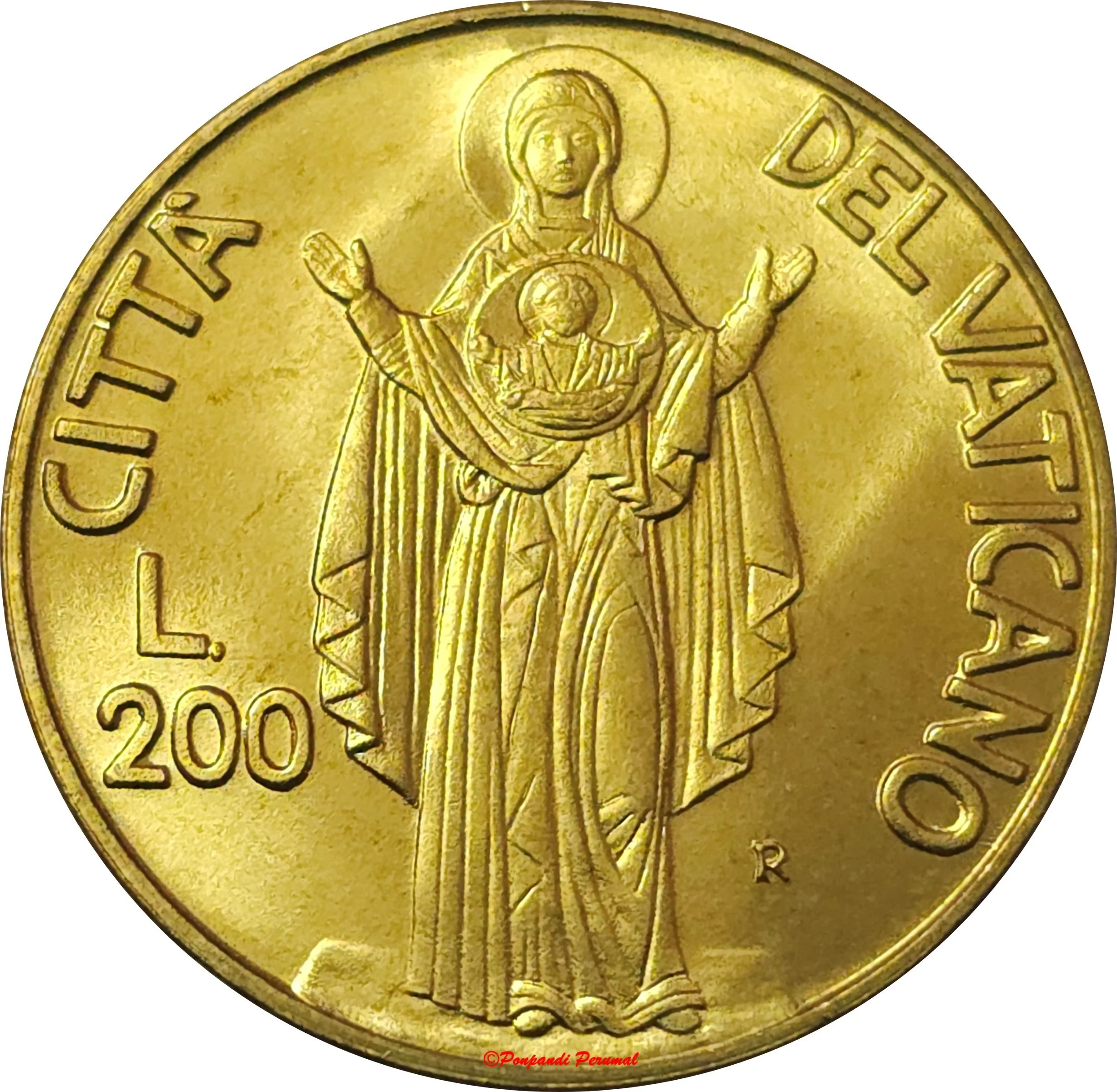
Madonna and Child standing.
Inscription:
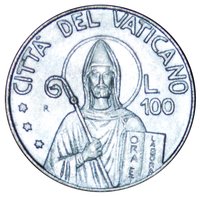
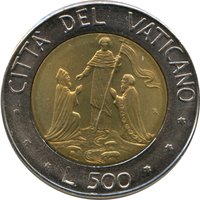
CITTA' DEL VATICANO
L. 200 R
L. 200 R
Translation:
Vatican City
L. 200 R
L. 200 R
Script: Latin
Language: Italian
Engraver: Angelo Canevari
Edge
Reeded
Categories
| Person> Religious figure |
| Religion> Religious objects |
Mints
| Name | Mark |
|---|---|
| Rome | R |
Mintings
| Year | Mint Mark | Mintage | Quality | Collection |
|---|---|---|---|---|
| 1990 | R | 48,000 |
Historical background
In 1990, Vatican City's currency situation was defined by its unique status as an independent sovereign state with a tiny, non-commercial economy. While it issued its own distinct coins and banknotes, known as Vatican lire, these were not a standalone currency. Instead, they operated under a formal monetary convention with Italy, meaning the Vatican lira was pegged at par with the Italian lira and was legal tender in both countries. This arrangement was a practical necessity, as the Vatican's economic activity—primarily fueled by museum admissions, postage stamps, and publications—was deeply integrated with Italy, relying on its larger neighbor for goods, services, and banking infrastructure.
The issuance of Vatican currency served symbolic and fiscal purposes more than economic ones. The coins and notes, often sought after by collectors for their artistic designs and limited mintage, featured the image of Pope John Paul II and generated significant seigniorage revenue (profit from minting). This income was a valuable, though modest, source of independent funding for the city-state. Crucially, the monetary convention with Italy strictly limited the volume of currency the Vatican could issue, preventing it from affecting the Italian money supply and ensuring the arrangement remained mutually agreeable.
This stable but dependent system existed within the broader context of European monetary integration. The late 1980s had seen the creation of the European Monetary System (EMS), and plans for a single currency were advancing. By 1990, it was clear that the future European Economic and Monetary Union would eventually necessitate a new agreement for the Vatican, as Italy's adoption of the euro would automatically end the lira-based convention. Thus, while the currency situation in 1990 was functionally stable, it was on the cusp of significant change driven by forces far beyond the Vatican's walls.
The issuance of Vatican currency served symbolic and fiscal purposes more than economic ones. The coins and notes, often sought after by collectors for their artistic designs and limited mintage, featured the image of Pope John Paul II and generated significant seigniorage revenue (profit from minting). This income was a valuable, though modest, source of independent funding for the city-state. Crucially, the monetary convention with Italy strictly limited the volume of currency the Vatican could issue, preventing it from affecting the Italian money supply and ensuring the arrangement remained mutually agreeable.
This stable but dependent system existed within the broader context of European monetary integration. The late 1980s had seen the creation of the European Monetary System (EMS), and plans for a single currency were advancing. By 1990, it was clear that the future European Economic and Monetary Union would eventually necessitate a new agreement for the Vatican, as Italy's adoption of the euro would automatically end the lira-based convention. Thus, while the currency situation in 1990 was functionally stable, it was on the cusp of significant change driven by forces far beyond the Vatican's walls.
🌱 Common