

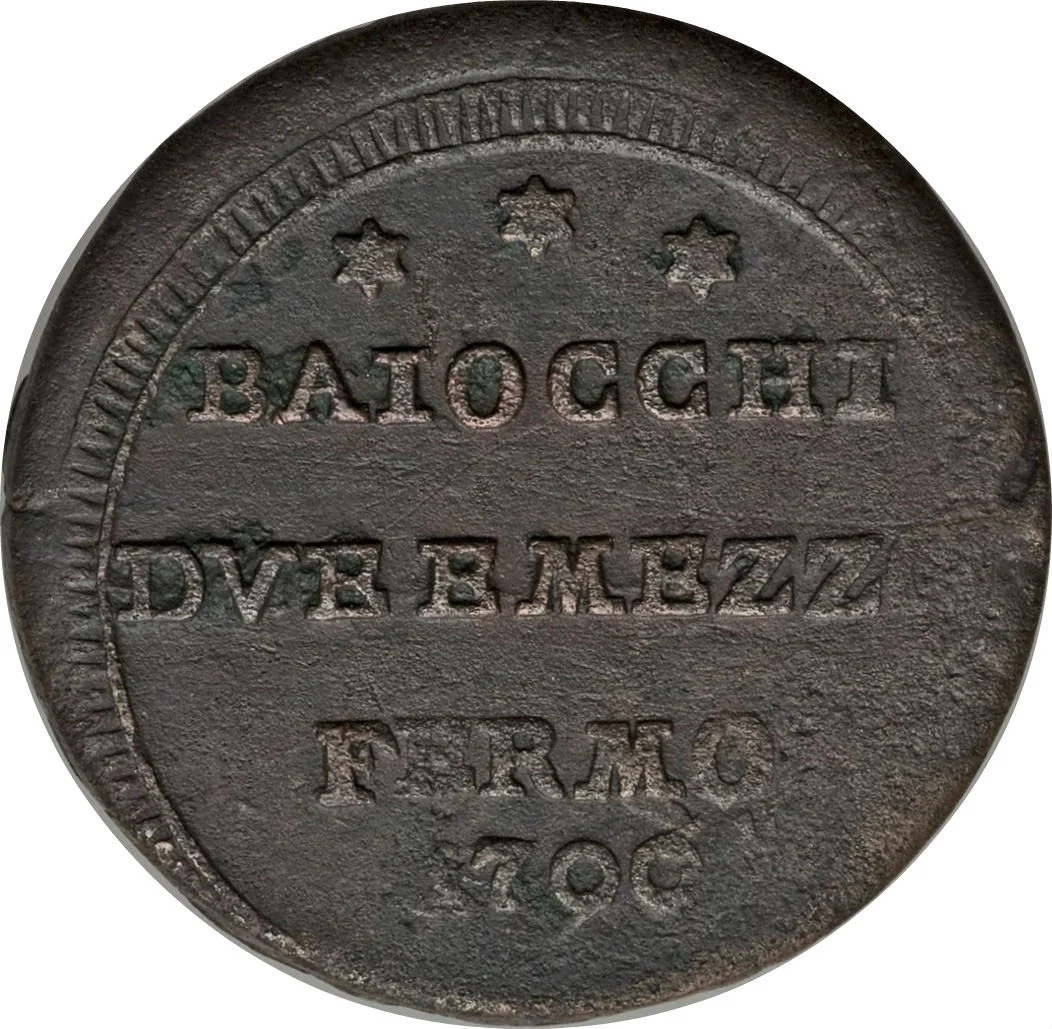
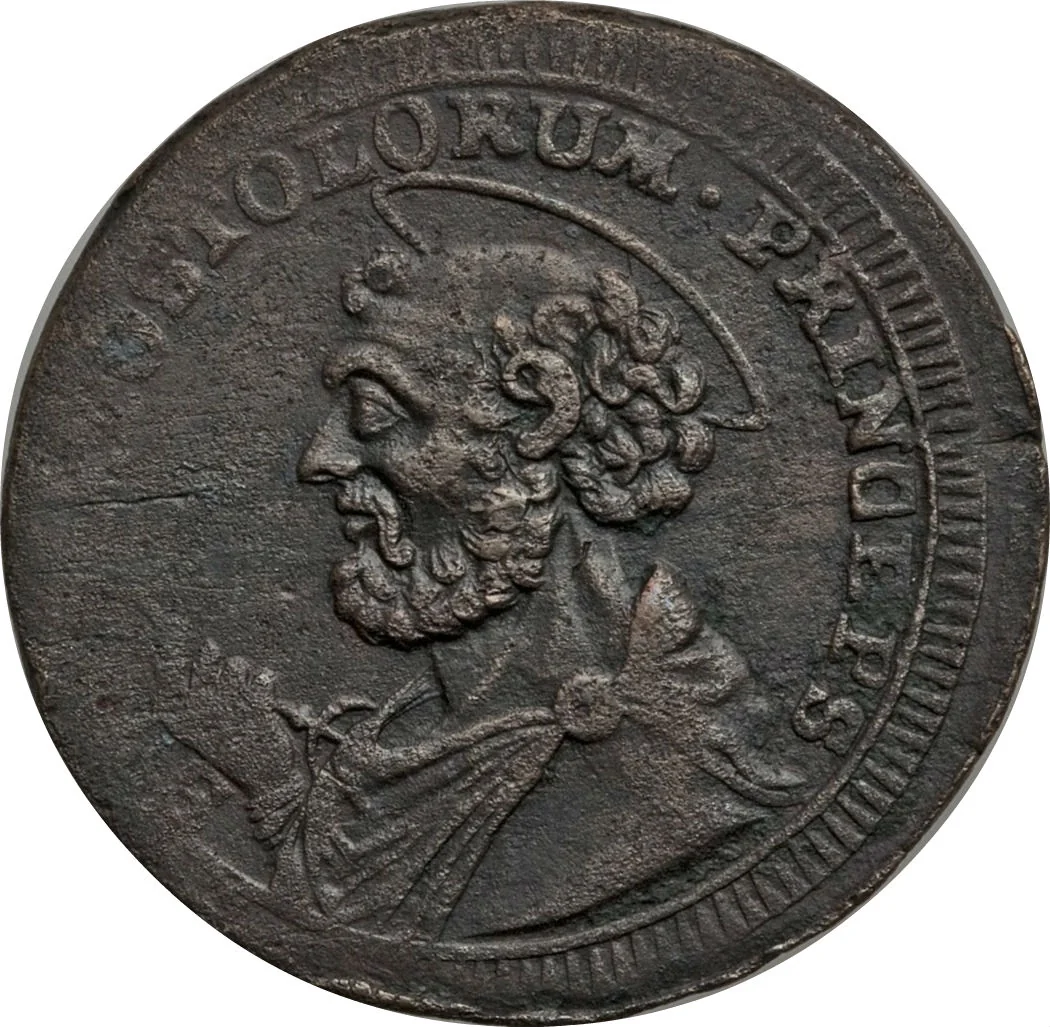
2½ baiocchi – Fermo
Add to wishlist
Italy
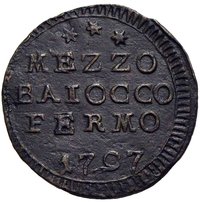
Obverse
Description:
Value written, date beneath stars in circle.
Inscription:
BAIOCCHI
DVE E MEZZO
FERMO
1796
DVE E MEZZO
FERMO
1796
Script: Latin
Reverse
Edge
Plain
Categories
| Person> Religious figure |
| Mustache/Beard |
Mints
| Name | Mark |
|---|---|
| Fermo | — |
Mintings
| Year | Mint Mark | Mintage | Quality | Collection |
|---|---|---|---|---|
| 1796 | — | — | ||
| 1797 | — | — |
Historical background
In 1796, the Italian city of Fermo, part of the Papal States, was caught in the turbulent monetary transition triggered by the French Revolutionary Wars. Following Napoleon Bonaparte's invasion of northern Italy in 1796, the established financial order was rapidly dismantled. The French authorities, needing to fund their campaign, imposed heavy war indemnities and began replacing local and papal currencies with French-backed money. This created a chaotic multi-currency environment where old Papal scudi and baiocchi circulated uneasily alongside new French-minted coins and even emergency paper assignats, whose value was highly unstable.
The local economy faced severe strain from this monetary confusion. The forced introduction of new currencies, often at unfavourable exchange rates, amounted to a form of economic extraction that drained wealth from the region. Merchants and citizens faced uncertainty in daily transactions, as the value of coins could fluctuate based on political and military news. Furthermore, the French practice of requisitioning supplies and demanding payments in specific coinage exacerbated shortages and led to price inflation, punishing the general population and disrupting traditional market networks.
This period in Fermo represents a microcosm of the broader Napoleonic upheaval across Italy, where political conquest was immediately followed by financial restructuring. The currency situation of 1796 was not merely an economic issue but a direct instrument of political power, marking the abrupt end of Fermo's centuries-old integration into the Papal monetary system and its coercive integration into a new, French-dominated economic sphere. The instability sowed during this year would set the stage for further monetary reforms and consolidation in the years of French administration that followed.
The local economy faced severe strain from this monetary confusion. The forced introduction of new currencies, often at unfavourable exchange rates, amounted to a form of economic extraction that drained wealth from the region. Merchants and citizens faced uncertainty in daily transactions, as the value of coins could fluctuate based on political and military news. Furthermore, the French practice of requisitioning supplies and demanding payments in specific coinage exacerbated shortages and led to price inflation, punishing the general population and disrupting traditional market networks.
This period in Fermo represents a microcosm of the broader Napoleonic upheaval across Italy, where political conquest was immediately followed by financial restructuring. The currency situation of 1796 was not merely an economic issue but a direct instrument of political power, marking the abrupt end of Fermo's centuries-old integration into the Papal monetary system and its coercive integration into a new, French-dominated economic sphere. The instability sowed during this year would set the stage for further monetary reforms and consolidation in the years of French administration that followed.
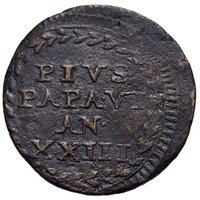
💎 Extremely Rare