

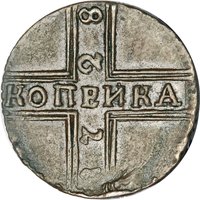
1 Kopeck – Russian Empire
Russia
Context
Years: 1728–1729
Country: Russia 
Issuer: Russian Empire
Ruler: Peter II
Currency:
(1700—1917)
Demonetized: Yes
Material
References
KM: #Click to copy to clipboard185.1
Numista: #16529
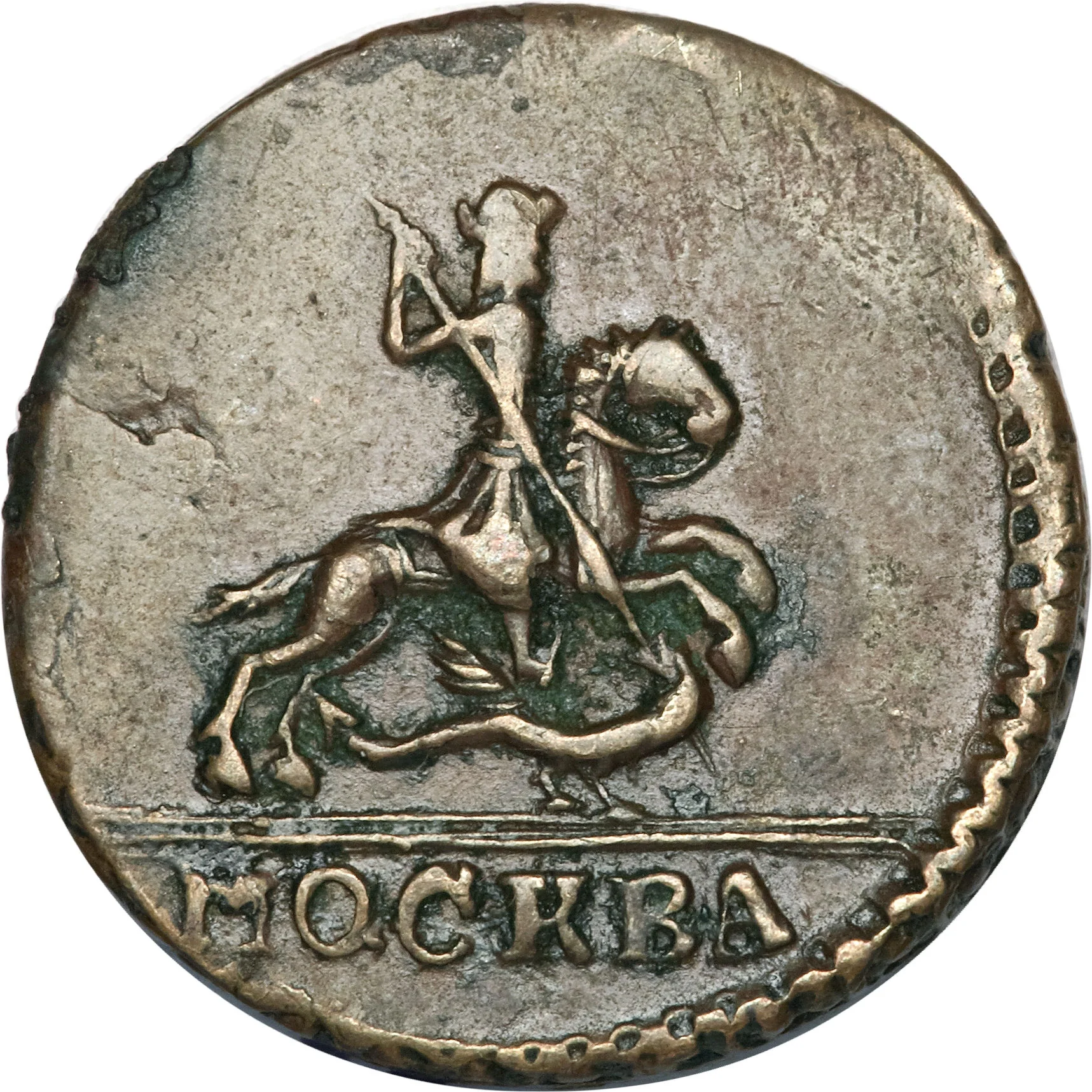
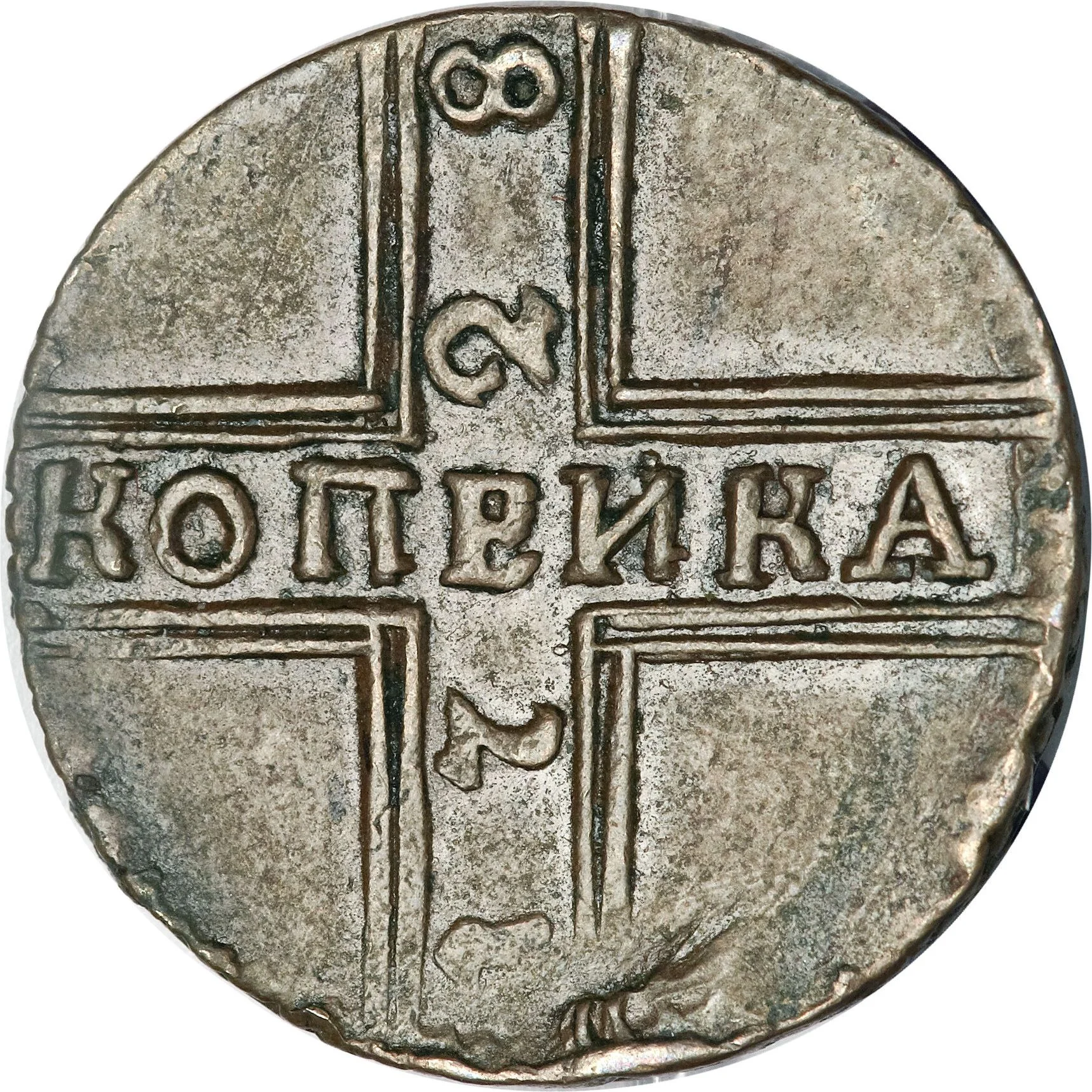
Obverse
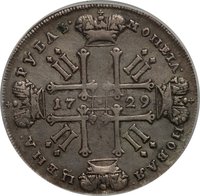
Reverse
Edge
Ornamental
Mints
| Name | Mark |
|---|---|
| Kadashevsky Mint | — |
Mintings
| Year | Mint Mark | Mintage | Quality | Collection |
|---|---|---|---|---|
| 1728 | — | — | ||
| 1729 | — | — |
Historical background
By 1728, the currency system of the Russian Empire, still reeling from the ambitious and often chaotic reforms of Peter the Great (d. 1725), was in a state of profound instability. Peter’s drive to fund the Great Northern War had led to a drastic debasement of the silver kopeck coinage. The government repeatedly reduced the silver content, minting lighter coins from the same nominal amount of bullion, which caused severe inflation and eroded public trust. The primary circulating coins were the silver kopeck and its fractions, but their value was unreliable, and a critical shortage of small change paralyzed everyday retail trade, hampering the economy.
The situation was exacerbated by the continued circulation of old, pre-Petrine silver kopecks alongside the new, lighter ones, creating a confusing dual system where older coins were often hoarded for their higher intrinsic value. Furthermore, the state’s finances were strained, and the minting process itself was inefficient and prone to corruption. The ruling Supreme Privy Council under the young Emperor Peter II (who ascended in 1727) lacked a clear monetary policy, leading to a period of drift and ad-hoc management. The treasury was desperate for revenue, creating a temptation to continue debasement, while the economic consequences of a weakened currency were becoming ever more apparent.
In response to this crisis, the government initiated a significant reform in 1728. The key decision was to return to a heavier silver kopeck, increasing its weight to align more closely with its face value. This move, championed by officials like Prince Dmitry Golitsyn, aimed to restore confidence in the currency, curb inflation, and stabilize the fiscal system. Thus, 1728 stands as a pivotal year of corrective action, marking the beginning of a retreat from Peter’s extreme monetary experiments and an attempt to establish a more sound and reliable coinage for the empire.
The situation was exacerbated by the continued circulation of old, pre-Petrine silver kopecks alongside the new, lighter ones, creating a confusing dual system where older coins were often hoarded for their higher intrinsic value. Furthermore, the state’s finances were strained, and the minting process itself was inefficient and prone to corruption. The ruling Supreme Privy Council under the young Emperor Peter II (who ascended in 1727) lacked a clear monetary policy, leading to a period of drift and ad-hoc management. The treasury was desperate for revenue, creating a temptation to continue debasement, while the economic consequences of a weakened currency were becoming ever more apparent.
In response to this crisis, the government initiated a significant reform in 1728. The key decision was to return to a heavier silver kopeck, increasing its weight to align more closely with its face value. This move, championed by officials like Prince Dmitry Golitsyn, aimed to restore confidence in the currency, curb inflation, and stabilize the fiscal system. Thus, 1728 stands as a pivotal year of corrective action, marking the beginning of a retreat from Peter’s extreme monetary experiments and an attempt to establish a more sound and reliable coinage for the empire.
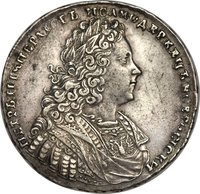
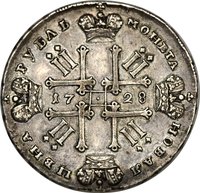
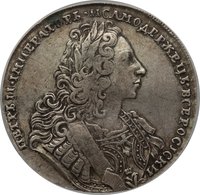
💎 Very Rare