

10 bahts (Secretariat of the Cabinet) – Thailand
Add to wishlist
Circulating commemorative coins
Commemoration: 72nd Anniversary of the Secretariat of the Cabinet
Thailand
Context
Year: 2004
Thai Year:: 2547
Issuer: Thailand
Ruler: Bhumibol Adulyadej
Currency:
(since 1897)
Total mintage: 3,000,000
Material
References
Y: #
Numista: #12187
Value
Exchange value: 10 THB
Obverse
Description:
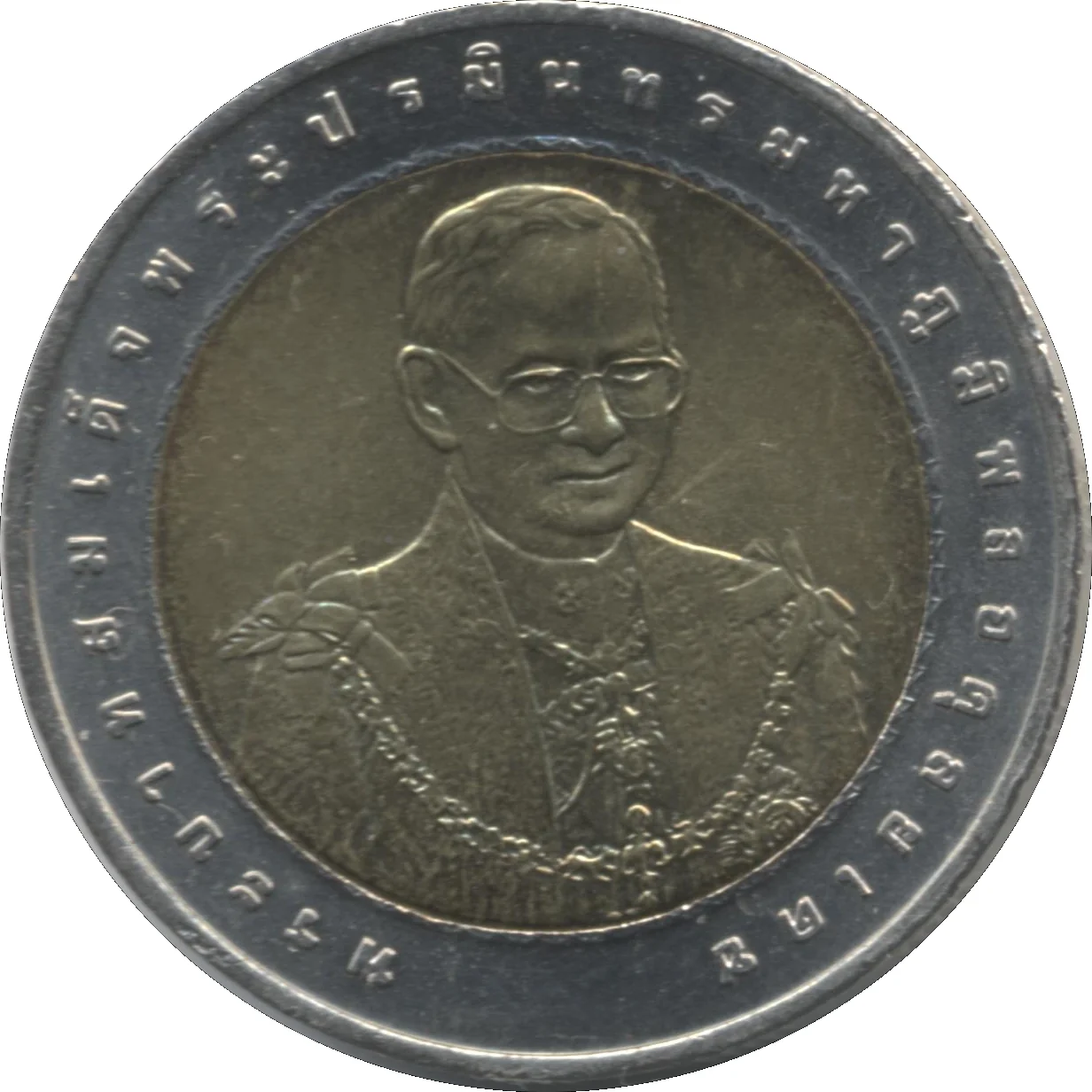
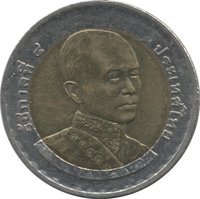
Busts of King Bhumibol Adulyadej in Supreme Commander uniform with the Order of the Royal House of Chakri.
Reverse
Description:
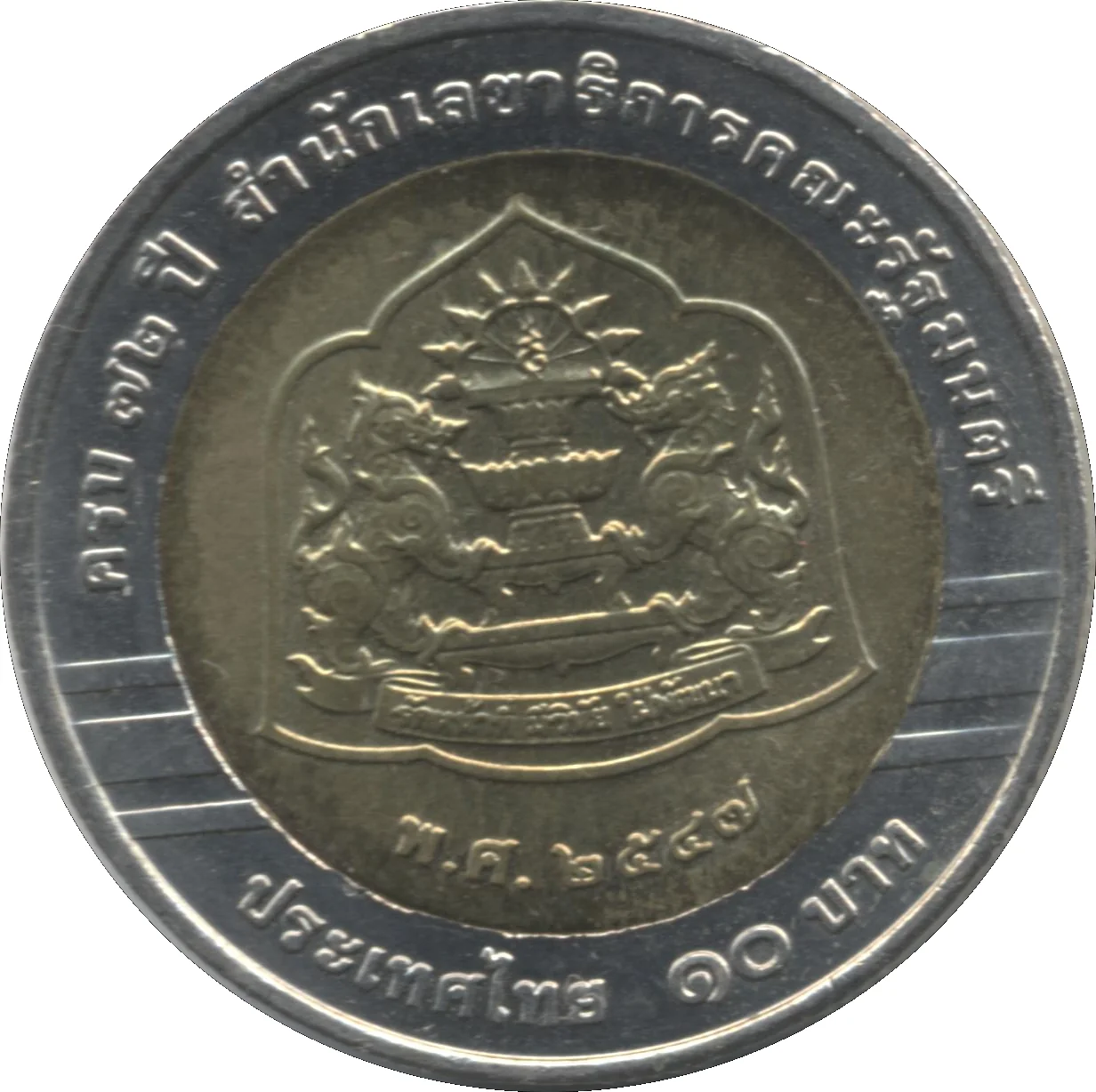
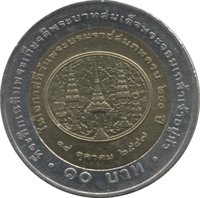
Cabinet Secretariat Seal: The Constitution book on a two-tiered tray, flanked by a Rajasiha lion (left) and a Koshasih elephant-lion (right). Above the book, the letter "U" with nine sun rays.
Edge
Segmented reeding
Mintings
| Year | Mint Mark | Mintage | Quality | Collection |
|---|---|---|---|---|
| 2004 | — | 3,000,000 |
Historical background
In 2004, Thailand's currency, the baht (THB), was operating under a managed float regime, a system established in the aftermath of the 1997 Asian Financial Crisis which had originated from Thailand's currency collapse. The Bank of Thailand (BoT) actively intervened in the foreign exchange market to prevent excessive volatility, but did not target a fixed exchange rate. The baht's value was primarily influenced by market forces of supply and demand, with the central bank smoothing out sharp fluctuations. This period was characterized by relative stability, especially when compared to the extreme turbulence of the late 1990s, with the baht trading in a managed range against the US dollar.
The broader economic context was one of robust recovery and growth. Thailand had successfully repaid its debts to the International Monetary Fund (IMF) ahead of schedule in 2003, signaling regained economic sovereignty and strength. Strong export performance, particularly in electronics, automotive parts, and agricultural products, drove this growth and generated significant foreign exchange inflows. However, this success also created a key policy challenge: managing these inflows to prevent the baht from appreciating too rapidly, which could hurt the competitiveness of Thai exports—a vital pillar of the economy.
Looking ahead, the stable environment of 2004 was underlaid with emerging concerns. Large current account surpluses and persistent foreign capital inflows, attracted by Thailand's growth and interest rate differentials, were building upward pressure on the baht. The Bank of Thailand faced the delicate task of sterilizing these inflows to control money supply growth and inflation without attracting even more speculative "hot money." This balancing act set the stage for future policy dilemmas, which would become more acute in the following years and eventually lead to controversial capital controls in 2006.
The broader economic context was one of robust recovery and growth. Thailand had successfully repaid its debts to the International Monetary Fund (IMF) ahead of schedule in 2003, signaling regained economic sovereignty and strength. Strong export performance, particularly in electronics, automotive parts, and agricultural products, drove this growth and generated significant foreign exchange inflows. However, this success also created a key policy challenge: managing these inflows to prevent the baht from appreciating too rapidly, which could hurt the competitiveness of Thai exports—a vital pillar of the economy.
Looking ahead, the stable environment of 2004 was underlaid with emerging concerns. Large current account surpluses and persistent foreign capital inflows, attracted by Thailand's growth and interest rate differentials, were building upward pressure on the baht. The Bank of Thailand faced the delicate task of sterilizing these inflows to control money supply growth and inflation without attracting even more speculative "hot money." This balancing act set the stage for future policy dilemmas, which would become more acute in the following years and eventually lead to controversial capital controls in 2006.
🌱 Fairly Common