

3 kreuzer – Austrian Empire
Add to wishlist
Austria
Context
Year: 1799
Country: Austria
Issuer: Austrian Empire
Ruler: Francis II
Currency:
(1754—1857)
Demonetized: Yes
Material
References
KM: #
Numista: #160469
Obverse
Description:
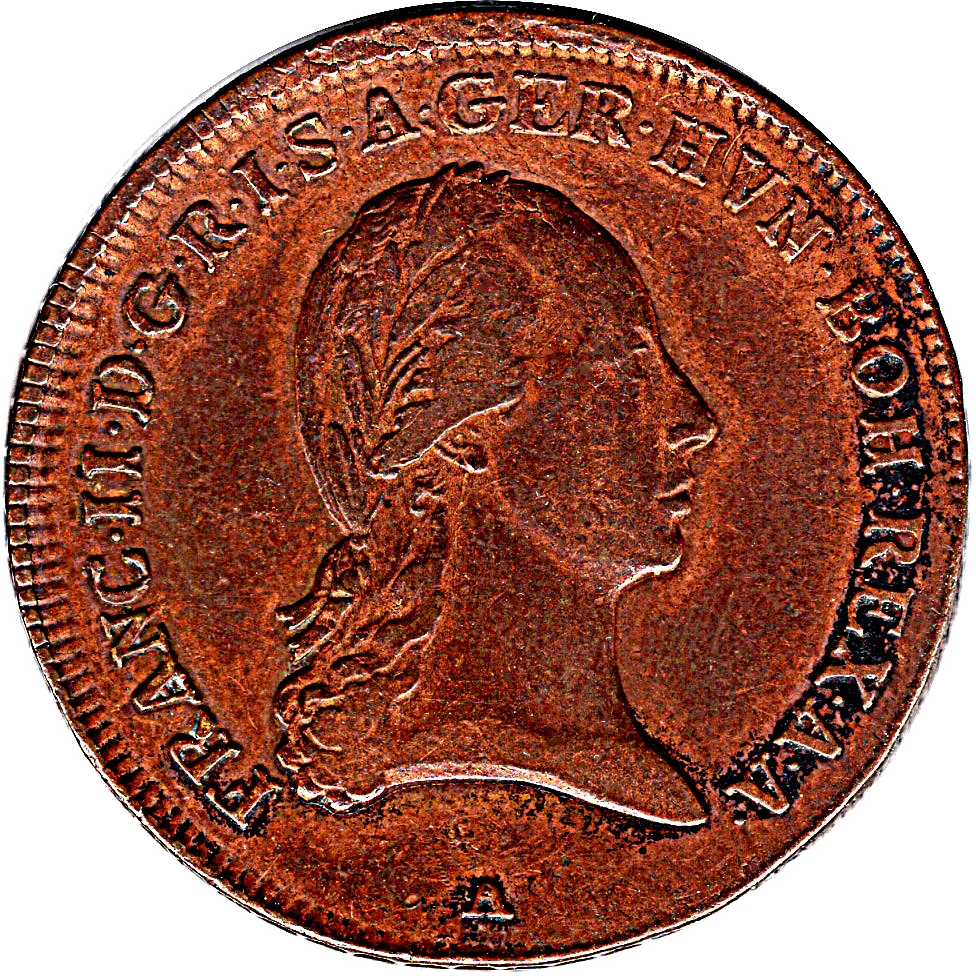
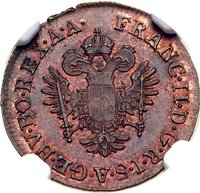
Portrait of Francis II, Holy Roman Emperor, King of Germany, Hungary, and Bohemia, and Archduke of Austria.
Inscription:
FRANC·II·D·G·R·I·S·A·GER·HVN·BOH·REX·A·A·
Script: Latin
Reverse
Description:
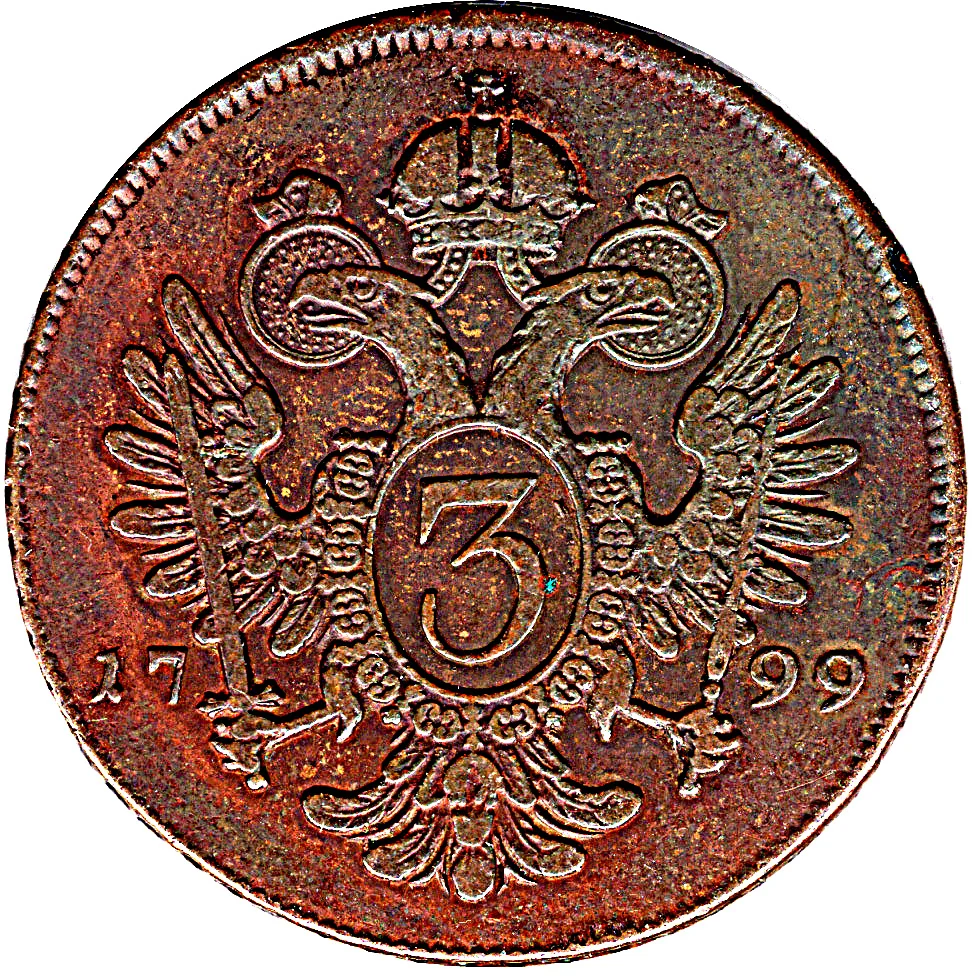
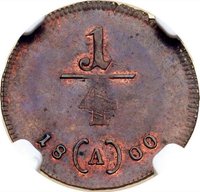
Imperial double-headed eagle with breast value, encircled by Golden Fleece, date divided.
Inscription:
3
17 99
17 99
Script: Latin
Edge
Ornamental pattern
Mints
| Name | Mark |
|---|---|
| Münze Österreich | A |
| Kremnica | B |
| Prague | C |
Historical background
In 1799, the currency situation in the Habsburg Monarchy (often called the Austrian Empire after 1804) was one of profound crisis, directly tied to the immense financial strain of the ongoing French Revolutionary Wars. The state's traditional revenues were utterly insufficient to fund the colossal military expenditures, leading to a heavy reliance on borrowing and, most consequentially, the repeated issuance of paper money. This paper currency, known as Bancozettel, was initially introduced in 1762 as a state debt instrument but had evolved into a forced circulating medium.
By the late 1790s, the over-issuance of Bancozettel had triggered severe inflation and a disastrous divergence between its face value and its value in silver. In 1799 alone, the circulation of these notes exceeded 200 million gulden, a staggering increase from their original issuance. This led to a dual-price system where goods had one price in silver coin and a much higher price in paper, causing widespread economic dislocation, hoarding of specie, and a collapse in public confidence. The government's attempts to stabilize the currency through loans and the establishment of a "Redemption and Exchange Bank" in the previous years had provided only temporary relief before the pressures of war finance overwhelmed them again.
Consequently, the monetary system was characterized by instability, uncertainty, and a effective devaluation that burdened the populace, especially those on fixed incomes and soldiers paid in depreciating paper. The crisis of 1799 was a pivotal moment in a longer period of Austrian state bankruptcy and currency devaluation that would culminate in the major Staatsbankrott (state bankruptcy) of 1811, when the Bancozettel were officially devalued to one-fifth of their face value. The financial weakness exposed in 1799 fundamentally limited the Empire's military and diplomatic capabilities during the Napoleonic conflicts.
By the late 1790s, the over-issuance of Bancozettel had triggered severe inflation and a disastrous divergence between its face value and its value in silver. In 1799 alone, the circulation of these notes exceeded 200 million gulden, a staggering increase from their original issuance. This led to a dual-price system where goods had one price in silver coin and a much higher price in paper, causing widespread economic dislocation, hoarding of specie, and a collapse in public confidence. The government's attempts to stabilize the currency through loans and the establishment of a "Redemption and Exchange Bank" in the previous years had provided only temporary relief before the pressures of war finance overwhelmed them again.
Consequently, the monetary system was characterized by instability, uncertainty, and a effective devaluation that burdened the populace, especially those on fixed incomes and soldiers paid in depreciating paper. The crisis of 1799 was a pivotal moment in a longer period of Austrian state bankruptcy and currency devaluation that would culminate in the major Staatsbankrott (state bankruptcy) of 1811, when the Bancozettel were officially devalued to one-fifth of their face value. The financial weakness exposed in 1799 fundamentally limited the Empire's military and diplomatic capabilities during the Napoleonic conflicts.
⭐ Rare