

1 ducat – Hungary
Add to wishlist
Hungary
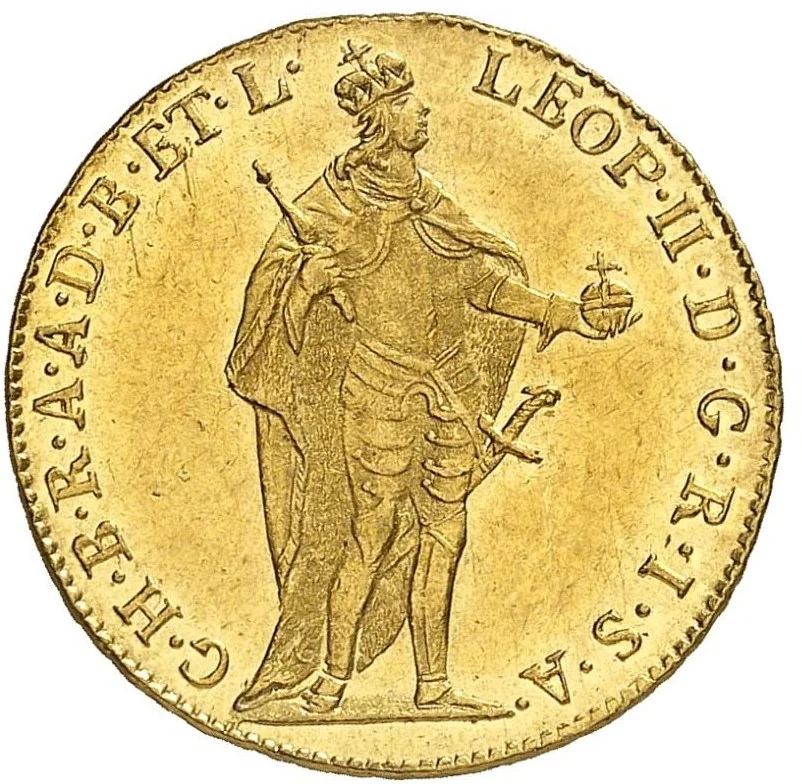
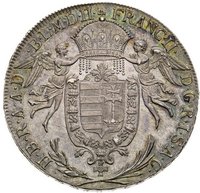
Obverse
Description:
Leopold II, standing.
Inscription:
LEOP · II · D · G · R · IMP · S · A · G · H · B · REX · A-A · D · B & L
Script: Latin
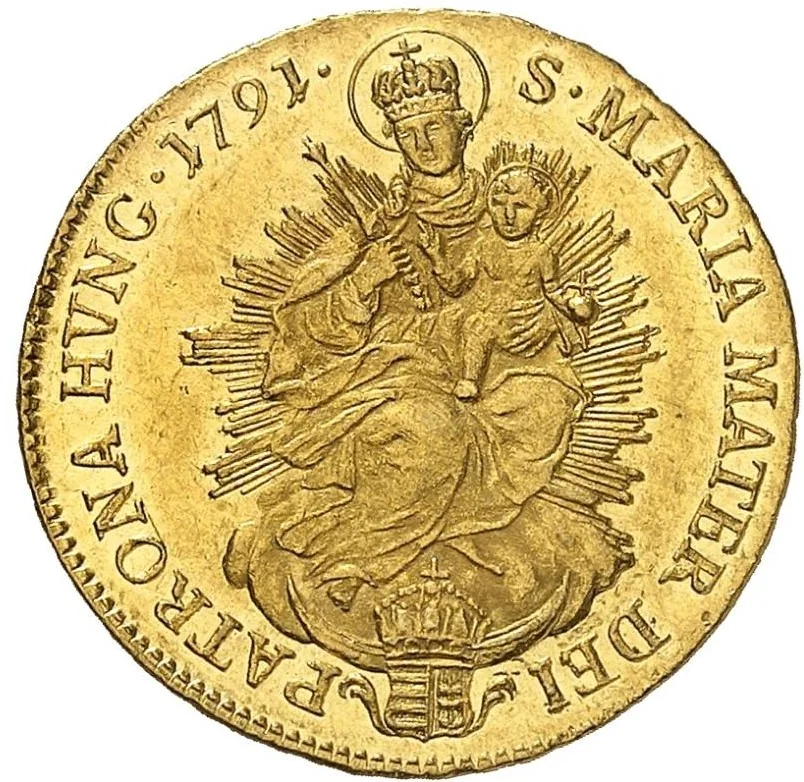
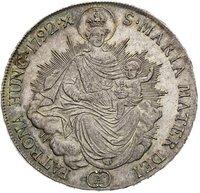
Reverse
Description:
Radiant Madonna and Child enthroned on a crescent moon.
Inscription:
S. MARIA MATER DEI - PATRONA HVNG 1791
Script: Latin
Edge
Mintings
| Year | Mint Mark | Mintage | Quality | Collection |
|---|---|---|---|---|
| 1791 | — | — | ||
| 1792 | — | — |
Historical background
In 1791, Hungary operated within the complex monetary system of the Habsburg Monarchy, which was characterized by a chronic shortage of specie and a reliance on paper money. The primary circulating currency was the Habsburg Conventionsmünze (Convention Coinage), based on the silver Conventionsthaler, but the state's finances were heavily dependent on the paper banknotes issued by the Wiener Stadtbanco (Vienna City Bank). These notes, known as Bancozettel, had been introduced to fund the wars of Empress Maria Theresa and were increasingly subject to depreciation, creating a tension between their face value and their actual silver worth.
This monetary instability was a source of significant political tension between the Hungarian estates and the central court in Vienna. The Hungarian Diet, which convened in 1790-91 after a long hiatus, viewed the depreciating paper currency as a form of financial oppression that harmed the kingdom's economy, particularly its landed nobility and agricultural exporters who were paid in devalued notes. A key demand of the Diet was for the restoration of a stable, silver-based currency and for Hungary to gain greater control over its own fiscal and monetary affairs, seeing this as a cornerstone of national autonomy within the monarchy.
Ultimately, the legislative outcomes of the 1790-91 Diet, encapsulated in Law X of 1791, did not achieve a fundamental reform of the currency system. While the Diet secured important political concessions regarding Hungary's constitutional status and use of the Latin language, the central monetary authority remained in Vienna. The unresolved currency issue persisted, with the Bancozettel continuing to depreciate, especially during the Napoleonic Wars, embedding a legacy of financial distrust and highlighting the economic dimensions of the struggle between Hungarian nationalism and Habsburg centralism.
This monetary instability was a source of significant political tension between the Hungarian estates and the central court in Vienna. The Hungarian Diet, which convened in 1790-91 after a long hiatus, viewed the depreciating paper currency as a form of financial oppression that harmed the kingdom's economy, particularly its landed nobility and agricultural exporters who were paid in devalued notes. A key demand of the Diet was for the restoration of a stable, silver-based currency and for Hungary to gain greater control over its own fiscal and monetary affairs, seeing this as a cornerstone of national autonomy within the monarchy.
Ultimately, the legislative outcomes of the 1790-91 Diet, encapsulated in Law X of 1791, did not achieve a fundamental reform of the currency system. While the Diet secured important political concessions regarding Hungary's constitutional status and use of the Latin language, the central monetary authority remained in Vienna. The unresolved currency issue persisted, with the Bancozettel continuing to depreciate, especially during the Napoleonic Wars, embedding a legacy of financial distrust and highlighting the economic dimensions of the struggle between Hungarian nationalism and Habsburg centralism.
✨ Legendary