

5 Ducats – Sweden
Sweden
Context

References
KM: #Click to copy to clipboard100
Numista: #159434
Value
Bullion value: $2844.41
Obverse
Description:
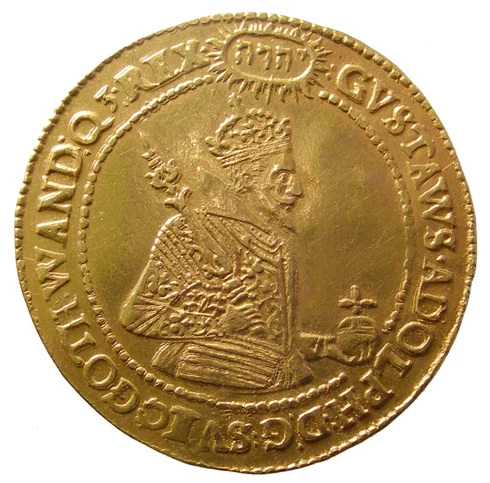
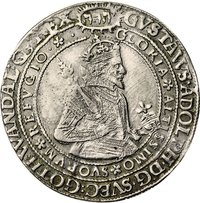
Gustav II Adolf half-figure right, radiant "Jehovah" above.
Script: Latin
Reverse
Description:
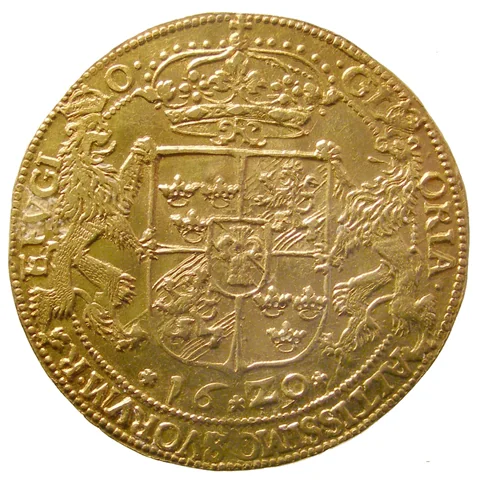
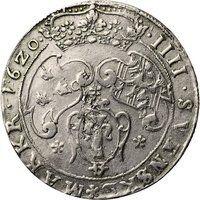
Crowned arms with lion supporters, date within inner circle.
Script: Latin
Edge
Mintings
| Year | Mint Mark | Mintage | Quality | Collection |
|---|---|---|---|---|
| 1620 | — | — |
Historical background
In 1620, Sweden was a rising military power in Northern Europe, yet its domestic currency system was chaotic and unstable. The primary unit was the silver daler, but a severe shortage of precious metals, especially silver, plagued the kingdom. To facilitate everyday small-scale trade, the realm relied heavily on a devalued copper coinage. This created a problematic dual-currency system where the value of copper coins in relation to the silver daler fluctuated wildly, causing confusion and economic friction.
The situation was exacerbated by the government's practice of debasement—reducing the silver content in coins to fund the ongoing wars in the Baltic and against Poland. This led to older, purer coins being hoarded or melted down (Gresham's Law in action), leaving the circulating currency even more degraded. Furthermore, foreign coins, particularly German and Dutch, circulated widely due to trade, adding another layer of complexity and inconsistency to an already fractured monetary landscape.
This monetary disarray hindered both commerce and state finances. Recognizing the problem, King Gustavus Adolphus and his advisors, including the influential Dutch merchant Louis De Geer, were already laying the groundwork for reform. Just four years later, in 1624, they would implement a major monetary overhaul, introducing a standardised copper plate money and a new silver coinage to bring order and stability, which was crucial for funding Sweden’s ambitious military campaigns during the Thirty Years' War.
The situation was exacerbated by the government's practice of debasement—reducing the silver content in coins to fund the ongoing wars in the Baltic and against Poland. This led to older, purer coins being hoarded or melted down (Gresham's Law in action), leaving the circulating currency even more degraded. Furthermore, foreign coins, particularly German and Dutch, circulated widely due to trade, adding another layer of complexity and inconsistency to an already fractured monetary landscape.
This monetary disarray hindered both commerce and state finances. Recognizing the problem, King Gustavus Adolphus and his advisors, including the influential Dutch merchant Louis De Geer, were already laying the groundwork for reform. Just four years later, in 1624, they would implement a major monetary overhaul, introducing a standardised copper plate money and a new silver coinage to bring order and stability, which was crucial for funding Sweden’s ambitious military campaigns during the Thirty Years' War.
✨ Legendary