

500 Lire – Vatican City
Non-circulating coins
Commemoration: Encyclical Dives Misericordiae
Vatican City
Context
Year: 1981
Issuer: Vatican City 
Ruler: John Paul II
Currency:
(1929—2001)
Demonetized: Yes
Total mintage: 124,000
Material
References
KM: #Click to copy to clipboard160
Numista: #12171
Value
Exchange value: 500 VAL
Bullion value: $26.69
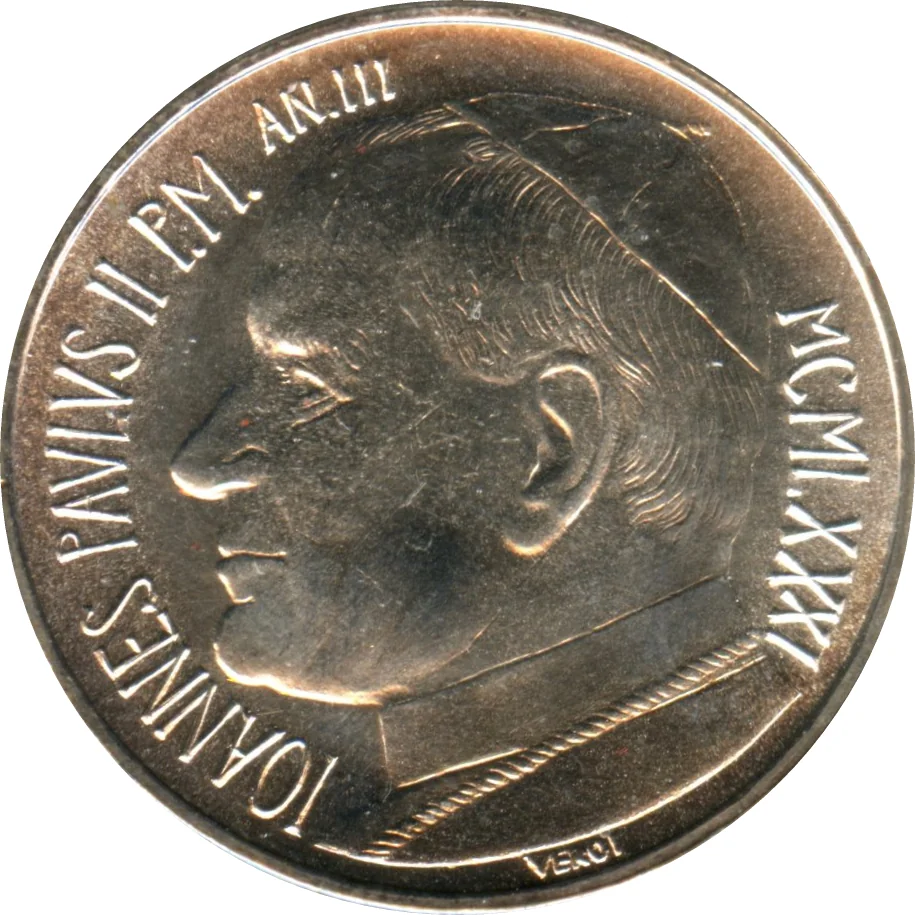
Obverse
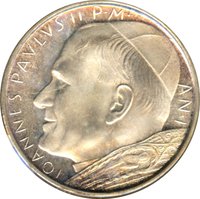
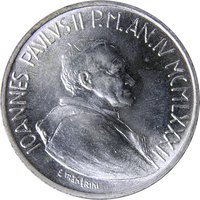
Description:
Left turn
Inscription:
IOANNES PAVLVS II P.M. AN.III MCMLXXXI
VEROI
VEROI
Translation:
John Paul II, Pontifex Maximus, Year 3, 1981
True
True
Script: Latin
Engraver: Guido Veroi
Reverse
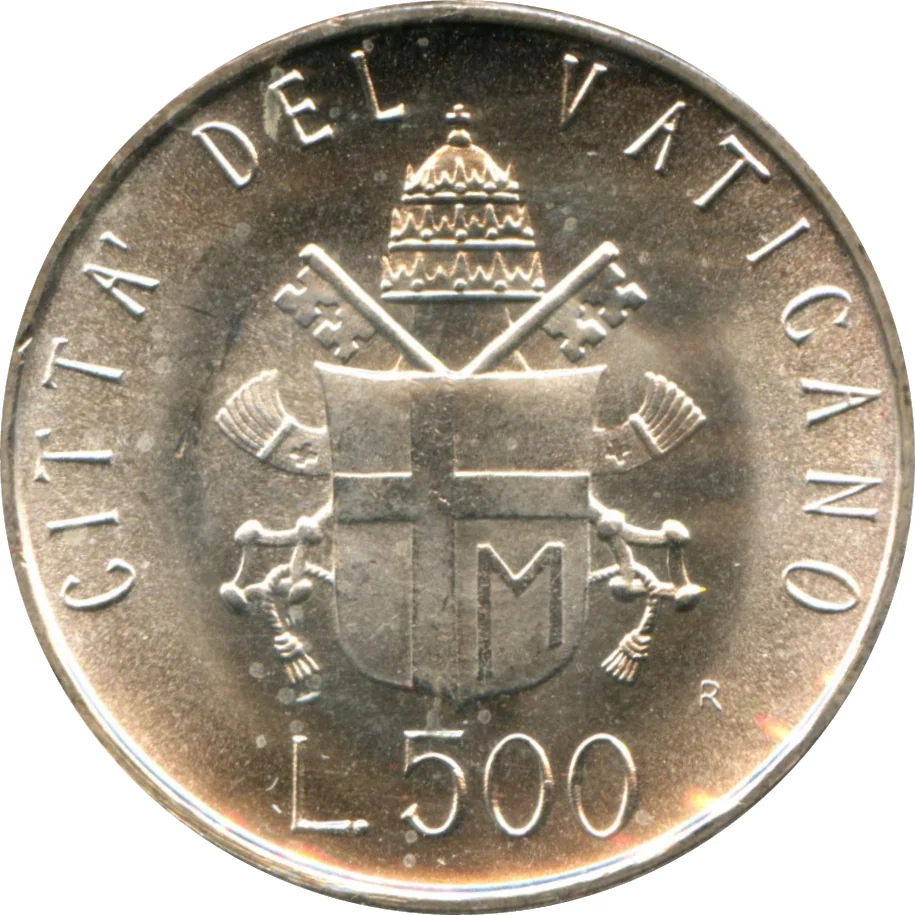
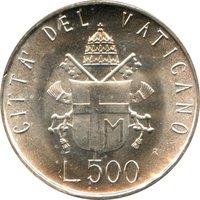
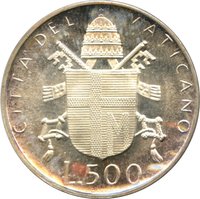
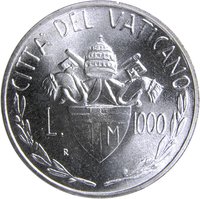
Description:
Papal coat of arms.
Inscription:
CITTA' DEL VATICANO
R
L. 500
R
L. 500
Translation:
Vatican City
R
500 Lire
R
500 Lire
Script: Latin
Language: Italian
Engraver: Guido Veroi
Edge
John Paul II motto inscription and date in roman numeral
Legend:
+++ TOTVS TVVS +++ MCMLXXXI
Translation:
Entirely Yours 1981
Language: Latin
Categories
| Person> Religious figure |
| Religion> Religious objects |
| Symbols> Coat of Arms |
Mints
| Name | Mark |
|---|---|
| Rome | R |
Mintings
| Year | Mint Mark | Mintage | Quality | Collection |
|---|---|---|---|---|
| 1981 | R | 124,000 | In sets |
Historical background
In 1981, Vatican City’s currency situation was defined by its unique status as a sovereign city-state without an independent monetary system. Like today, it did not mint its own circulating currency for general economic activity. Instead, its monetary system was fully integrated with that of Italy, operating under the terms of the Lateran Treaty of 1929. This agreement granted the Vatican the right to issue its own coins (the Vatican lira, which was pegged at par with the Italian lira) but these were primarily commemorative and numismatic in nature, intended for collectors and ceremonial purposes rather than day-to-day commerce.
Practically, the Italian lira was the de facto circulating currency used for all transactions within the tiny state's borders. The Vatican's own coinage, though legal tender, saw limited circulation and its issuance was strictly limited by annual quotas agreed upon with the Italian government to prevent financial disruption. The broader economic context was one of significant inflation and instability in Italy during the period known as the "Years of Lead," which indirectly affected the Vatican's financial operations. While the Vatican Bank (IOR) operated in international financial markets, the physical currency used by employees, residents, and visitors was overwhelmingly Italian.
Therefore, the background of 1981 shows a currency situation of symbolic sovereignty but practical dependency. The Vatican's monetary identity was expressed through special-issue coins that affirmed its statehood, while its economy functioned seamlessly within the Italian lira zone. This arrangement would remain fundamentally unchanged until the introduction of the Euro decades later, which the Vatican would also adopt under new international agreements.
Practically, the Italian lira was the de facto circulating currency used for all transactions within the tiny state's borders. The Vatican's own coinage, though legal tender, saw limited circulation and its issuance was strictly limited by annual quotas agreed upon with the Italian government to prevent financial disruption. The broader economic context was one of significant inflation and instability in Italy during the period known as the "Years of Lead," which indirectly affected the Vatican's financial operations. While the Vatican Bank (IOR) operated in international financial markets, the physical currency used by employees, residents, and visitors was overwhelmingly Italian.
Therefore, the background of 1981 shows a currency situation of symbolic sovereignty but practical dependency. The Vatican's monetary identity was expressed through special-issue coins that affirmed its statehood, while its economy functioned seamlessly within the Italian lira zone. This arrangement would remain fundamentally unchanged until the introduction of the Euro decades later, which the Vatican would also adopt under new international agreements.
🌱 Fairly Common