

dinar – Fez Branch of Saadi dynasty
Add to wishlist
Morocco
Context
Year: 1612
Islamic (Hijri) Year:: 1021
Country: Morocco
Issuer: Fez Branch of Saadi dynasty
Ruler: Abdallah al-Ghalib II
Currency:
(1549—1659)
Demonetized: Yes
References
KM: #
Numista: #157689
Value
Bullion value: $694.57
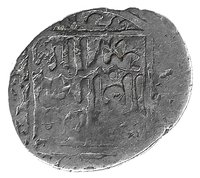
Obverse
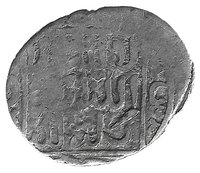
Reverse
Edge
Mintings
| Year | Mint Mark | Mintage | Quality | Collection |
|---|---|---|---|---|
| 1612 | — | — |
Historical background
In 1612, the Fez branch of the Saadi dynasty, ruling the northern part of a divided Morocco, faced a complex and challenging currency situation. The empire, once unified under Ahmad al-Mansur (d. 1603), had fragmented following a succession war between his sons, Zidan al-Nasir in Marrakesh and Muhammad al-Shaykh al-Mamun in Fez. This political division directly fractured the monetary system, as each rival court sought to control minting to finance their military campaigns and assert sovereign legitimacy. The Fez mint, therefore, operated not for a unified realm but for a contested kingdom in a state of civil war, leading to inconsistent coinage production.
The primary currency was the silver dirham and the gold dinar, but the period was marked by acute scarcity of precious metals, particularly silver. The lucrative Trans-Saharan gold trade, which had enriched the Saadis, was disrupted by internal conflict and rising European coastal competition. Furthermore, the costly practice of striking low-weight or debased coinage to meet immediate fiscal needs—a temptation for both Fez and Marrakesh—risked eroding public trust in the currency. This created a environment where the intrinsic value of coins could be uncertain, hampering both commerce and tax collection.
Despite these pressures, the minting of coins in Fez remained a vital political act. The inscriptions on the dirhams and dinars of Muhammad al-Shaykh al-Mamun served as declarations of his rightful authority, bearing his name and titles in opposition to his brother's. Thus, the currency situation was a microcosm of the broader crisis: a struggle to maintain economic stability and demonstrate regal power amidst fragmentation, scarce resources, and continuous military expenditure, all of which undermined the monetary uniformity and strength achieved under Ahmad al-Mansur.
The primary currency was the silver dirham and the gold dinar, but the period was marked by acute scarcity of precious metals, particularly silver. The lucrative Trans-Saharan gold trade, which had enriched the Saadis, was disrupted by internal conflict and rising European coastal competition. Furthermore, the costly practice of striking low-weight or debased coinage to meet immediate fiscal needs—a temptation for both Fez and Marrakesh—risked eroding public trust in the currency. This created a environment where the intrinsic value of coins could be uncertain, hampering both commerce and tax collection.
Despite these pressures, the minting of coins in Fez remained a vital political act. The inscriptions on the dirhams and dinars of Muhammad al-Shaykh al-Mamun served as declarations of his rightful authority, bearing his name and titles in opposition to his brother's. Thus, the currency situation was a microcosm of the broader crisis: a struggle to maintain economic stability and demonstrate regal power amidst fragmentation, scarce resources, and continuous military expenditure, all of which undermined the monetary uniformity and strength achieved under Ahmad al-Mansur.

✨ Legendary