

4 marks – Östergötland
Add to wishlist
Sweden
Context
Year: 1614
Country: Sweden
Issuer: Östergötland
Period:
Ruler: John
Currency:
(1598—1665)
Demonetized: Yes
Material
References
KM: #
Numista: #156586
Value
Bullion value: $40.50
Obverse
Description:
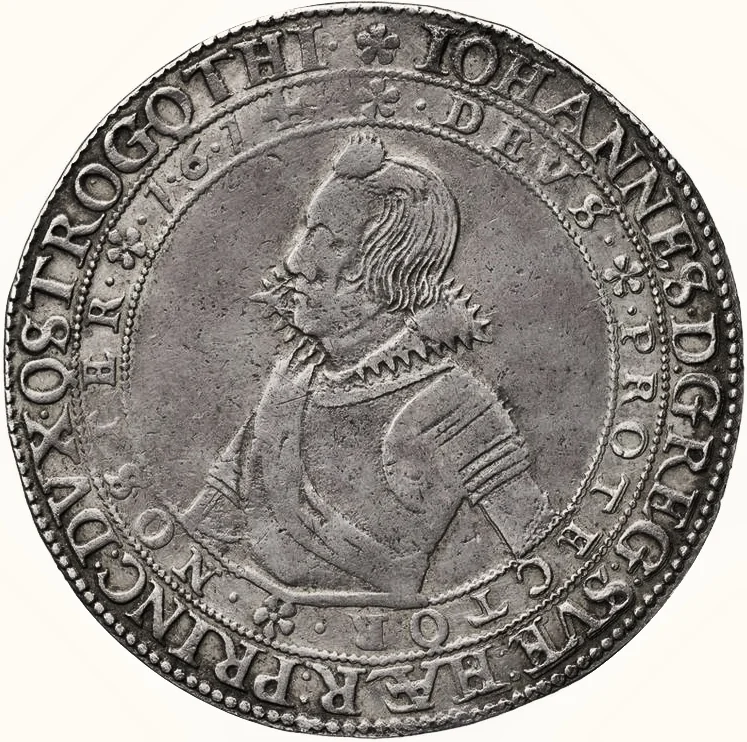
Half-figure of Duke Johan in a high collar, his shoulder with a folded band, enclosed in a circle surrounded by two text lines.
Inscription:
* IOHANNES·D:G:REG:SVE:HÆR:PRINC:DVX·OSTROGOTHI·
*· DEVS ·*· PROTECTOR ·*· NOSTER ·*· 1614
*· DEVS ·*· PROTECTOR ·*· NOSTER ·*· 1614
Script: Latin
Reverse
Description:
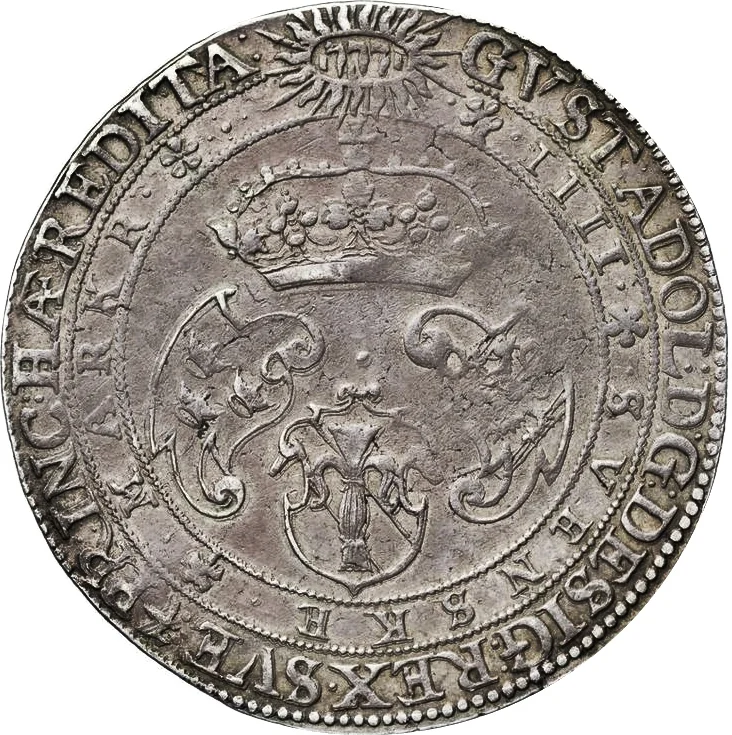
A crown above three shields in a triangular frame: the top left shield bears Sweden's Three Crowns, the top right the Folkungs Lion, and the bottom shield the Vasa Arms. The design is encircled by two text lines, with the radiant Hebrew name of Jehovah above and the written value below.
Inscription:
( יהוה ) GVST : ADOL : D:G : DESIG : REX : SVE & PRINC : HÆREDITA :
·*· IIII ·*· SVENSKA ·*· MARCK ·*·
·*· IIII ·*· SVENSKA ·*· MARCK ·*·
Edge
Mintings
| Year | Mint Mark | Mintage | Quality | Collection |
|---|---|---|---|---|
| 1614 | — | — |

✨ Legendary