
Logo Title
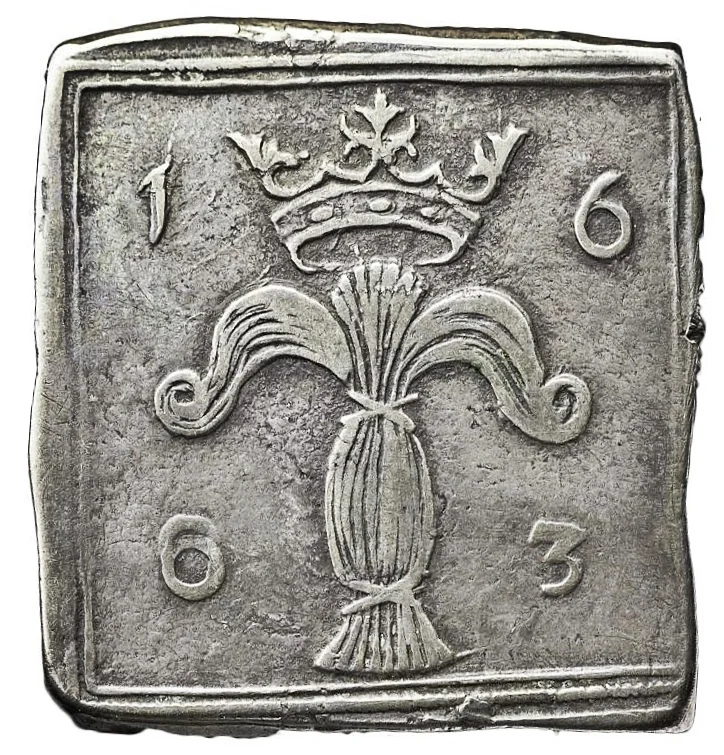
obverse
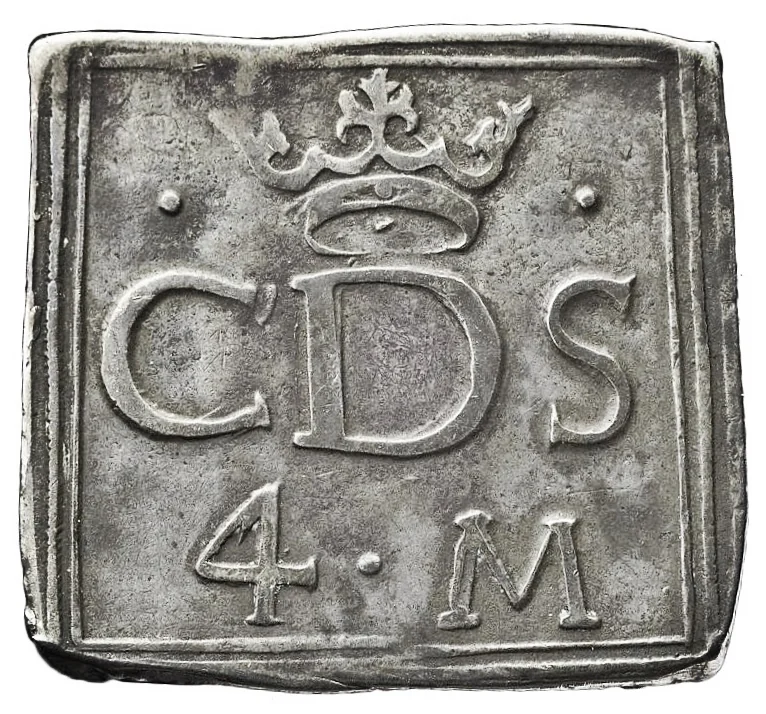
reverse
Oslo Myntgalleri

4 Marks – Duchy of Södermanland

Sweden
Context
Years: 1603–1604
Country: Sweden Country flag
Ruler: Charles IX
Currency:
(1598—1665)
Demonetized: Yes
Material
Weight: 19.62 g
Silver weight: 19.62 g
Composition: Silver
Magnetic: No
Technique: Klippe
References
KM: #Click to copy to clipboard12
Numista: #156233
Value
Bullion value: $54.39

Obverse

Description:
Vasa arms with crown and date numerals in corners.
Inscription:
1 6

0 3
Script: Latin

Reverse

Description:
Karl monogram with crown above, value below.
Inscription:
· CDS ·

4 · M
Script: Latin

Edge

Mints

NameMark
Kalmar

Mintings

YearMint MarkMintageQualityCollection
1603
1604

Historical background

In 1603, the currency situation in the Duchy of Södermanland was intrinsically linked to the wider monetary crisis gripping the Swedish Realm, exacerbated by the ongoing war with Poland. Duke Karl, who ruled the duchy and was the de facto regent for his nephew Sigismund (the King of Sweden but residing in Poland), faced severe financial strain. To fund his military and administrative costs, he continued the detrimental practice of heavily debasing the coinage, particularly the copper öre and mark coins, by reducing their silver content. This led to a classic situation of bad money driving out good, as older, purer coins were hoarded or melted down, leaving circulation dominated by inferior currency.

The resulting inflation and loss of confidence in the coinage caused significant economic hardship within the duchy and beyond, disrupting trade and sowing public discontent. Karl, a central figure in the Protestant opposition to the Catholic Sigismund, used his control over the mints (including the important Södermanland mint at Nyköping) not just for revenue but also as a political instrument. By issuing his own debased currency, he strengthened his independent financial base against the king, effectively making the monetary chaos a tool in the power struggle for the Swedish throne.

Therefore, the background of 1603 is one of a dual crisis: a severe economic breakdown caused by currency debasement, overlapping with a high-stakes political conflict. The situation would only be resolved after Karl's victory in the civil war and his subsequent coronation as King Karl IX of Sweden in 1604, after which he initiated sweeping monetary reforms to restore stability and royal control over the coinage across the unified kingdom.
Legendary