

1 Piastra – Papal States
Vatican City
Context
Year: 1693
Country: Vatican City 
Issuer: Papal States
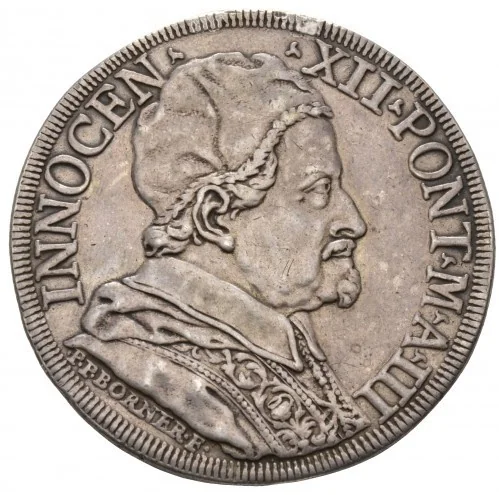
Ruler: Innocent XII
Currency:
(1534—1835)
Demonetized: Yes
Material
References
KM: #Click to copy to clipboard569
Numista: #106035
Value
Bullion value: $84.43
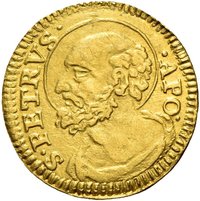
Obverse
Reverse
Description:
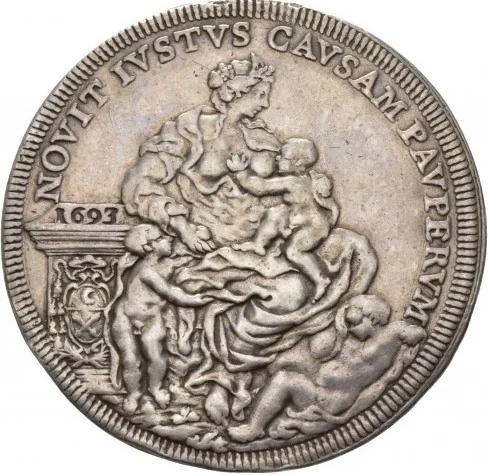
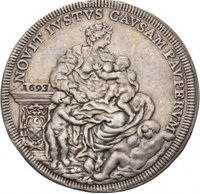
Charity nursing an infant, with two infants below. Date above arms of mintmaster Maffeo Farsetti.
Inscription:
NOVIT ITSTVS CAVSAM PAVPERVM
1693
1693
Script: Latin
Edge
Plain
Mints
| Name | Mark |
|---|---|
| Rome | — |
Mintings
| Year | Mint Mark | Mintage | Quality | Collection |
|---|---|---|---|---|
| 1693 | — | — |
Historical background
In 1693, the Papal States under Pope Innocent XII faced a significant monetary crisis rooted in decades of debasement and fiscal strain. The primary currency, the papetto or giulio, a silver coin, had been steadily reduced in its precious metal content by previous popes to fund expansive building projects, military campaigns, and administrative costs. This practice, combined with the widespread circulation of underweight and counterfeit coins, led to severe inflation, a loss of public confidence in the currency, and chaotic exchange rates between different regional coinages within the Papal territories. The situation was exacerbated by a broader shortage of silver in Europe, making it difficult to mint high-quality coinage.
Recognizing the destabilizing effects on trade and the papal treasury, Innocent XII (elected in 1691) embarked on a major monetary reform in 1693. The cornerstone of this reform was the introduction of a new, high-quality silver coin called the testone or lira, valued at one papal scudo. This coin was struck with a rigorous and reliable silver content, aiming to restore trust and serve as a stable unit of account. Furthermore, the reform systematically re-tariffed the entire coinage system, clearly defining the value of all circulating coins in relation to the new testone and the gold scudo, thereby simplifying a complex and fragmented system.
The 1693 reform was a notable, if partially successful, attempt at financial stabilization. It temporarily restored confidence in the papal currency and facilitated commerce. However, the fundamental fiscal pressures of the Papal States—reliance on debt, inconsistent revenues, and high expenditure—persisted. Future popes would again resort to debasement, leading to further cycles of inflation and reform. Thus, the situation in 1693 represents a pivotal but fleeting moment of monetary order amidst the long-term struggle to manage the Papal States' finances in the early modern period.
Recognizing the destabilizing effects on trade and the papal treasury, Innocent XII (elected in 1691) embarked on a major monetary reform in 1693. The cornerstone of this reform was the introduction of a new, high-quality silver coin called the testone or lira, valued at one papal scudo. This coin was struck with a rigorous and reliable silver content, aiming to restore trust and serve as a stable unit of account. Furthermore, the reform systematically re-tariffed the entire coinage system, clearly defining the value of all circulating coins in relation to the new testone and the gold scudo, thereby simplifying a complex and fragmented system.
The 1693 reform was a notable, if partially successful, attempt at financial stabilization. It temporarily restored confidence in the papal currency and facilitated commerce. However, the fundamental fiscal pressures of the Papal States—reliance on debt, inconsistent revenues, and high expenditure—persisted. Future popes would again resort to debasement, leading to further cycles of inflation and reform. Thus, the situation in 1693 represents a pivotal but fleeting moment of monetary order amidst the long-term struggle to manage the Papal States' finances in the early modern period.
✨ Legendary