Logo Title
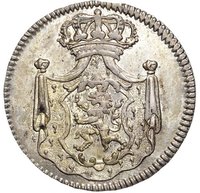
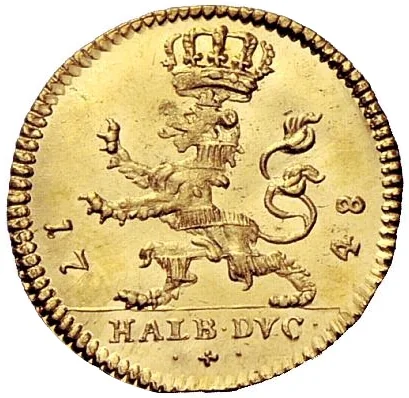
obverse
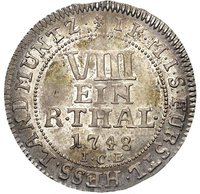
reverse
Hess Divo

½ Ducat – Landgraviate of Hesse-Cassel

Context
Year: 1748
Currency:
Demonetized: Yes
Material
Weight: 1.74 g
Gold weight: 1.72 g
Shape: Round
Composition: 98.6% Gold
Magnetic: No
References
KM: #Click to copy to clipboard439
Numista: #154602
Value
Bullion value: $286.05

Obverse

Description:
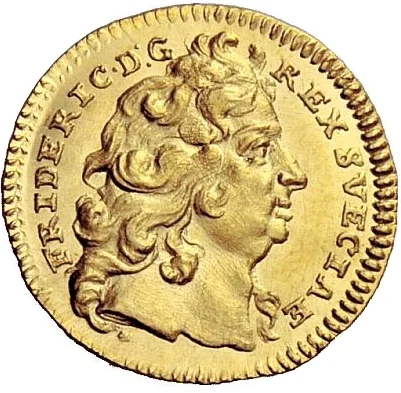
Right-facing bust.
Inscription:
FRIDERIC · D : G REX SVECIAE
Script: Latin

Reverse

Description:
Crowned rampant lion left, date aside, denomination in exergue.
Inscription:
17 48

HALB · DVC ·

· + ·
Script: Latin

Edge
Mints

NameMark
Kassel

Mintings

YearMint MarkMintageQualityCollection
1748

Historical background

In 1748, the Landgraviate of Hesse-Cassel was navigating a complex and challenging currency situation, a legacy of decades of war and fiscal expediency. The primary issue was the severe debasement of the local Hessen-Casselischer Reichsthaler and its subsidiary coins. Successive landgraves, particularly during the War of the Austrian Succession (1740-1748), had repeatedly lowered the silver content of the coinage to finance military expenditures, leading to a proliferation of underweight and inferior coins circulating alongside older, full-value pieces. This created a chaotic monetary environment where the intrinsic metal value of a coin often differed significantly from its face value, undermining both domestic trade and financial stability.

The consequences were pervasive: price inflation, a loss of public confidence in the currency, and difficulties in conducting commerce with neighboring states, which often refused the debased Hesse-Cassel coins or accepted them only at a steep discount. The problem was exacerbated by the broader context of the Holy Roman Empire’s fragmented monetary system, where hundreds of mints issued coinage. Hesse-Cassel’s weak currency was vulnerable to arbitrage by speculators and the influx of even more debased foreign coins, further muddying the money supply.

Recognizing the crisis, Landgrave William VIII, who had assumed full rule in 1751 but was already the acting regent, was moving toward a major monetary reform. The year 1748 thus represents a pivotal point of assessment and planning. The landgravate's finances were uniquely positioned for such a reform, thanks to its infamous but lucrative practice of leasing mercenary troops to foreign powers, particularly Great Britain, which provided a stream of silver Subsidienthaler. This war-derived capital would soon enable a ambitious recoinage project to restore the currency's silver standard and public trust, a process that would culminate in the comprehensive reforms of the early 1750s.
Legendary