

⅙ Ducat – Royal Mint of Silesia
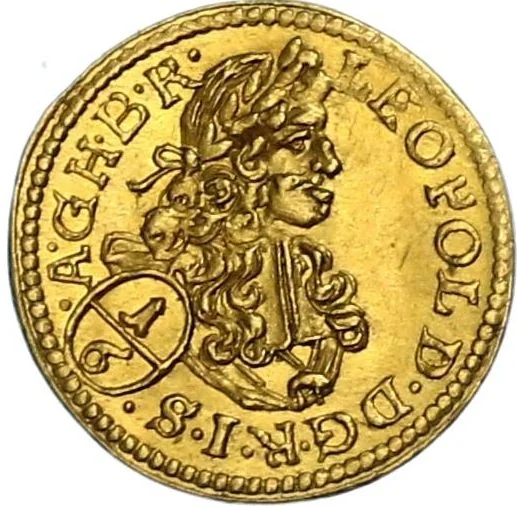
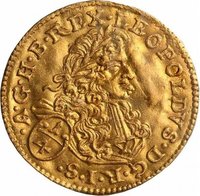
Obverse
Description:
Laureate bust right. No inner circle.
Inscription:
LEOPOLD D G R I S (1/6) A G H B R
Script: Latin
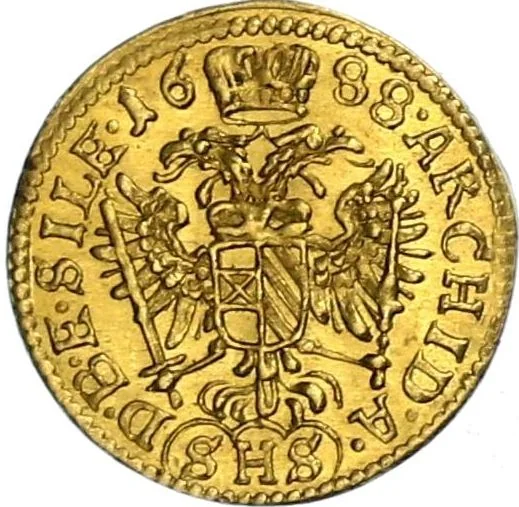
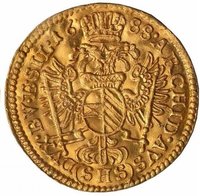
Reverse
Description:
Double-headed crowned eagle, holding sword and scepter, with a shield on its chest. The date is divided above by the crown.
Inscription:
ARCHID A (SHS) D B Et SILE
Script: Latin
Edge
Mints
| Name | Mark |
|---|---|
| Wrocław | — |
Mintings
| Year | Mint Mark | Mintage | Quality | Collection |
|---|---|---|---|---|
| 1687 | — | — | ||
| 1688 | — | — | ||
| 1690 | — | — | ||
| 1691 | — | — | ||
| 1693 | — | — | ||
| 1694 | — | — | ||
| 1695 | — | — | ||
| 1696 | — | — | ||
| 1698 | — | — |
Historical background
In 1687, the Royal Mint of Silesia, located in Opava, operated under the complex political and monetary landscape of the Habsburg Empire. Silesia was a contested region, but following the 1675 death of the last Piast duke, the Duchy of Opava had reverted to direct Habsburg control. The mint's operations were therefore governed from Vienna, reflecting the centralizing monetary policies of Emperor Leopold I. Its primary function was to produce coinage for circulation within Silesia and the broader Austrian territories, helping to standardize currency and assert imperial authority in a strategically important province.
The currency situation was defined by the Empire's ongoing struggle with debasement and the need for fiscal revenue, particularly to fund wars against the Ottoman Empire. The mint would have been producing silver coins, likely thalers and their fractional denominations (kreuzers, groschen), but the pressure to generate funds often led to reductions in the precious metal content. This period saw frequent monetary ordinances attempting to stabilize the relationship between various circulating coins, including older regional issues and new imperial strikes, creating a confusing environment for commerce.
Consequently, the output of the Royal Mint of Silesia in 1687 was not merely economic but deeply political. Each coin struck served as a portable symbol of Habsburg sovereignty over Silesia, while simultaneously addressing the empire's urgent financial needs. The coins minted that year would have entered a circulatory system fraught with variability, where their accepted value depended on both their official face value and the ever-fluctuating market trust in the silver content guaranteed by the imperial mint mark.
The currency situation was defined by the Empire's ongoing struggle with debasement and the need for fiscal revenue, particularly to fund wars against the Ottoman Empire. The mint would have been producing silver coins, likely thalers and their fractional denominations (kreuzers, groschen), but the pressure to generate funds often led to reductions in the precious metal content. This period saw frequent monetary ordinances attempting to stabilize the relationship between various circulating coins, including older regional issues and new imperial strikes, creating a confusing environment for commerce.
Consequently, the output of the Royal Mint of Silesia in 1687 was not merely economic but deeply political. Each coin struck served as a portable symbol of Habsburg sovereignty over Silesia, while simultaneously addressing the empire's urgent financial needs. The coins minted that year would have entered a circulatory system fraught with variability, where their accepted value depended on both their official face value and the ever-fluctuating market trust in the silver content guaranteed by the imperial mint mark.
✨ Legendary