

1 Falus – Afghanistan
Afghanistan
Context
Material
References
KM: #Click to copy to clipboard280
Numista: #154152
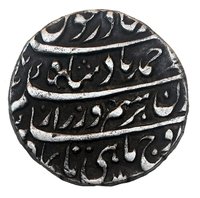
Obverse
Description:
Arabic inscription.
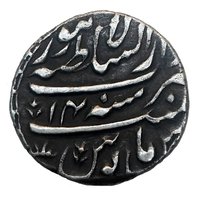
Reverse
Description:
Arabic inscription.
Edge
Mints
| Name | Mark |
|---|---|
| Bhakkar | — |
Mintings
| Year | Mint Mark | Mintage | Quality | Collection |
|---|---|---|---|---|
| 1748 | — | — | ||
| 1748 | — | — | ||
| 1749 | — | — | ||
| 1749 | — | — | ||
| 1754 | — | — | ||
| 1755 | — | — |
Historical background
In 1748, Afghanistan was not a unified nation but a contested region at the crossroads of declining empires, and its "currency situation" reflected this turbulent political landscape. The dominant power was the Durrani Empire, founded just three years prior in 1747 by Ahmad Shah Durrani. He established a centralized state that minted its own coinage, primarily silver rupees and gold mohurs, in major cities like Kandahar, Kabul, and Herat. These coins were crucial for asserting sovereignty, paying the army, and facilitating trade, marking a shift from the earlier period of fragmentation and foreign occupation under the Persian Afsharids and the Mughals.
The currency system was a practical blend of continuity and innovation. Ahmad Shah largely maintained the monetary standards and even the designs (including calligraphy and mint names) of the preceding Mughal and Safavid empires to ensure wide acceptance and stability in regional commerce. However, he prominently added his own name and titles, such as "Ahmad Shah Durr-i Durran," transforming the coins into instruments of political propaganda. The economy was heavily reliant on long-distance trade routes between India, Persia, and Central Asia, so these coins needed to be trusted and recognizable alongside other circulating currencies like the Persian toman and various Indian rupees.
Despite this centralization, the monetary situation remained complex and localized. The quality and supply of coinage could vary significantly between mints, and older foreign coins, particularly Mughal rupees, remained in circulation, especially in border regions and remote areas. Furthermore, the empire's finances were perpetually strained by constant military campaigns, which were both a drain on the treasury and a source of new plunder to be minted into coin. Therefore, while 1748 represents a period of newfound monetary authority under the Durrani dynasty, the system was still in its formative stage, underpinned by the precarious balance of conquest, trade, and the personal authority of Ahmad Shah.
The currency system was a practical blend of continuity and innovation. Ahmad Shah largely maintained the monetary standards and even the designs (including calligraphy and mint names) of the preceding Mughal and Safavid empires to ensure wide acceptance and stability in regional commerce. However, he prominently added his own name and titles, such as "Ahmad Shah Durr-i Durran," transforming the coins into instruments of political propaganda. The economy was heavily reliant on long-distance trade routes between India, Persia, and Central Asia, so these coins needed to be trusted and recognizable alongside other circulating currencies like the Persian toman and various Indian rupees.
Despite this centralization, the monetary situation remained complex and localized. The quality and supply of coinage could vary significantly between mints, and older foreign coins, particularly Mughal rupees, remained in circulation, especially in border regions and remote areas. Furthermore, the empire's finances were perpetually strained by constant military campaigns, which were both a drain on the treasury and a source of new plunder to be minted into coin. Therefore, while 1748 represents a period of newfound monetary authority under the Durrani dynasty, the system was still in its formative stage, underpinned by the precarious balance of conquest, trade, and the personal authority of Ahmad Shah.
✨ Legendary