

¼ Silver Ecu – France
France

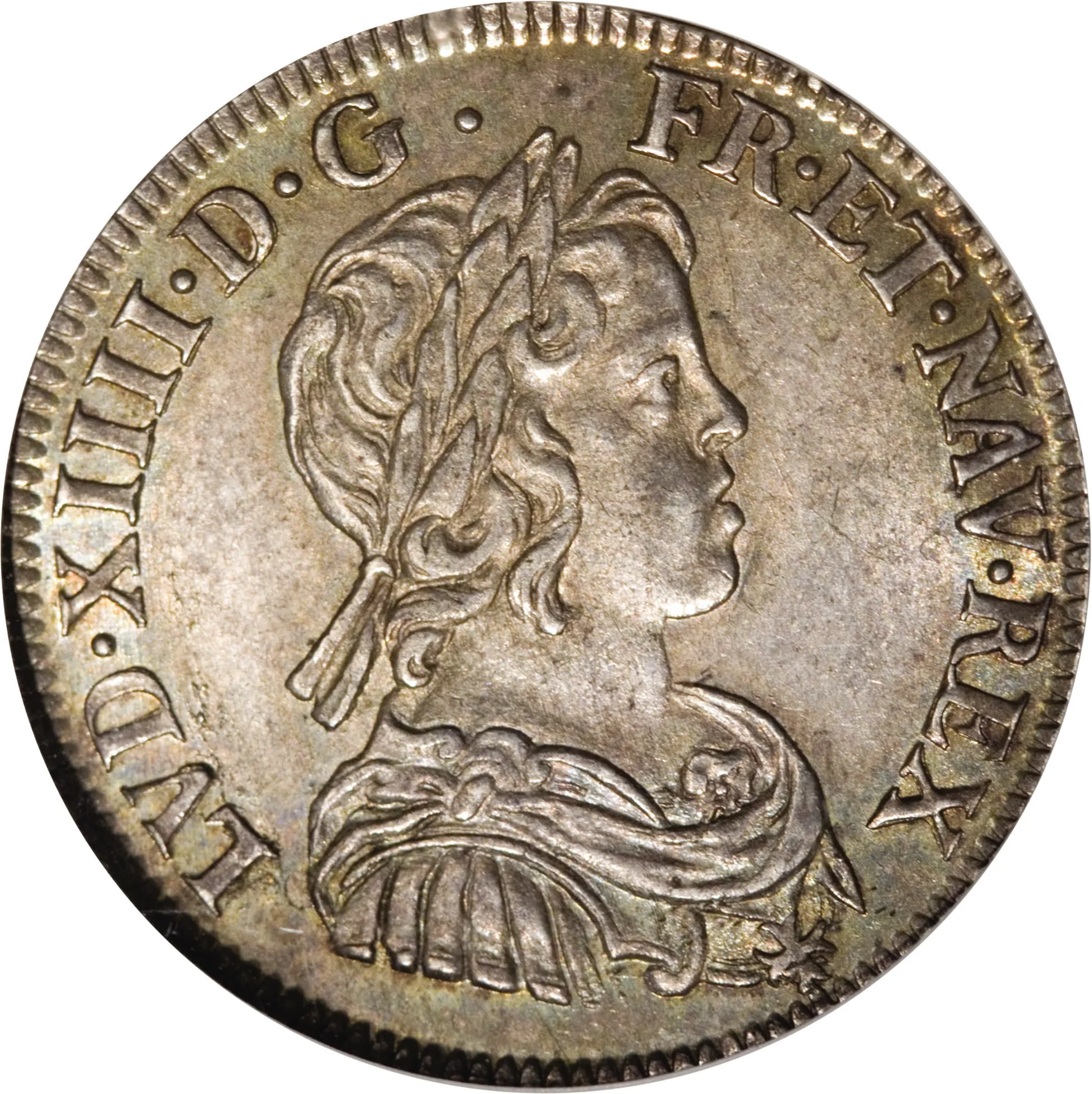
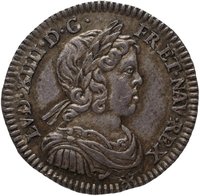
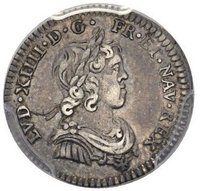
Obverse
Description:
Childlike bust of Louis XIV, laureate and draped in antique style with the Order of the Holy Spirit.
Inscription:
LVD · XIIII · D · G · FR · ET · NAV · REX
Script: Latin
Engraver: Jean Warin
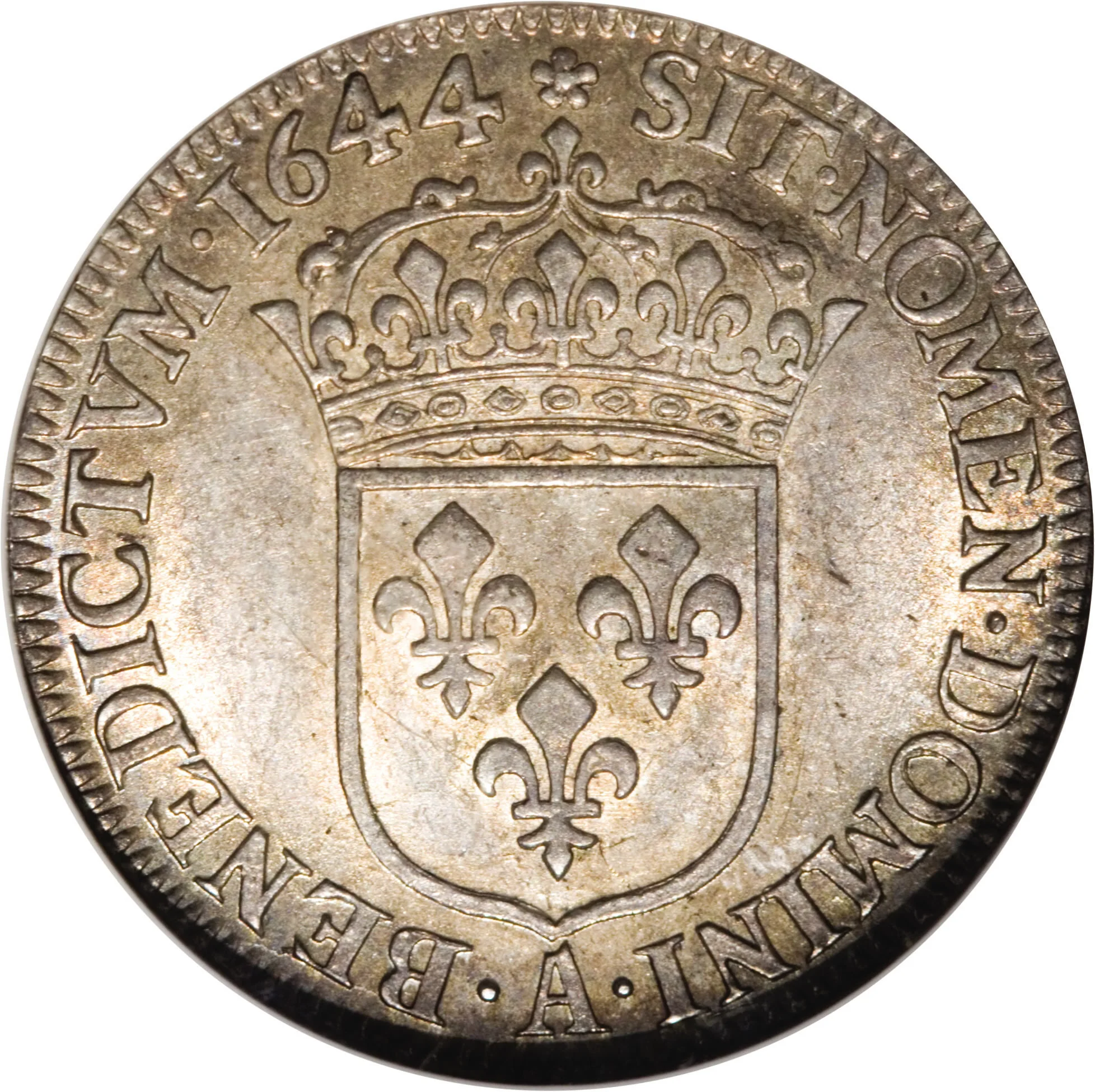
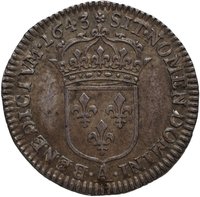
Reverse
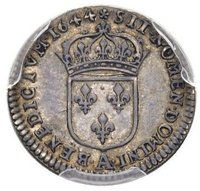
Description:
Shield of France crowned, encircled by inscription.
Inscription:
SIT · NOMEN · DOMINI · A · BENEDICTVM · 1644
Script: Latin
Engraver: Jean Warin
Edge
Plain
Categories
| Symbols> Coat of Arms |
| Symbol> Crown |
| Person> Monarch |
| Symbol> Cross |
| Symbol> Fleur-de-lis |
Mints
| Name | Mark |
|---|---|
| Monnaie de Paris | A |
| Lyon | D |
| Troyes | S |
Mintings
Historical background
In 1643, France's currency system was a complex and fragile patchwork, characterized by the simultaneous circulation of numerous physical coins and a separate unit of account. The actual coins in pockets and purses—primarily gold écus, silver livres tournois, and copper deniers—had an intrinsic value based on their metal content. However, all official accounting, from state budgets to merchant contracts, was conducted in the livre tournois, a stable monetary unit that existed only on paper. The critical and often volatile link between the two was the official taxe (exchange rate), set by royal decree, which stated how many physical coins equaled one livre. This created a bimetallic system vulnerable to the fluctuating market values of gold and silver.
This period, the first year of Louis XIV's personal reign (beginning after the death of Cardinal Richelieu in 1642 and with the young king under the regency of his mother, Anne of Austria, and her chief minister, Cardinal Mazarin), was one of profound financial strain. France was deeply committed to the Thirty Years' War (1618-1648), requiring enormous military expenditure. To raise funds, the crown repeatedly resorted to currency manipulations. This included augmentations (raising the official value of coins to draw more existing coinage into the treasury) and diminutions (lowering their value to profit from recoinage), effectively a form of debasement. These actions generated short-term revenue but severely disrupted commerce, eroded public trust, and caused widespread economic uncertainty.
Consequently, the monetary landscape was one of instability and confusion. Merchants and peasants alike suffered from sudden shifts in purchasing power and the bewildering array of coins whose real worth could change by royal fiat. Speculation and hoarding of stable-valued coins were common, while foreign currencies, often seen as more reliable, circulated widely within the kingdom. Thus, in 1643, France's currency was not just an economic tool but a key instrument of fraught state policy, manipulated to fund war at the cost of domestic economic stability, setting the stage for the financial crises that would mark the Fronde rebellions soon to follow.
This period, the first year of Louis XIV's personal reign (beginning after the death of Cardinal Richelieu in 1642 and with the young king under the regency of his mother, Anne of Austria, and her chief minister, Cardinal Mazarin), was one of profound financial strain. France was deeply committed to the Thirty Years' War (1618-1648), requiring enormous military expenditure. To raise funds, the crown repeatedly resorted to currency manipulations. This included augmentations (raising the official value of coins to draw more existing coinage into the treasury) and diminutions (lowering their value to profit from recoinage), effectively a form of debasement. These actions generated short-term revenue but severely disrupted commerce, eroded public trust, and caused widespread economic uncertainty.
Consequently, the monetary landscape was one of instability and confusion. Merchants and peasants alike suffered from sudden shifts in purchasing power and the bewildering array of coins whose real worth could change by royal fiat. Speculation and hoarding of stable-valued coins were common, while foreign currencies, often seen as more reliable, circulated widely within the kingdom. Thus, in 1643, France's currency was not just an economic tool but a key instrument of fraught state policy, manipulated to fund war at the cost of domestic economic stability, setting the stage for the financial crises that would mark the Fronde rebellions soon to follow.
Series: 1643 France circulation coins
⭐ Rare