

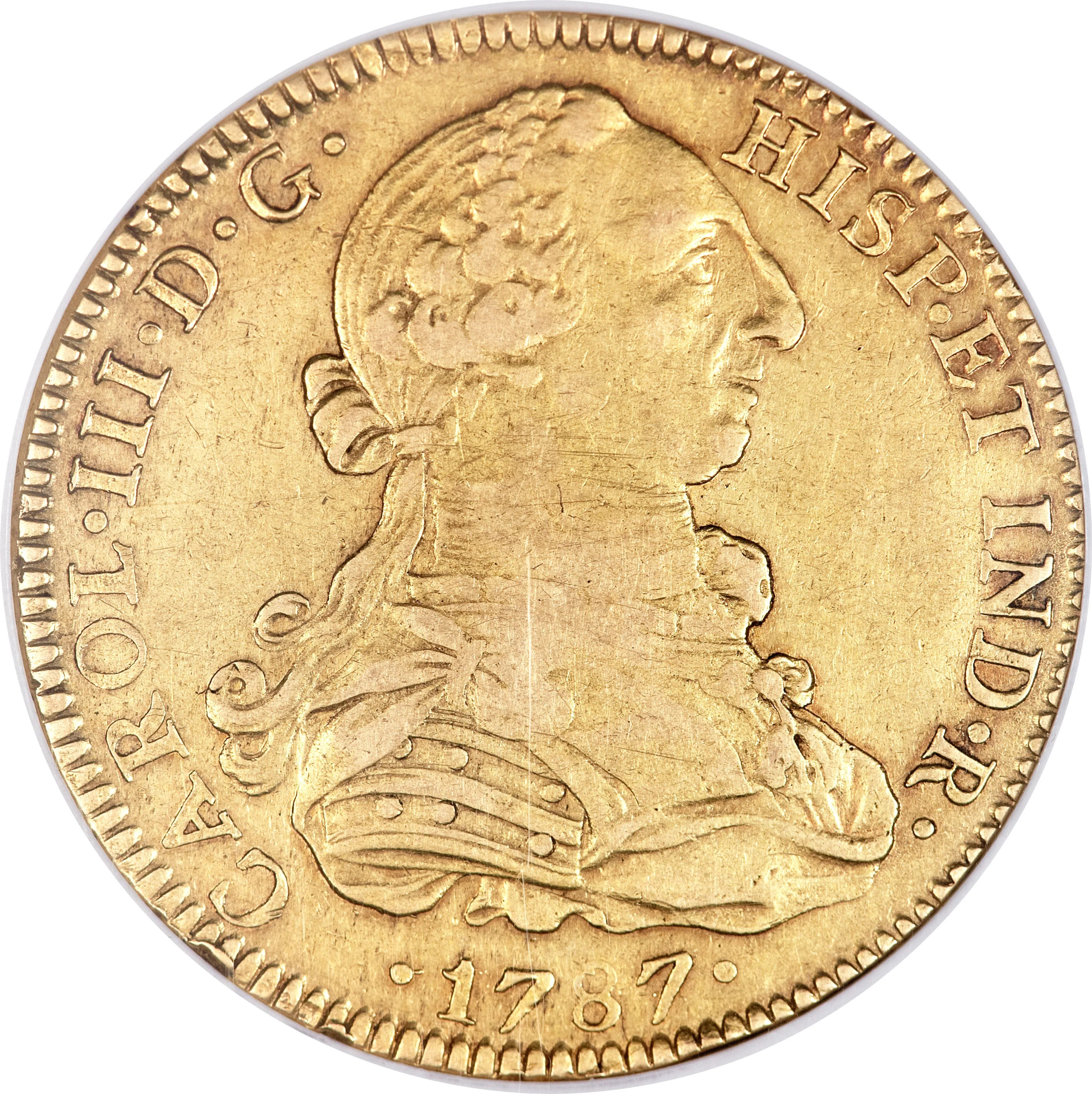
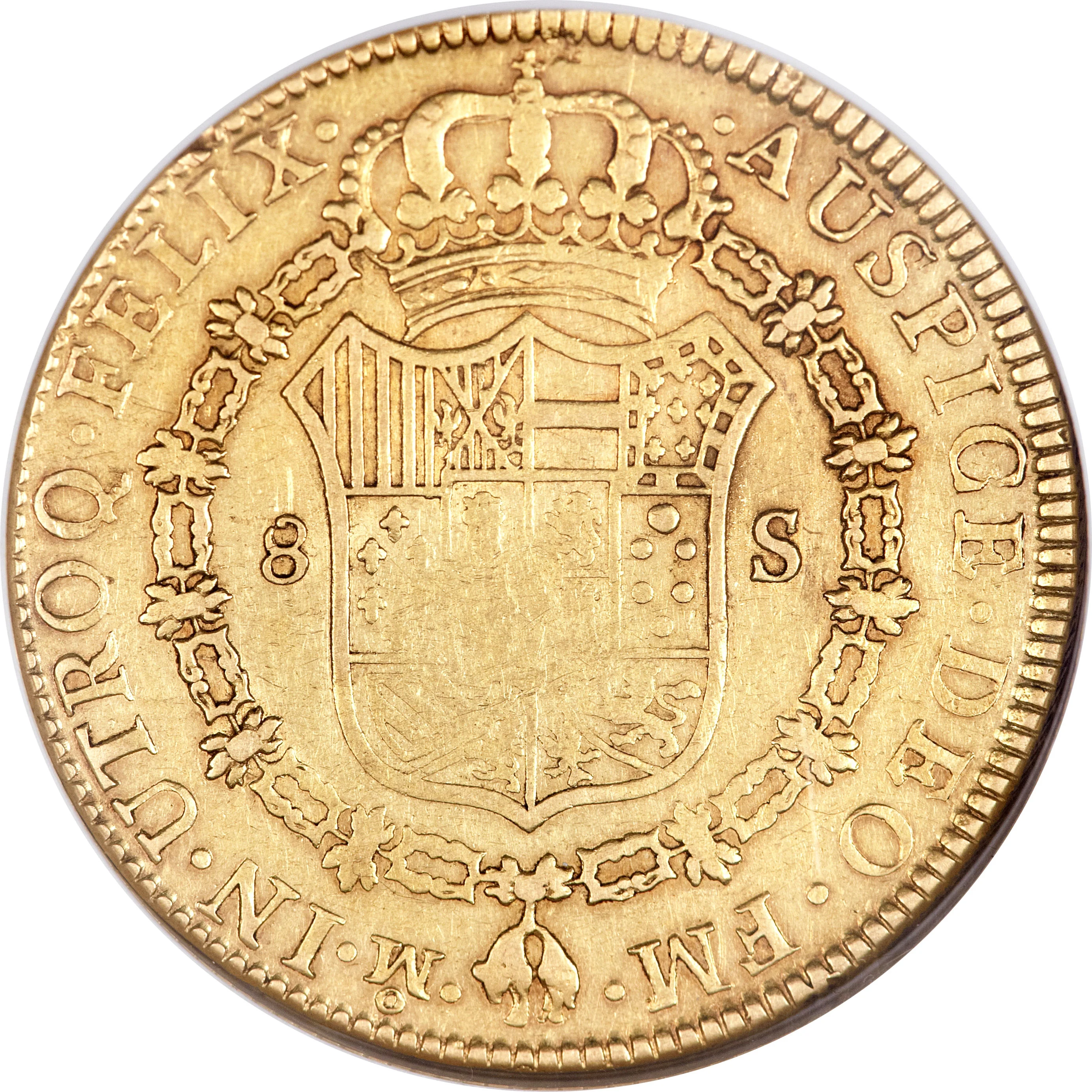
8 escudos – New Spain
Add to wishlist
Mexico
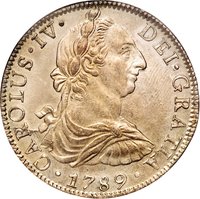
Obverse
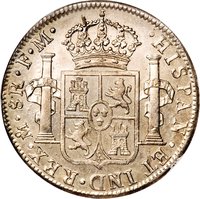
Reverse
Edge
Categories
| Symbol> Crown |
| Symbols> Coat of Arms |
Mints
| Name | Mark |
|---|---|
| Mexican Mint | Mo |
Mintings
| Year | Mint Mark | Mintage | Quality | Collection |
|---|---|---|---|---|
| 1786 | FM | — | ||
| 1787 | FM | — | ||
| 1788 | FM | — |
Historical background
In 1786, the currency system of New Spain, the wealthiest viceroyalty of the Spanish Empire, was characterized by a chronic and destabilizing shortage of circulating coinage. This scarcity stemmed from a fundamental colonial policy: the Crown's relentless extraction of silver bullion to finance its European wars and imperial administration. While the mines of New Spain, particularly in Zacatecas and Guanajuato, produced vast quantities of silver, a significant portion was immediately shipped to Spain as tax revenue or private profit, leaving the local economy perpetually drained of its primary monetary metal. This systemic drain created a severe mismatch between economic activity and the physical money needed to facilitate it.
The shortage manifested in a reliance on a cumbersome system of credit, barter, and a proliferation of low-denomination tlacos (token coins) and pilones (credit slips) issued by merchants and local authorities. Furthermore, the coinage in circulation was often debased and clipped, eroding public trust. The situation was exacerbated by the 1780-1782 "Great Recoinage" under Viceroy Martín de Mayorga, a well-intentioned but poorly executed attempt to call in old, worn coins and replace them with new, full-weight currency from the Mexico City mint. The recoinage process was slow and chaotic, temporarily worsening the scarcity and causing significant commercial disruption and public discontent that lingered into 1786.
Consequently, by 1786, the colonial government under the newly arrived Viceroy Manuel Antonio Flores faced a pressing monetary crisis. The economy was stifled by the lack of reliable specie, which hampered trade, tax collection, and even the payment of troops. This environment set the stage for the comprehensive monetary reforms that would be implemented in the following years, most notably the 1789 ordinance that standardized coinage and attempted to rationalize the system. Thus, 1786 represents a pivotal moment of strain, highlighting the unsustainable contradiction between New Spain's immense mineral wealth and its chronically under-monetized domestic economy.
The shortage manifested in a reliance on a cumbersome system of credit, barter, and a proliferation of low-denomination tlacos (token coins) and pilones (credit slips) issued by merchants and local authorities. Furthermore, the coinage in circulation was often debased and clipped, eroding public trust. The situation was exacerbated by the 1780-1782 "Great Recoinage" under Viceroy Martín de Mayorga, a well-intentioned but poorly executed attempt to call in old, worn coins and replace them with new, full-weight currency from the Mexico City mint. The recoinage process was slow and chaotic, temporarily worsening the scarcity and causing significant commercial disruption and public discontent that lingered into 1786.
Consequently, by 1786, the colonial government under the newly arrived Viceroy Manuel Antonio Flores faced a pressing monetary crisis. The economy was stifled by the lack of reliable specie, which hampered trade, tax collection, and even the payment of troops. This environment set the stage for the comprehensive monetary reforms that would be implemented in the following years, most notably the 1789 ordinance that standardized coinage and attempted to rationalize the system. Thus, 1786 represents a pivotal moment of strain, highlighting the unsustainable contradiction between New Spain's immense mineral wealth and its chronically under-monetized domestic economy.
✨ Legendary