

1 speciedaler – Denmark
Add to wishlist
Circulating commemorative coins
Commemoration: Coronation of King Frederik V of Denmark
Denmark
Context
Year: 1747
Issuer: Denmark
Ruler: Frederick V
Currency:
(1625—1813)
Demonetized: Yes
Total mintage: 9,250
Material
References
KM: #
Numista: #147913
Value
Bullion value: $61.83
Obverse
Description:
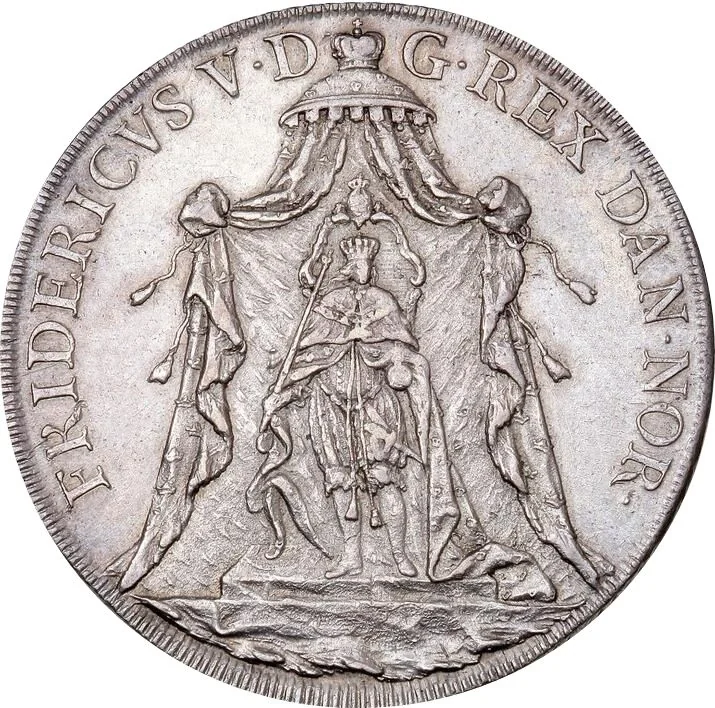
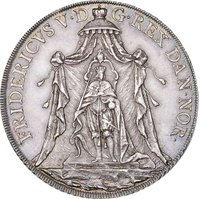
King Frederik V in coronation regalia, standing beneath a canopy and holding the scepter and Globus Cruciger.
Inscription:
FRIDERICVS • V • D | G • REX • DAN • NOR •
Script: Latin
Reverse
Description:
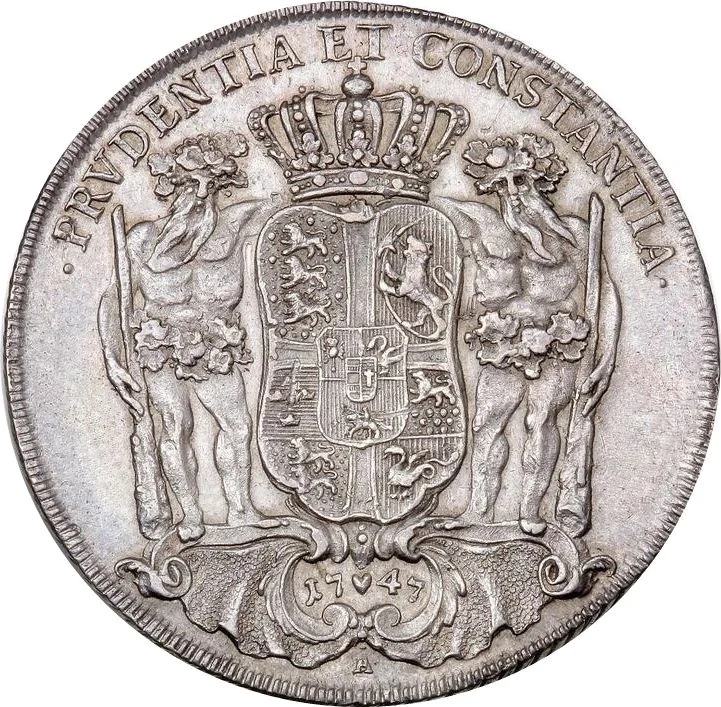
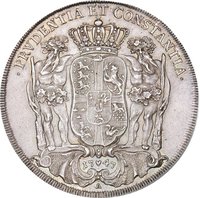
Two wildmen with clubs flank Denmark’s crowned arms on a cartouche containing the date, with the royal motto above.
Inscription:
• PRUDENTIA ET CONSTANTIA •
17♥47
A
17♥47
A
Script: Latin
Edge
Diagonal milling
Categories
| Symbols> Coat of Arms |
| Event> Coronation |
Mints
| Name | Mark |
|---|---|
| Royal Danish Mint | — |
Mintings
| Year | Mint Mark | Mintage | Quality | Collection |
|---|---|---|---|---|
| 1747 | ♥ | 9,250 |
Historical background
In 1747, Denmark operated under a complex and strained monetary system, a legacy of the Great Northern War and decades of fiscal challenges. The state currency was the rigsdaler, divided into 96 skilling. However, the system was not unified; alongside the government-issued "kurant" money used for domestic accounting, there circulated a multitude of physical coins, both domestic and foreign. These included older, debased Danish coins and, crucially, large quantities of high-quality foreign silver specie, particularly the Lybsk daler (Lübeck dollar), which was preferred in trade. This created a dual system where transactions often had to be calculated in both "kurant" money and "species" (specie) money, with fluctuating exchange rates between them.
The core problem was a severe shortage of state-minted, full-value silver coinage, leading to a reliance on less reliable copper and heavily debased silver coins for everyday use. Years of war had drained the treasury, prompting the crown to repeatedly reduce the silver content in its coinage to generate seigniorage profit, a practice that eroded public trust. Consequently, "good money" (full-weight foreign silver) was hoarded or used for international trade, while "bad money" (debased domestic coin) flooded the market, causing inflation and economic friction. This Gresham's Law dynamic—where "bad money drives out good"—hindered commerce and state finances.
Recognizing the crisis, the Danish government was actively working toward a major monetary reform, which would culminate in the Currency Reforms of 1747-1753. The process, initiated that year, aimed to stabilize the system by introducing new, standardized silver coins and definitively fixing the exchange rate between the rigsdaler specie and the rigsdaler kurant. This arduous multi-year project sought to restore confidence, simplify transactions, and centralize monetary authority, laying the groundwork for a more modern and stable currency system in the latter half of the 18th century.
The core problem was a severe shortage of state-minted, full-value silver coinage, leading to a reliance on less reliable copper and heavily debased silver coins for everyday use. Years of war had drained the treasury, prompting the crown to repeatedly reduce the silver content in its coinage to generate seigniorage profit, a practice that eroded public trust. Consequently, "good money" (full-weight foreign silver) was hoarded or used for international trade, while "bad money" (debased domestic coin) flooded the market, causing inflation and economic friction. This Gresham's Law dynamic—where "bad money drives out good"—hindered commerce and state finances.
Recognizing the crisis, the Danish government was actively working toward a major monetary reform, which would culminate in the Currency Reforms of 1747-1753. The process, initiated that year, aimed to stabilize the system by introducing new, standardized silver coins and definitively fixing the exchange rate between the rigsdaler specie and the rigsdaler kurant. This arduous multi-year project sought to restore confidence, simplify transactions, and centralize monetary authority, laying the groundwork for a more modern and stable currency system in the latter half of the 18th century.
✨ Legendary