

2 ducats – Denmark
Add to wishlist
Denmark
Context
Material
References
KM: #
Numista: #145504
Value
Bullion value: $1061.77
Obverse
Description:
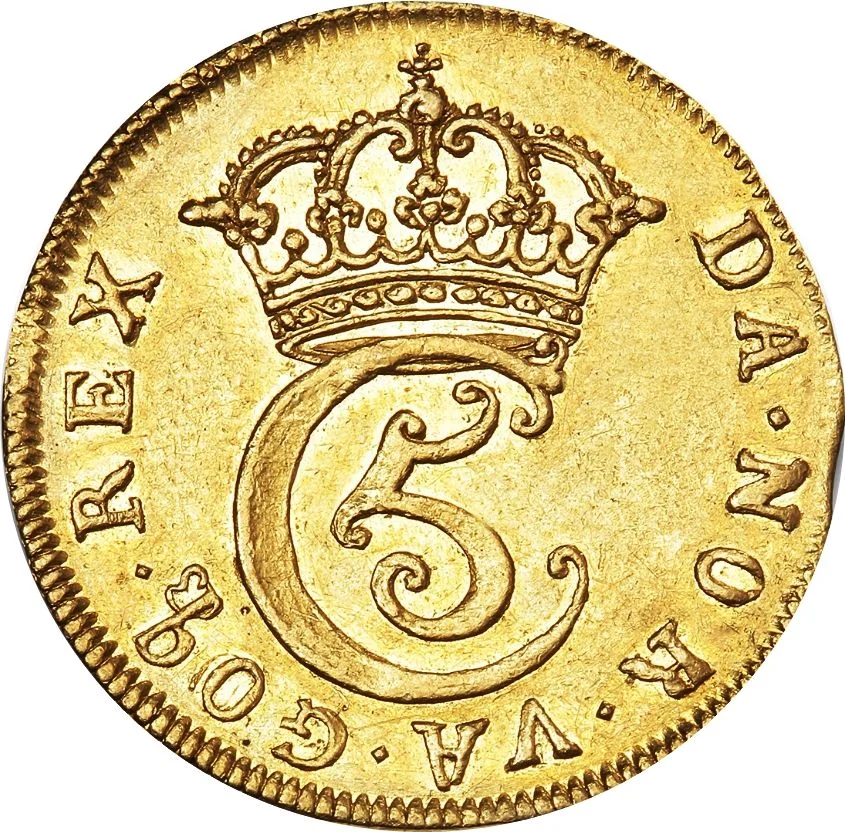
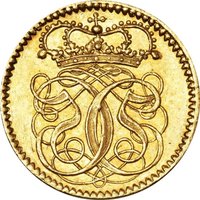
King's crowned monogram, encircled by rim legend.
Inscription:
DA · NOR · VA · GOq · REX
Script: Latin
Reverse
Description:
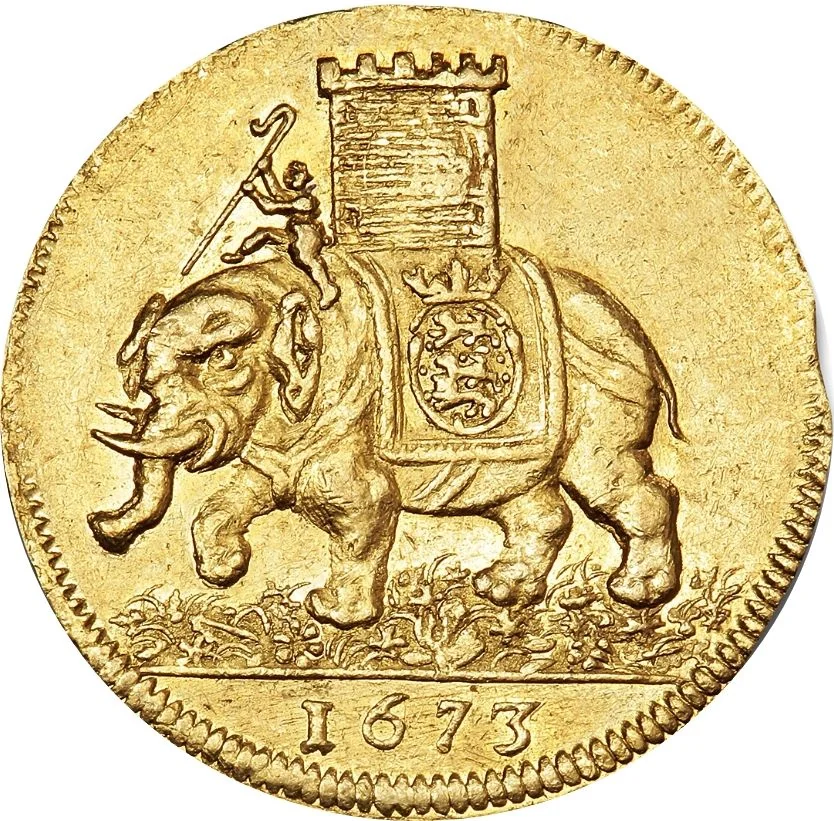
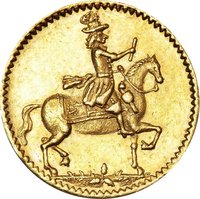
Roaring elephant with tower and Danish royal banner, left. Date in exergue.
Inscription:
1673
Script: Latin
Edge
Mints
| Name | Mark |
|---|---|
| Copenhagen | — |
Mintings
| Year | Mint Mark | Mintage | Quality | Collection |
|---|---|---|---|---|
| 1673 | — | — |
Historical background
In 1673, Denmark-Norway was navigating a complex and challenging monetary landscape, a direct consequence of the prolonged and costly Dano-Swedish wars of the mid-17th century. To finance these conflicts, the state had heavily debased its coinage, notably the silver rigsdaler, by reducing its precious metal content while maintaining its face value. This practice, combined with the influx of even poorer quality foreign coins circulating in the realm, led to severe inflation, a loss of public confidence in the currency, and widespread economic disruption. The monetary system was a chaotic patchwork of old and new coins of varying intrinsic values, making trade and taxation profoundly difficult.
Recognizing the crisis, the absolute monarch, King Christian V, and his advisors embarked on a major monetary reform, which was formally decreed in January 1673. The cornerstone of this reform was the introduction of a new, stable silver standard based on the kurant rigsdaler. The state recalled the old debased coins and began minting new ones with a fixed and reliable silver content, aiming to restore trust and impose order. A key administrative feature was the creation of the Kurantbank in Copenhagen, a precursor to a central bank, which was tasked with managing the new currency and facilitating government finance.
The reform of 1673 was a significant step toward modernizing the Danish economy and strengthening state control over fiscal matters. While the transition was not instantaneous or without difficulty—older coins remained in circulation for years—it successfully halted the spiral of debasement and established a firmer foundation for commerce. This move towards a standardized, state-guaranteed currency under the absolute monarchy laid important groundwork for Denmark’s financial stability in the following decades, even as the system would continue to evolve with the later introduction of paper money.
Recognizing the crisis, the absolute monarch, King Christian V, and his advisors embarked on a major monetary reform, which was formally decreed in January 1673. The cornerstone of this reform was the introduction of a new, stable silver standard based on the kurant rigsdaler. The state recalled the old debased coins and began minting new ones with a fixed and reliable silver content, aiming to restore trust and impose order. A key administrative feature was the creation of the Kurantbank in Copenhagen, a precursor to a central bank, which was tasked with managing the new currency and facilitating government finance.
The reform of 1673 was a significant step toward modernizing the Danish economy and strengthening state control over fiscal matters. While the transition was not instantaneous or without difficulty—older coins remained in circulation for years—it successfully halted the spiral of debasement and established a firmer foundation for commerce. This move towards a standardized, state-guaranteed currency under the absolute monarchy laid important groundwork for Denmark’s financial stability in the following decades, even as the system would continue to evolve with the later introduction of paper money.
✨ Legendary