

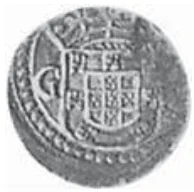
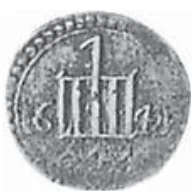
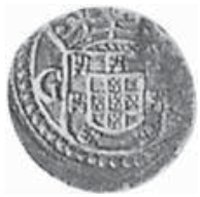
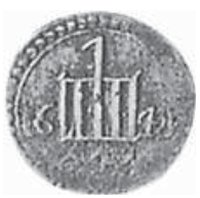
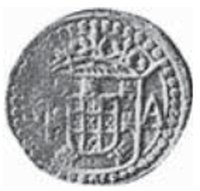
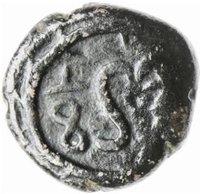
Obverse
Description:
Heraldic emblem
Inscription:
G A
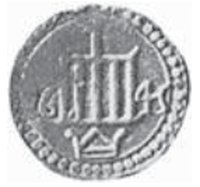
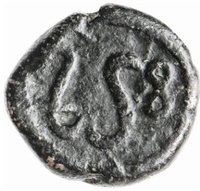
Reverse
Description:
Football
Inscription:
16 45
Edge
Plain
Mintings
| Year | Mint Mark | Mintage | Quality | Collection |
|---|---|---|---|---|
| 1645 | — | — |
Historical background
In 1645, the currency situation in Ceylon (modern-day Sri Lanka) was a complex and contested system, shaped by the island's strategic importance in the Indian Ocean trade. The coastal regions, particularly the west and south, were under the control of the Dutch East India Company (VOC), which had recently displaced the Portuguese. The VOC sought to impose its monetary order, primarily based on imported Spanish silver reales (pieces of eight) and their fractional coins. However, these European coins circulated alongside a vast array of other currencies, including Portuguese tangas, various Indian gold pagodas and silver rupees, and even Chinese copper cash, reflecting the island's role as a commercial crossroads.
The interior Kingdom of Kandy, which remained independent, operated on a different monetary system. The Kandyan economy was more subsistence-based and relied heavily on traditional exchange mechanisms, including barter and the use of small-denomination coins like lari (a form of wire money) and fanams. The kingdom also collected taxes in kind, such as rice and cinnamon, reducing its dependence on coined money. This created a monetary divide between the coast, integrated into global bullion flows, and the highlands, which maintained a more indigenous and regional economic structure.
For the Dutch, the primary challenge was establishing a stable and uniform currency to facilitate their monopoly on the lucrative cinnamon trade and other exports. They faced constant difficulties with currency debasement, counterfeiting, and the outflow of good silver coins to India. Consequently, the VOC frequently issued proclamations to fix exchange rates between the various coins in circulation, but these measures were often undermined by market forces and smuggling. Thus, the currency situation in 1645 was one of fragmentation and transition, as the Dutch attempted, with limited success, to overlay a European-controlled monetary system onto a deeply entrenched and diverse Asian exchange landscape.
The interior Kingdom of Kandy, which remained independent, operated on a different monetary system. The Kandyan economy was more subsistence-based and relied heavily on traditional exchange mechanisms, including barter and the use of small-denomination coins like lari (a form of wire money) and fanams. The kingdom also collected taxes in kind, such as rice and cinnamon, reducing its dependence on coined money. This created a monetary divide between the coast, integrated into global bullion flows, and the highlands, which maintained a more indigenous and regional economic structure.
For the Dutch, the primary challenge was establishing a stable and uniform currency to facilitate their monopoly on the lucrative cinnamon trade and other exports. They faced constant difficulties with currency debasement, counterfeiting, and the outflow of good silver coins to India. Consequently, the VOC frequently issued proclamations to fix exchange rates between the various coins in circulation, but these measures were often undermined by market forces and smuggling. Thus, the currency situation in 1645 was one of fragmentation and transition, as the Dutch attempted, with limited success, to overlay a European-controlled monetary system onto a deeply entrenched and diverse Asian exchange landscape.
✨ Legendary