

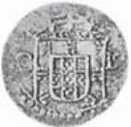
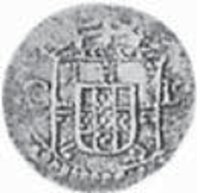
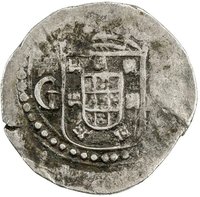
Obverse
Description:
Heraldic emblem
Inscription:
C Lo
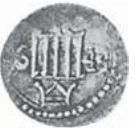
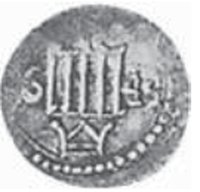
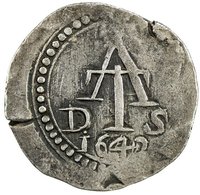
Reverse
Description:
Football
Inscription:
16 44
Edge
Plain
Mintings
| Year | Mint Mark | Mintage | Quality | Collection |
|---|---|---|---|---|
| 1644 | — | — |
Historical background
In 1644, Ceylon (modern Sri Lanka) was a fractured and contested island, with its currency situation reflecting its complex political geography. The interior Kingdom of Kandy, ruled by Sinhalese monarchs, maintained a traditional economy. Here, transactions were often conducted through barter or using small, denomination-less lareens (silver pieces) and gold fanams, which were valued by weight and purity rather than as standardized coins. The Kandyan economy was largely insular, with these physical bullion coins serving both local trade and the kingdom's external commerce, particularly in cinnamon.
Meanwhile, the coastal lowlands were under the tightening grip of the Dutch East India Company (VOC), which had begun displacing the Portuguese. The VOC aggressively imposed a monetary system to control trade and extract profit. They introduced a variety of foreign coins into circulation, most notably Spanish reales (pieces of eight) and Dutch rixdollars, declaring their official exchange rates. The VOC's primary objective was to monopolise the island's lucrative spice trade, particularly cinnamon, and their currency policies were designed to streamline tax collection, pay local labour, and dominate all commercial transactions in their territories.
This created a dual monetary environment. In the VOC ports like Colombo and Galle, trade was increasingly monetised and controlled by Company ledgers, while the Kandyan highlands operated on a more ancient, bullion-based system. Tensions arose at the intersections, such as in border markets, where the value of coins fluctuated based on political influence and silver content. Furthermore, the VOC frequently faced shortages of coinage, leading to the use of promissory notes and barter even within their own settlements, illustrating that their desired monetary control in 1644 was still an ongoing project rather than a fully realised system.
Meanwhile, the coastal lowlands were under the tightening grip of the Dutch East India Company (VOC), which had begun displacing the Portuguese. The VOC aggressively imposed a monetary system to control trade and extract profit. They introduced a variety of foreign coins into circulation, most notably Spanish reales (pieces of eight) and Dutch rixdollars, declaring their official exchange rates. The VOC's primary objective was to monopolise the island's lucrative spice trade, particularly cinnamon, and their currency policies were designed to streamline tax collection, pay local labour, and dominate all commercial transactions in their territories.
This created a dual monetary environment. In the VOC ports like Colombo and Galle, trade was increasingly monetised and controlled by Company ledgers, while the Kandyan highlands operated on a more ancient, bullion-based system. Tensions arose at the intersections, such as in border markets, where the value of coins fluctuated based on political influence and silver content. Furthermore, the VOC frequently faced shortages of coinage, leading to the use of promissory notes and barter even within their own settlements, illustrating that their desired monetary control in 1644 was still an ongoing project rather than a fully realised system.
✨ Legendary