

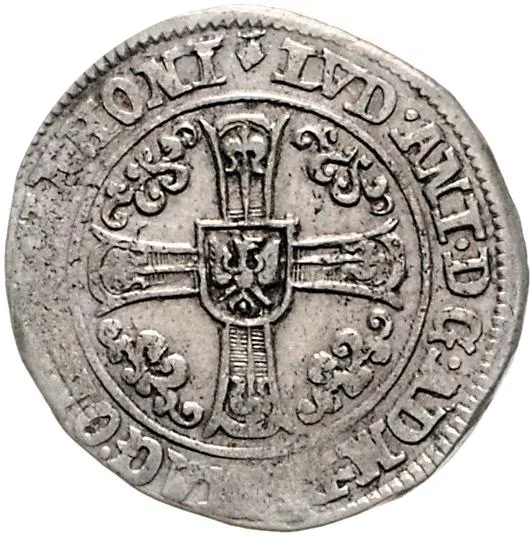
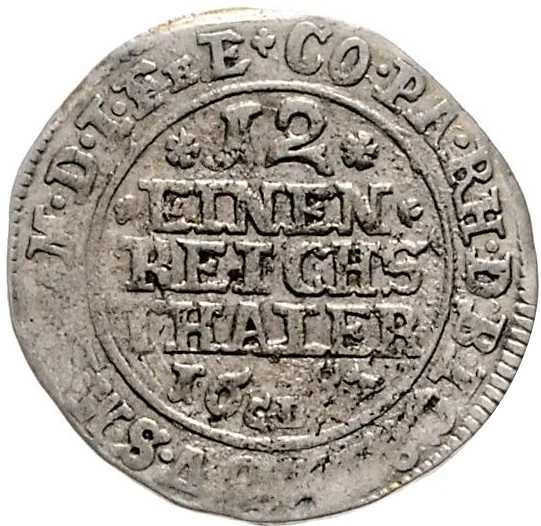
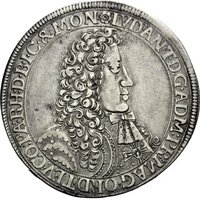
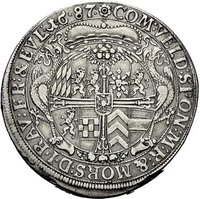
1⁄12 Thaler – Teutonic Order
Germany

Mintings
| Year | Mint Mark | Mintage | Quality | Collection |
|---|---|---|---|---|
| 1687 | CB | — | ||
| 1688 | CB | — |
Historical background
In 1687, the currency situation within the Teutonic Order State was one of profound complexity and instability, reflecting the Order's diminished political and economic power. The state, a relic of the medieval crusading era, now consisted primarily of scattered territories in the Holy Roman Empire, notably around Mergentheim, following the loss of its Prussian heartland over two centuries prior. Its monetary system was not autonomous but was deeply entangled within the sprawling and fragmented currency landscape of the German Empire, where hundreds of mints issued coins of varying standards. The Order’s own limited minting activity was largely symbolic, and daily transactions were dominated by a bewildering array of circulating foreign coins, primarily from neighboring German principalities.
This monetary fragmentation created chronic problems for trade and administration. The value of coins depended not only on their metallic content (often debased by princes seeking profit) but also on fluctuating exchange rates between different Kipper- und Wipperzeit era currencies. The Order’s treasury had to constantly reckon with Reichstalers, Guldens, Kreuzers, and Groschens from dozens of different issuers, making tax collection and financial planning exceptionally difficult. Furthermore, the state’s limited resources meant it lacked the coercive power to enforce a uniform monetary standard across its own small, non-contiguous domains.
Consequently, the financial posture of the Teutonic Order in 1687 was one of defensive management rather than sovereign control. Its efforts focused on meticulously assaying and valuing incoming coinage to prevent losses, publishing exchange rate tables for its officials, and attempting to maintain the integrity of its own ceremonial coinage. The currency chaos mirrored the Order's broader status: a once-mighty institution now surviving as a minor imperial knightly corporation, navigating an economic environment it could no longer command but had to painstakingly navigate for its very sustenance.
This monetary fragmentation created chronic problems for trade and administration. The value of coins depended not only on their metallic content (often debased by princes seeking profit) but also on fluctuating exchange rates between different Kipper- und Wipperzeit era currencies. The Order’s treasury had to constantly reckon with Reichstalers, Guldens, Kreuzers, and Groschens from dozens of different issuers, making tax collection and financial planning exceptionally difficult. Furthermore, the state’s limited resources meant it lacked the coercive power to enforce a uniform monetary standard across its own small, non-contiguous domains.
Consequently, the financial posture of the Teutonic Order in 1687 was one of defensive management rather than sovereign control. Its efforts focused on meticulously assaying and valuing incoming coinage to prevent losses, publishing exchange rate tables for its officials, and attempting to maintain the integrity of its own ceremonial coinage. The currency chaos mirrored the Order's broader status: a once-mighty institution now surviving as a minor imperial knightly corporation, navigating an economic environment it could no longer command but had to painstakingly navigate for its very sustenance.
✨ Legendary