

1⁄24 Thaler – Swedish dominion of Pomerania
Sweden
Context
Years: 1685–1688
Country: Sweden 
Issuer: Swedish dominion of Pomerania
Ruler: Charles XI
Currency:
(1630—1815)
Demonetized: Yes
References
KM: #Click to copy to clipboard302.2
Numista: #137424
Value
Bullion value: $4.58
Obverse
Description:
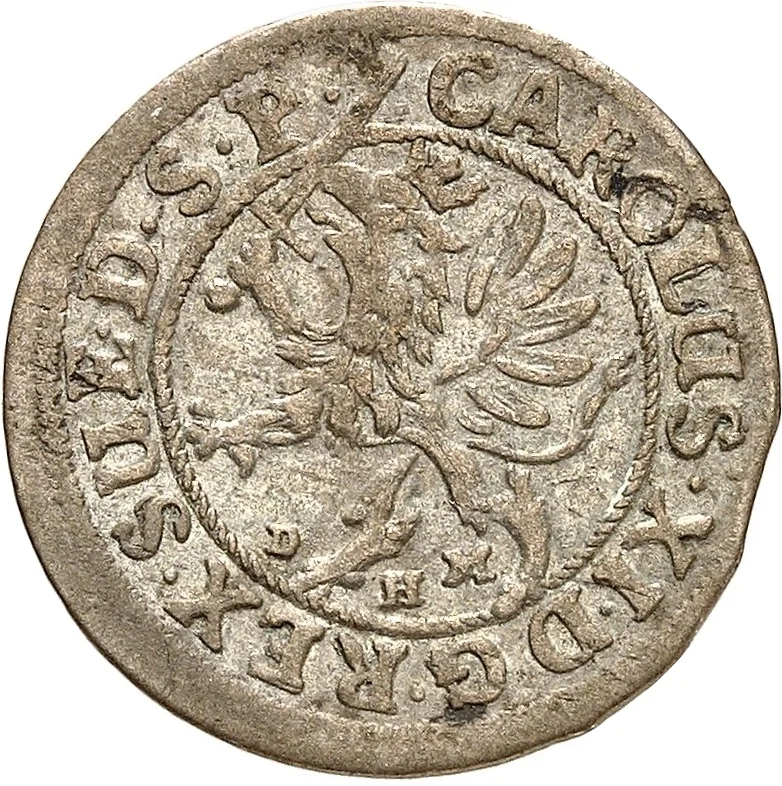
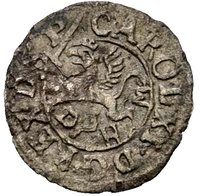
Crowned griffin left, sword in grasp, mintmaster's initials below.
Script: Latin
Reverse
Description:
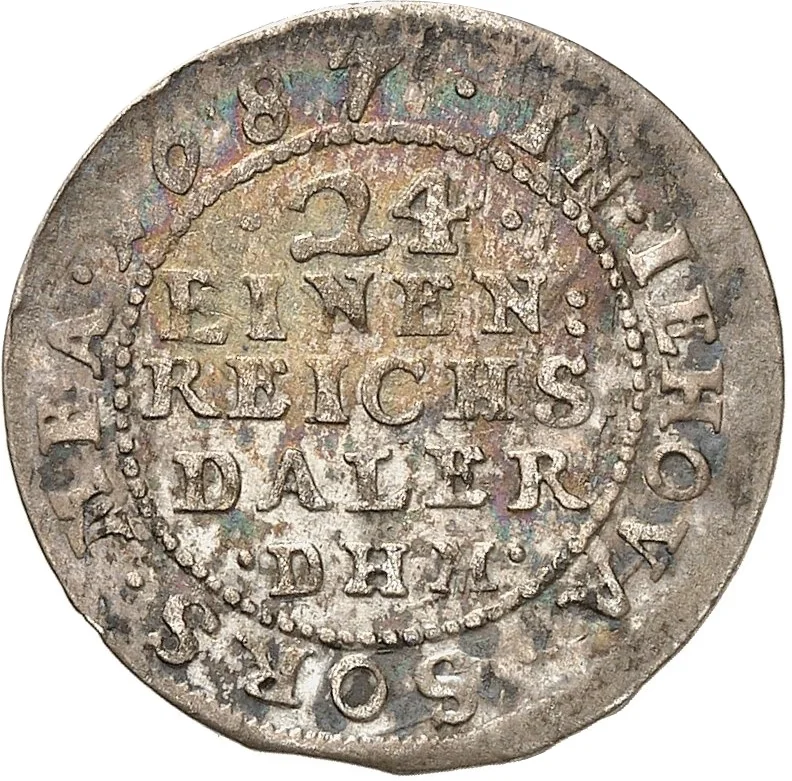
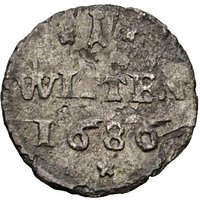
Five-line description.
Script: Latin
Edge
Mintings
| Year | Mint Mark | Mintage | Quality | Collection |
|---|---|---|---|---|
| 1685 | DHM | — | ||
| 1687 | DHM | — | ||
| 1688 | DHM | — |
Historical background
In 1685, the currency situation in Swedish Pomerania was complex and challenging, reflecting the territory's position as a geopolitical and economic crossroads. The province, a remnant of Sweden's gains in the Thirty Years' War, operated within a dual monetary system. Officially, the Swedish government attempted to impose its own national currency, the Swedish klipping and öre, for administrative and military payments, particularly to sustain the vital garrison at Stettin. However, these often debased Swedish coins circulated alongside a plethora of other currencies, primarily the ubiquitous German Reichsthaler and regional Gulden, which were preferred for local and regional trade.
This monetary duality created persistent instability and confusion. The intrinsic value of the various coins in circulation—including Dutch, Danish, and Polish issues—fluctuated constantly, leading to widespread discounting and exchange disputes. The Swedish authorities struggled to enforce fixed exchange rates between their own coinage and the stronger, more trusted Reichsthaler, a problem exacerbated by the practice of "crying up" or "crying down" coins. Furthermore, the need to finance the local military establishment often led to the issuance of low-quality Klippen (emergency coinage), which further eroded public trust in the official Swedish money.
Consequently, the economy of Swedish Pomerania in this period was characterized by a fragmented and inefficient monetary landscape. Merchants and the public had to navigate a daily reality of multiple valuation scales, fostering an environment ripe for arbitrage and financial uncertainty. This situation undermined both local commerce and Swedish fiscal control, highlighting the difficulties of administering a German territory within the Swedish empire while integrated into the broader economic sphere of the Holy Roman Empire. The state's inability to monopolize the currency system remained a persistent weakness in its governance of the dominion.
This monetary duality created persistent instability and confusion. The intrinsic value of the various coins in circulation—including Dutch, Danish, and Polish issues—fluctuated constantly, leading to widespread discounting and exchange disputes. The Swedish authorities struggled to enforce fixed exchange rates between their own coinage and the stronger, more trusted Reichsthaler, a problem exacerbated by the practice of "crying up" or "crying down" coins. Furthermore, the need to finance the local military establishment often led to the issuance of low-quality Klippen (emergency coinage), which further eroded public trust in the official Swedish money.
Consequently, the economy of Swedish Pomerania in this period was characterized by a fragmented and inefficient monetary landscape. Merchants and the public had to navigate a daily reality of multiple valuation scales, fostering an environment ripe for arbitrage and financial uncertainty. This situation undermined both local commerce and Swedish fiscal control, highlighting the difficulties of administering a German territory within the Swedish empire while integrated into the broader economic sphere of the Holy Roman Empire. The state's inability to monopolize the currency system remained a persistent weakness in its governance of the dominion.
✨ Legendary