

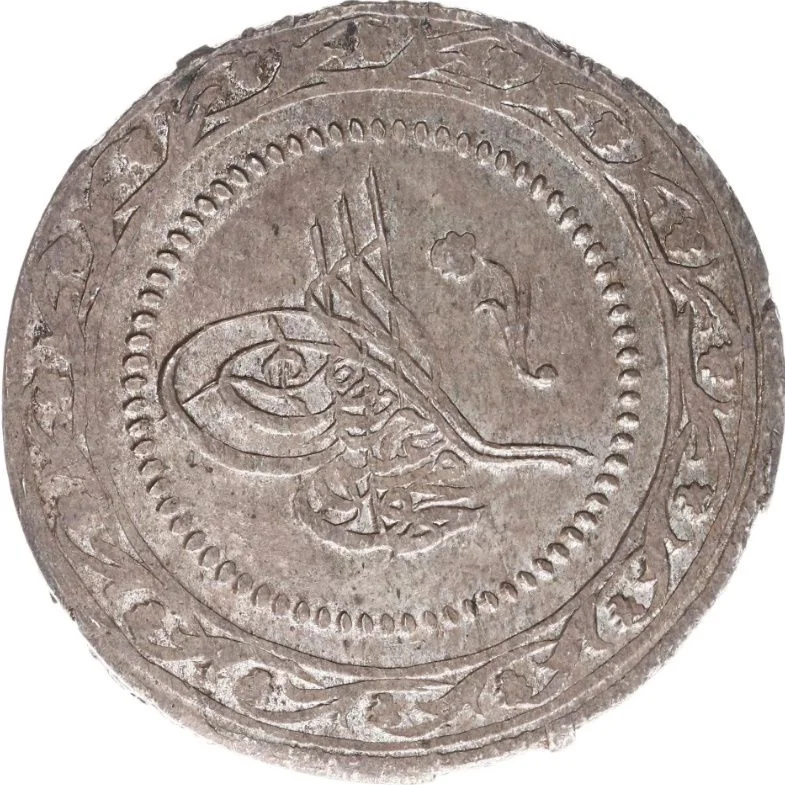
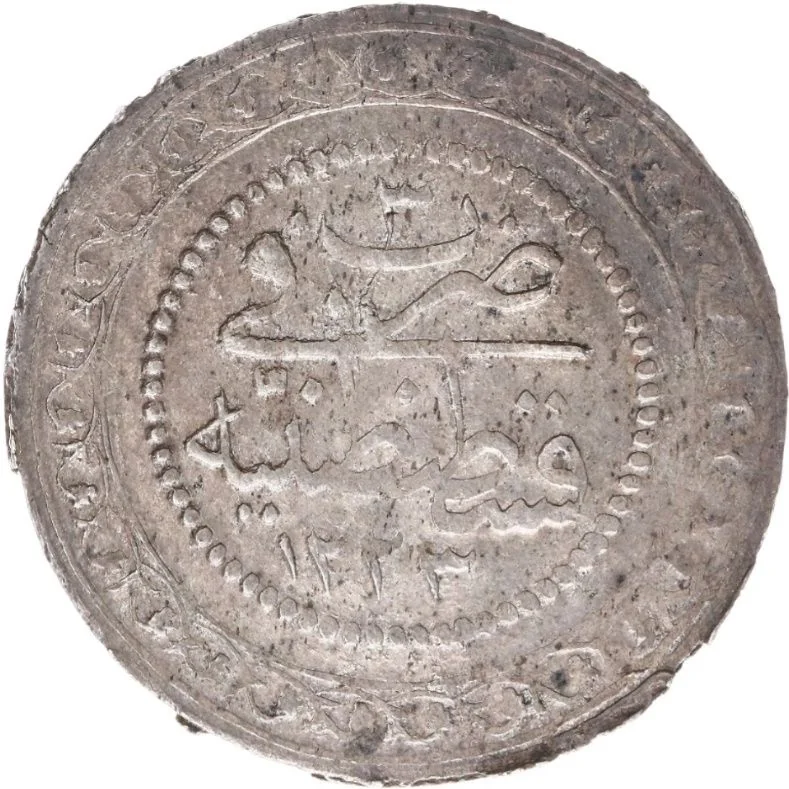
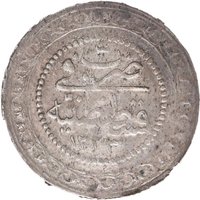
1 Kuruş – Ottoman Empire
Turkey
Context
Year: 1223
Country: Turkey 
Issuer: Ottoman Empire
Ruler: Mahmud II
Currency:
(1688—1844)
Demonetized: Yes
Material
Diameter: 29 mm
Weight: 5 g
Silver weight: 3.65 g
Shape: Irregular round
Composition: 73% Silver
Magnetic: No
Technique: Hammered
Alignment: Medal alignment
flip
References
KM: #Click to copy to clipboard562
Numista: #103420
Value
Bullion value: $10.61
Mints
| Name | Mark |
|---|---|
| Constantinople | — |
Mintings
| Year | Mint Mark | Mintage | Quality | Collection |
|---|---|---|---|---|
| 1223 | 3 | — |
Historical background
The year 1223 (corresponding to AH 620) falls within the late Seljuk period in Anatolia, not the Ottoman era. The Ottoman Beylik was not founded until around 1299, and the first Ottoman coinage would not appear until the reign of Orhan Gazi in the early 14th century. Therefore, discussing an "Ottoman Empire" currency situation in 1223 is anachronistic. The Anatolian political landscape at that time was dominated by the Sultanate of Rum (the Seljuks of Anatolia), a successor state to the Great Seljuk Empire, along with various other Turkish beyliks and Byzantine territories.
In the Seljuk Sultanate of Rum of the early 13th century, the currency system was complex and diverse. The primary coin was the silver dirham, but the most prestigious and internationally traded unit was the gold dinar. High-value commerce and state treasuries also relied on the mithqal, a unit of weight for gold. The coinage reflected the political reality, often bearing the names of the reigning Seljuk sultan (like Kayqubad I, who was a contemporary ruler) and the Abbasid Caliph in Baghdad, acknowledging religious suzerainty. Alongside official Seljuk mintings, coins from the Byzantine Empire, the Crusader states, Italian merchant republics like Genoa and Venice, and other Islamic realms circulated widely, creating a multi-currency environment.
This period, just before the Mongol invasions that would critically weaken the Seljuks after the Battle of Köse Dağ in 1243, was one of relative economic prosperity and flourishing trade along the Silk Road routes through Anatolia. The stability under strong sultans like Kayqubad I allowed for a reliable and respected coinage. The monetary fragmentation and the power vacuum that followed the Mongol ascendancy would later be key factors enabling the rise of small frontier beyliks, including the Ottomans, who would eventually develop their own unified currency system to consolidate power.
In the Seljuk Sultanate of Rum of the early 13th century, the currency system was complex and diverse. The primary coin was the silver dirham, but the most prestigious and internationally traded unit was the gold dinar. High-value commerce and state treasuries also relied on the mithqal, a unit of weight for gold. The coinage reflected the political reality, often bearing the names of the reigning Seljuk sultan (like Kayqubad I, who was a contemporary ruler) and the Abbasid Caliph in Baghdad, acknowledging religious suzerainty. Alongside official Seljuk mintings, coins from the Byzantine Empire, the Crusader states, Italian merchant republics like Genoa and Venice, and other Islamic realms circulated widely, creating a multi-currency environment.
This period, just before the Mongol invasions that would critically weaken the Seljuks after the Battle of Köse Dağ in 1243, was one of relative economic prosperity and flourishing trade along the Silk Road routes through Anatolia. The stability under strong sultans like Kayqubad I allowed for a reliable and respected coinage. The monetary fragmentation and the power vacuum that followed the Mongol ascendancy would later be key factors enabling the rise of small frontier beyliks, including the Ottomans, who would eventually develop their own unified currency system to consolidate power.
💎 Extremely Rare