

1 Ducat – Swedish dominion of Pomerania
Sweden
Context
Year: 1682
Country: Sweden 
Issuer: Swedish dominion of Pomerania
Ruler: Charles XI
Currency:
(1630—1815)
Demonetized: Yes
References
KM: #Click to copy to clipboard257.4
Numista: #137080
Value
Bullion value: $568.82
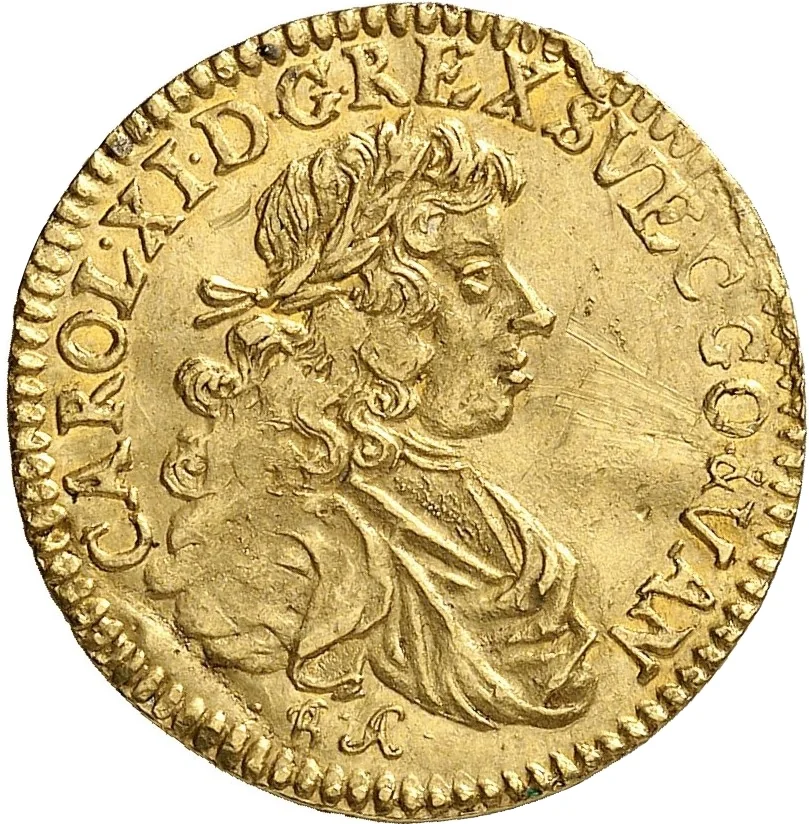
Obverse
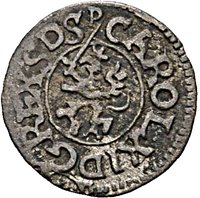
Description:
Laureate bust right.
Inscription:
CAROL . XI . D . G . REX SVEC GO . & VAN
Script: Latin
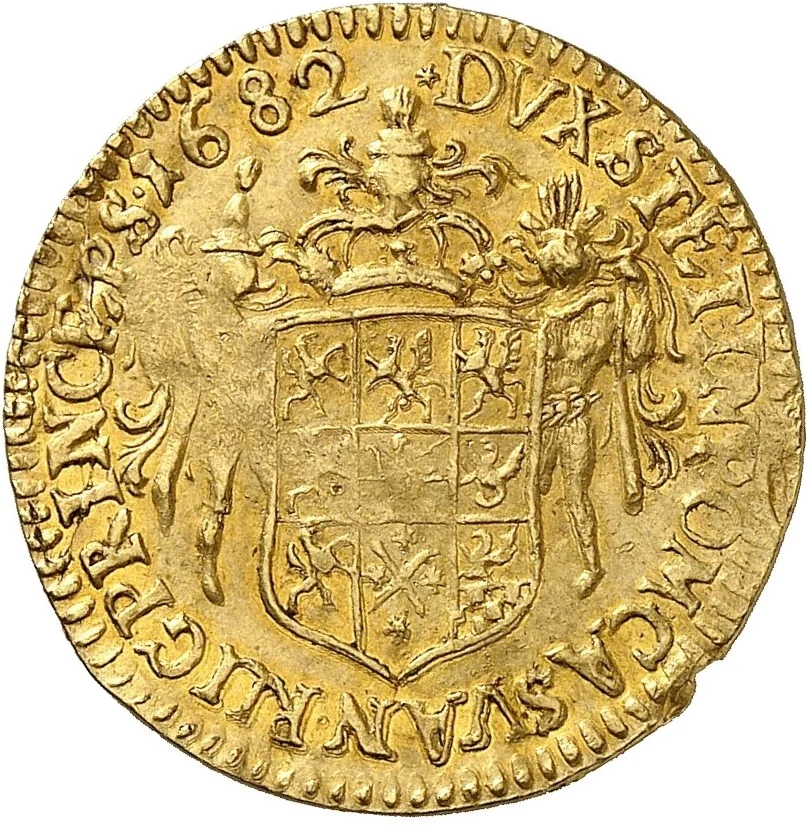
Reverse
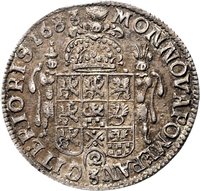
Description:
Arms with crowned helm and flanking supporters.
Inscription:
DVX STETIN POM CAS . VAN . RUG PRINCEPS . 1682
Script: Latin
Edge
Mintings
| Year | Mint Mark | Mintage | Quality | Collection |
|---|---|---|---|---|
| 1682 | BA | — |
Historical background
In 1682, the currency situation in Swedish Pomerania was complex and challenging, reflecting the territory's position as a Swedish dominion within the Holy Roman Empire. The province operated within a multi-layered monetary system where Swedish coinage, local Pomeranian issues, and a flood of circulating currencies from neighbouring German states all competed. This created chronic instability, as the relative values of these coins fluctuated constantly, facilitating arbitrage and confusing commerce. The primary unit of account was the Pomeranian mark, divided into 48 shillings, but actual physical coins included Swedish riksdalers, öre, and a plethora of German thalers, groschen, and pfennigs.
The core problem was severe debasement and a shortage of high-quality specie. The Swedish government, needing revenue for its military and central treasury, often manipulated the currency. They periodically recalled coins, re-minted them with lower precious metal content, and profited from the seigniorage, a practice that eroded public trust. Furthermore, the territory was inundated with inferior foreign coins, as neighbouring states dumped their debased currency into the Pomeranian economy, exacerbating inflation and making everyday transactions difficult for the population.
Swedish authorities attempted to exert control through monetary ordinances that set exchange rates and banned certain foreign coins, but enforcement was difficult. The situation in 1682 was therefore one of fragmented monetary sovereignty, where official policy struggled against market forces and regional economic integration. This instability hampered trade and tax collection, posing a persistent administrative and economic problem for Stockholm's rule over its German possession.
The core problem was severe debasement and a shortage of high-quality specie. The Swedish government, needing revenue for its military and central treasury, often manipulated the currency. They periodically recalled coins, re-minted them with lower precious metal content, and profited from the seigniorage, a practice that eroded public trust. Furthermore, the territory was inundated with inferior foreign coins, as neighbouring states dumped their debased currency into the Pomeranian economy, exacerbating inflation and making everyday transactions difficult for the population.
Swedish authorities attempted to exert control through monetary ordinances that set exchange rates and banned certain foreign coins, but enforcement was difficult. The situation in 1682 was therefore one of fragmented monetary sovereignty, where official policy struggled against market forces and regional economic integration. This instability hampered trade and tax collection, posing a persistent administrative and economic problem for Stockholm's rule over its German possession.
✨ Legendary