

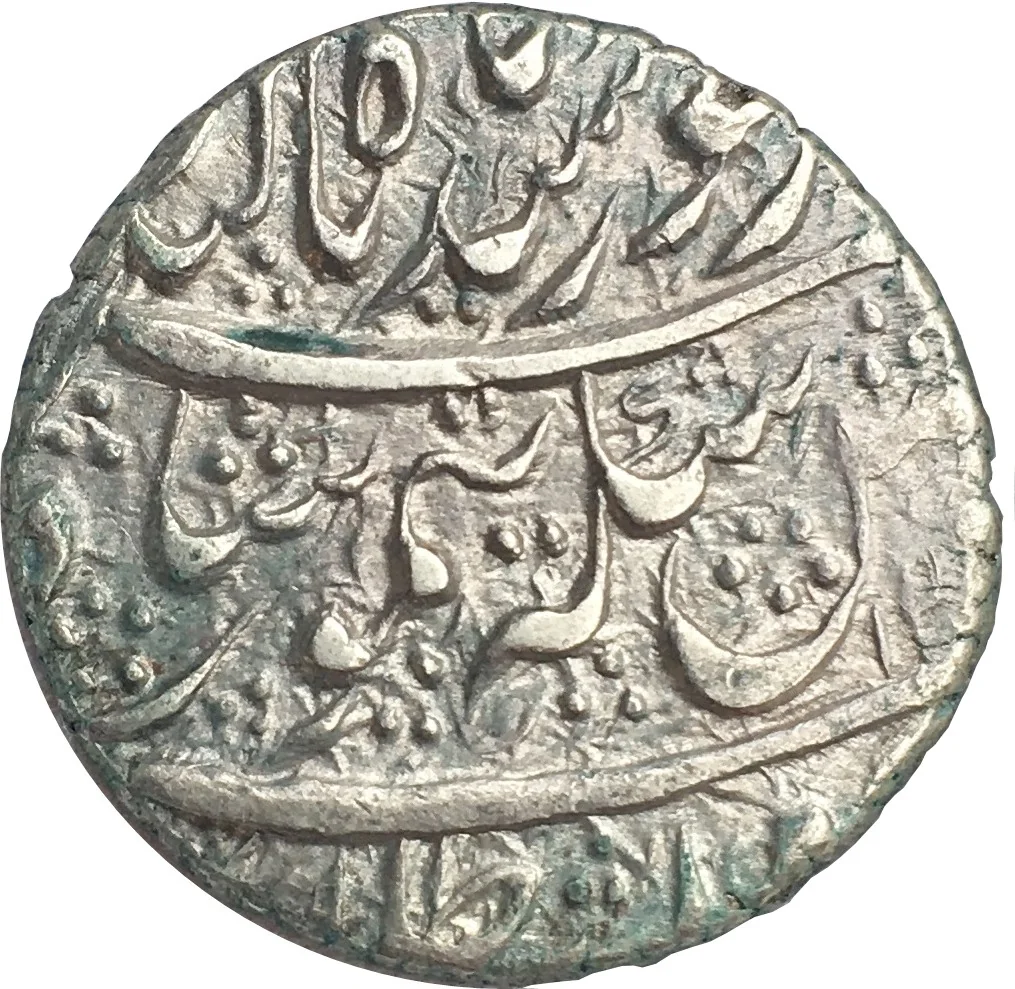
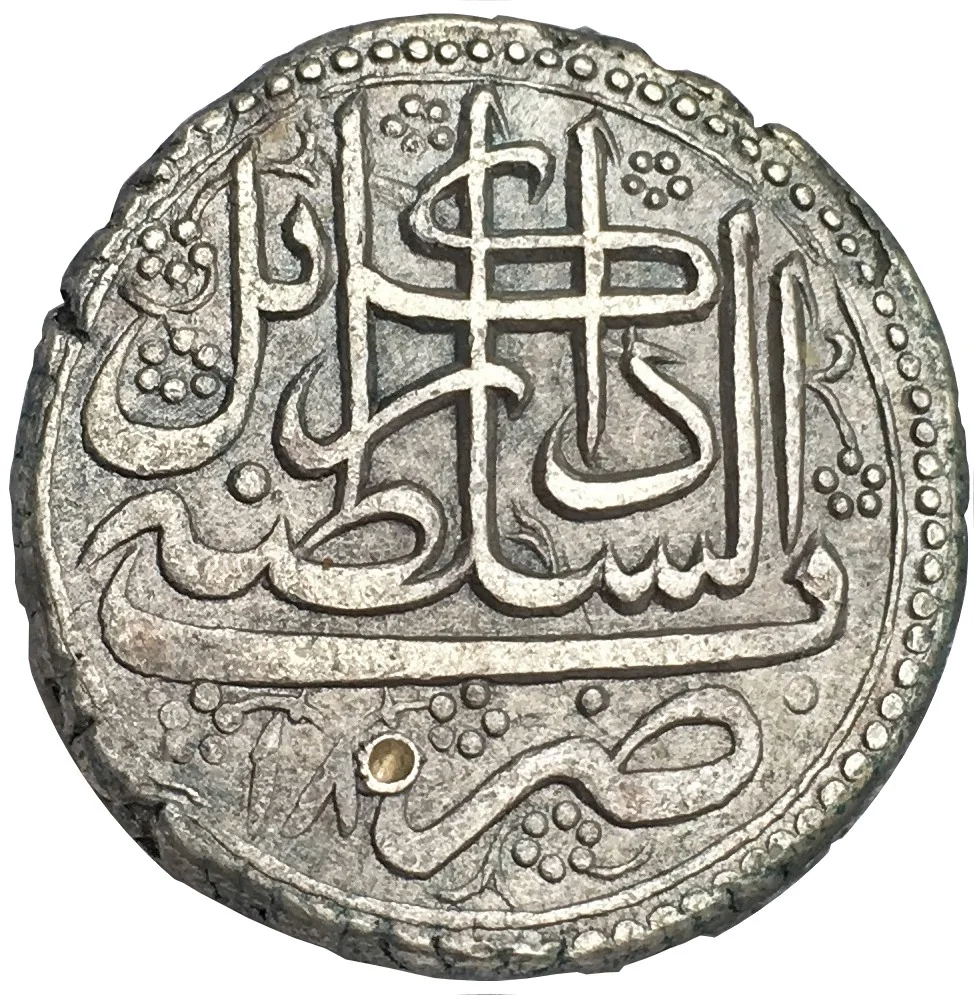
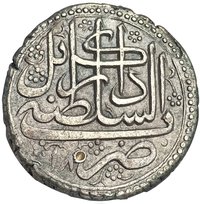
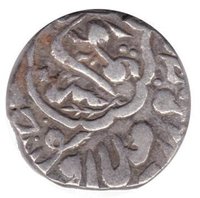
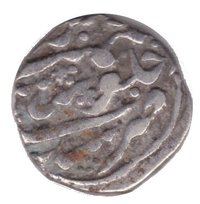
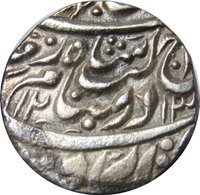
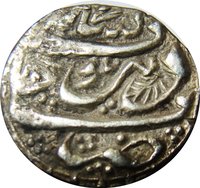
1 Rupee – Afghanistan
Afghanistan
Context
Material
Diameter: 24 mm
Weight: 11.47 g
Silver weight: 11.47 g
Shape: Irregular round
Composition: Silver
Magnetic: No
Alignment: Medal alignment
flip
References
KM: #Click to copy to clipboard433.4
Numista: #135717
Value
Bullion value: $33.33
Mints
| Name | Mark |
|---|---|
| Kabul | — |
Mintings
| Year | Mint Mark | Mintage | Quality | Collection |
|---|---|---|---|---|
| 1790 | — | — | ||
| 1791 | — | — | ||
| 1792 | — | — | ||
| 1793 | — | — |
Historical background
In 1790, the currency situation in Afghanistan was complex and fragmented, reflecting the decentralized political landscape of the Durrani Empire. Following the death of Ahmad Shah Durrani in 1772, the empire was in a state of gradual dissolution, with various provinces and cities under the control of competing heirs and local khans. There was no single, unified monetary system. Instead, currency issuance was largely localized, with major mint cities like Kabul, Kandahar, Herat, and Peshawar producing their own coins, primarily silver rupees and gold mohurs, often bearing the name of the current ruler, Timur Shah Durrani (r. 1772–1793).
The primary circulating coin was the silver rupee, but its weight, purity, and design could vary significantly between mints. These coins were hand-struck, leading to irregularities, and their value was intrinsically tied to their precious metal content. Alongside these official issues, older coins from the Mughal Empire and Safavid Persia remained in circulation, as did a variety of regional and foreign currencies due to Afghanistan's position on key trade routes. This created a practical monetary environment where merchants and money-changers (sarrafs) played a crucial role in assessing and exchanging a heterogeneous mix of coins.
This monetary fragmentation mirrored the weakening central authority of the Durrani throne in Kabul. Timur Shah struggled to control the empire's periphery, and local rulers often exercised the right of coinage as a symbol of their autonomy. Consequently, while the rupee was the standard unit of account, the actual currency in use was a diverse and often confusing array of metallic money, with its stability dependent more on the reputation of the specific mint and the prevailing price of silver than on a centralized fiscal policy. The system was functional for local and caravan trade but lacked the uniformity of a strong, centralized state.
The primary circulating coin was the silver rupee, but its weight, purity, and design could vary significantly between mints. These coins were hand-struck, leading to irregularities, and their value was intrinsically tied to their precious metal content. Alongside these official issues, older coins from the Mughal Empire and Safavid Persia remained in circulation, as did a variety of regional and foreign currencies due to Afghanistan's position on key trade routes. This created a practical monetary environment where merchants and money-changers (sarrafs) played a crucial role in assessing and exchanging a heterogeneous mix of coins.
This monetary fragmentation mirrored the weakening central authority of the Durrani throne in Kabul. Timur Shah struggled to control the empire's periphery, and local rulers often exercised the right of coinage as a symbol of their autonomy. Consequently, while the rupee was the standard unit of account, the actual currency in use was a diverse and often confusing array of metallic money, with its stability dependent more on the reputation of the specific mint and the prevailing price of silver than on a centralized fiscal policy. The system was functional for local and caravan trade but lacked the uniformity of a strong, centralized state.
💎 Extremely Rare