Logo Title
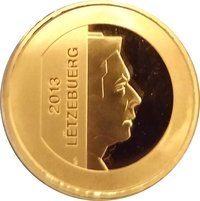
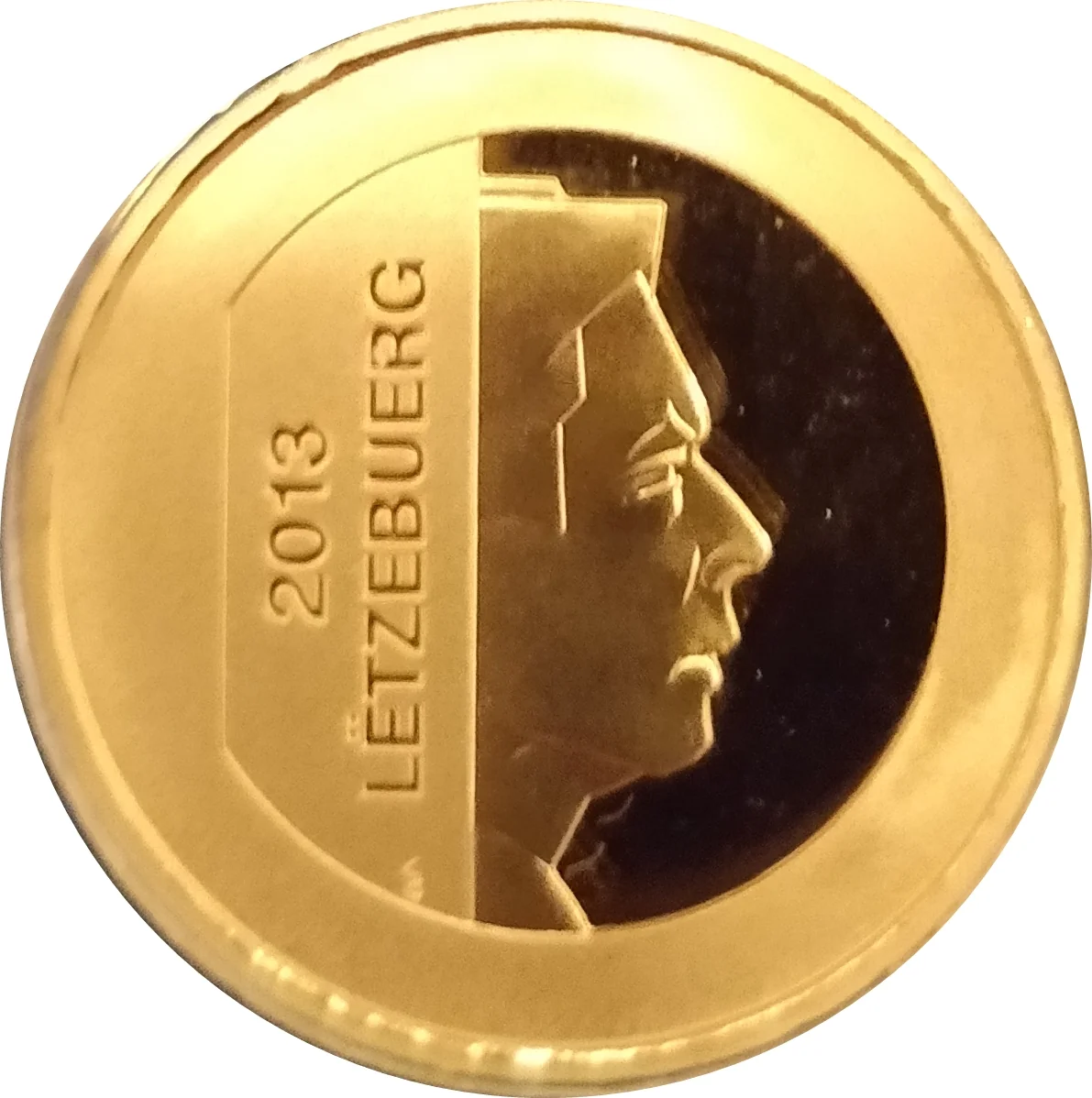
obverse
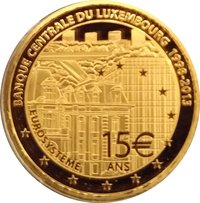
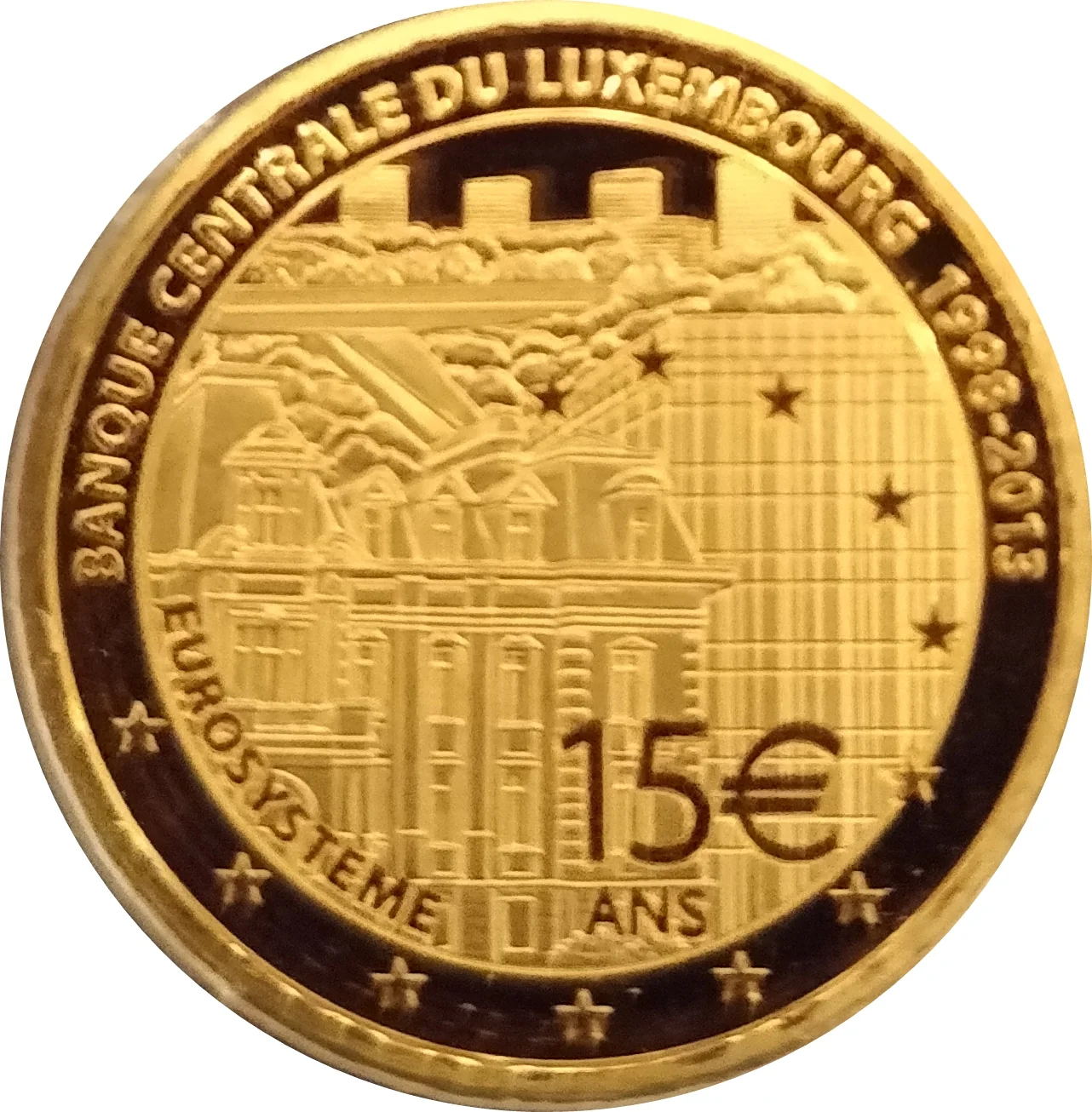
reverse

15 Euro (Central Bank of Luxembourg) – Grand Duchy of Luxembourg

Non-circulating coins
Commemoration: 15th anniversary of the Central Bank of Luxembourg
Luxembourg
Context
Year: 2013
Country: Luxembourg Country flag
Ruler: Henry
Currency:
(since 2002)
Total mintage: 2,000
Material
Diameter: 20 mm
Weight: 6.22 g
Gold weight: 6.21 g
Shape: Round
Composition: 99.9% Gold
Magnetic: No
Technique: Milled
Alignment: Medal alignment
Obverse
OBVERSE ↑
flip
Reverse
REVERSE ↑
References
KM: #Click to copy to clipboard130
Numista: #121014
Value
Exchange value: 15 EUR = $17.72
Bullion value: $1036.05
Inflation-adjusted value: 19.46 EUR

Obverse

Description:
A geometric portrait of Grand Duke Henri appears beside the inscription "LËTZEBUERG 2013".
Inscription:
2013

LËTZEBUERG

GC
Translation:
Grand Duchy of Luxembourg

2013
Script: Latin
Languages: French, Luxembourgish

Reverse

Description:
Central Bank of Luxembourg buildings.
Inscription:
BANQUE CENTRALE DU LUXEMBOURG

EUROSYSTÈME

1998-2013

€ 15

ANS
Translation:
Central Bank of Luxembourg

Eurosystem

1998-2013

€ 15

Years
Script: Latin
Language: French

Edge

Mintings

YearMint MarkMintageQualityCollection
20132,000Proof

Historical background

In 2013, the Grand Duchy of Luxembourg, as a founding member of the Eurozone, had its official currency firmly established as the euro (€), which it adopted at its launch in 1999 (with notes and coins entering circulation in 2002). The country's monetary policy was entirely set by the European Central Bank (ECB), meaning Luxembourg had no independent control over interest rates or money supply. This framework provided significant stability and facilitated seamless trade and financial integration with its neighbours, a critical factor for Luxembourg's export-oriented and financial services-driven economy.

The primary domestic currency focus in 2013 was not on sovereignty but on navigating the ongoing repercussions of the Eurozone debt crisis, which had peaked in the preceding years. Luxembourg, while maintaining a AAA credit rating and robust public finances, was deeply concerned with the stability of the monetary union as a whole. Key issues included participating in European financial stability mechanisms and managing the implications of ECB policies, such as the Outright Monetary Transactions (OMT) program announced in 2012, aimed at preserving the euro. Domestically, authorities continued to emphasize the strength and reputation of Luxembourg's financial centre within the euro framework.

Furthermore, 2013 saw Luxembourg operating within the first full year of the European Stability Mechanism (ESM), headquartered in Luxembourg City. The country's role as a co-guarantor of Eurozone stability, while managing its own banking sector's exposure to troubled Eurozone economies, was a central aspect of its currency reality. Thus, the "currency situation" was defined by proactive European integration and crisis management, rather than any national monetary challenges, solidifying the euro's role as the bedrock of Luxembourg's economic and financial identity.
Legendary