

2 escudos – Spain
Add to wishlist
Spain
Context
Material
Diameter: 22 mm
Weight: 6.8 g
Gold Weight:: 6.24 g
Thickness: 1 mm
Shape: Irregular round
Composition: 91.7% Gold
Magnetic: No
Technique: Hammered
References
KM: #
Numista: #134982
Value
Bullion value: $956.20
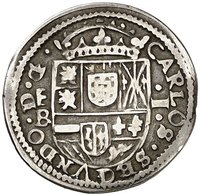
Obverse
Description:
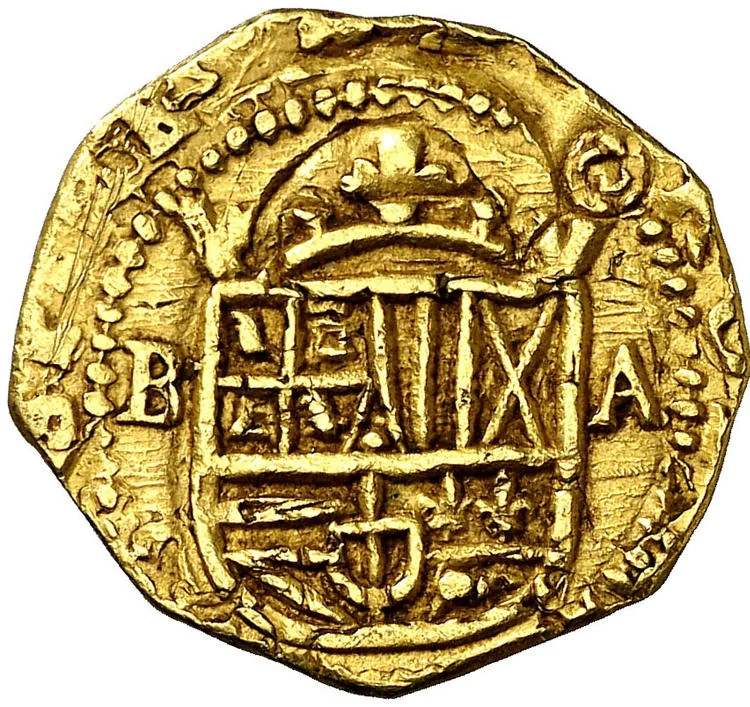
Shield between B and A, crowned.
Inscription:
CAROLVS · II · DEI · GRA
B A
B A
Script: Latin
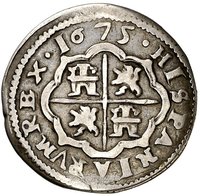
Reverse
Edge
Mints
| Name | Mark |
|---|---|
| Barcelona Mint / La Seca | — |
Mintings
| Year | Mint Mark | Mintage | Quality | Collection |
|---|---|---|---|---|
| 1673 | BA | — | ||
| 1685 | BA | — |
Historical background
In 1673, Spain’s currency system was in a state of profound crisis, a direct consequence of decades of economic mismanagement and the immense fiscal pressures of sustaining its global empire. The crown, under the rule of the physically and politically ailing Charles II, was trapped in a cycle of debt from endless warfare. To meet its obligations, the government repeatedly resorted to debasing the silver real and the widely used copper vellón coinage, flooding the economy with intrinsically worthless currency. This practice, combined with the massive outflow of American silver to pay foreign creditors, created a chaotic monetary environment where the face value of coins bore little relation to their precious metal content, leading to rampant inflation and a severe loss of public confidence.
The situation was characterized by a confusing duality: a "strong" currency of gold and silver for international trade and a "weak" currency of vellón for domestic use. The government attempted drastic measures, such as the failed 1680 decree to demonetize all copper currency, but these only caused greater economic disruption and social unrest. Prices soared, as sellers demanded more devalued coins for goods, and the crown’s own revenues plummeted in real terms, exacerbating the fiscal deficit. This period saw widespread hoarding of older, purer coins (Gresham’s Law in action), further crippling daily commerce and deepening the recession.
Ultimately, the monetary chaos of 1673 was a symptomatic manifestation of Spain’s broader 17th-century decline. It reflected a bankrupt state struggling to maintain its imperial pretensions, an inefficient and rigid economic structure, and the shifting of European financial power northwards to the Netherlands and England. The unstable currency stifled internal trade, discouraged productive investment, and placed a heavy burden on the peasantry and artisans, contributing to the social and economic stagnation that would define the final decades of Habsburg rule in Spain.
The situation was characterized by a confusing duality: a "strong" currency of gold and silver for international trade and a "weak" currency of vellón for domestic use. The government attempted drastic measures, such as the failed 1680 decree to demonetize all copper currency, but these only caused greater economic disruption and social unrest. Prices soared, as sellers demanded more devalued coins for goods, and the crown’s own revenues plummeted in real terms, exacerbating the fiscal deficit. This period saw widespread hoarding of older, purer coins (Gresham’s Law in action), further crippling daily commerce and deepening the recession.
Ultimately, the monetary chaos of 1673 was a symptomatic manifestation of Spain’s broader 17th-century decline. It reflected a bankrupt state struggling to maintain its imperial pretensions, an inefficient and rigid economic structure, and the shifting of European financial power northwards to the Netherlands and England. The unstable currency stifled internal trade, discouraged productive investment, and placed a heavy burden on the peasantry and artisans, contributing to the social and economic stagnation that would define the final decades of Habsburg rule in Spain.
✨ Legendary