

5 lire – Vatican City
Add to wishlist
Circulating commemorative coins
Commemoration: FAO
Vatican City
Context
Year: 1968
Issuer: Vatican City
Ruler: Paul VI
Currency:
(1929—2001)
Demonetization: 2 January 2002
Total mintage: 100,000
Material
References
KM: #
Numista: #12087
Value
Exchange value: 5 VAL
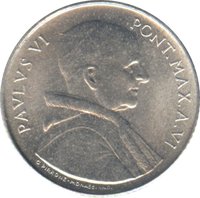
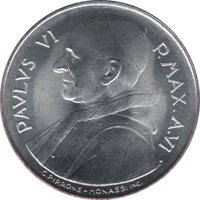
Obverse
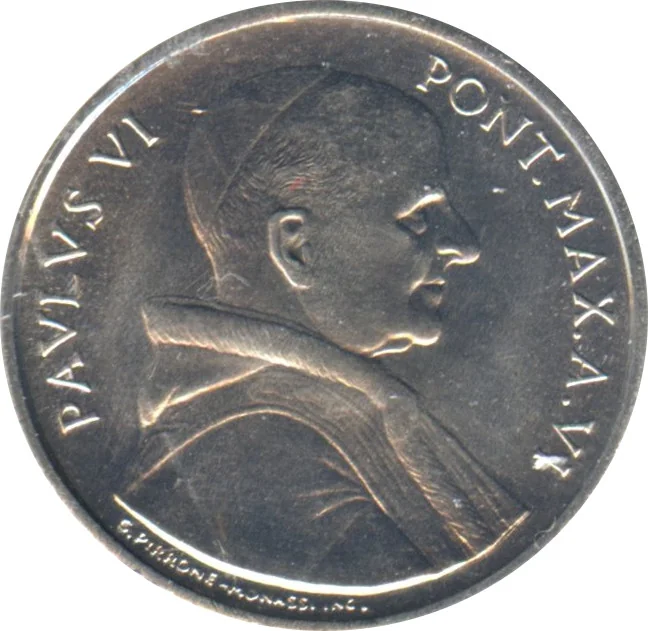
Description:
Get in. Let's go.
Inscription:
PAVLVS VI PONT. MAX. A. VI
Script: Latin
Engraver: Giuseppe Pirrone
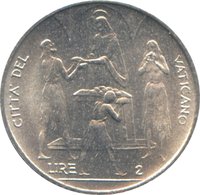
Reverse
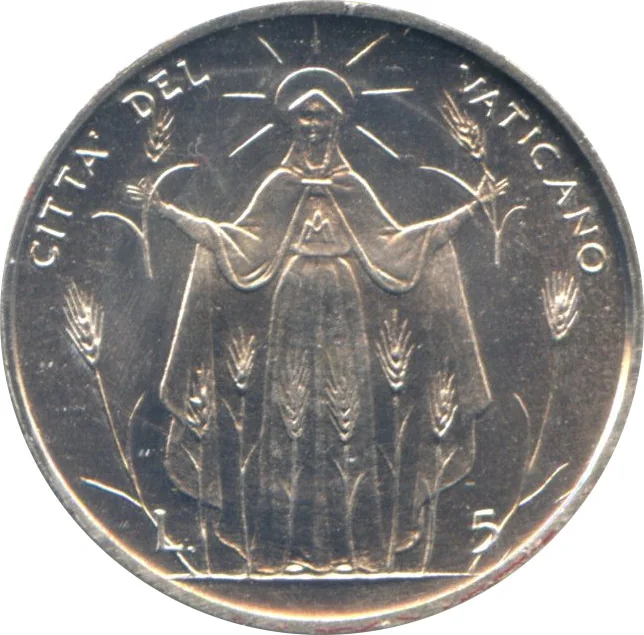
Description:
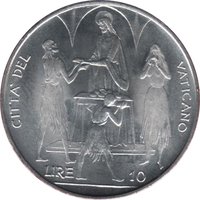
Our Lady of the Harvest encircled by wheat.
Inscription:
CITTA DEL VATICANO
L. 5
L. 5
Translation:
Vatican City
5 Lire
5 Lire
Script: Latin
Language: Italian
Engraver: Giuseppe Pirrone
Edge
Plain
Categories
| Symbol> Allegory |
| Person> Monarch |
| Person> Religious figure |
| Organization> FAO |
| Religion> Religious objects |
Mints
| Name | Mark |
|---|---|
| Rome | — |
Mintings
| Year | Mint Mark | Mintage | Quality | Collection |
|---|---|---|---|---|
| 1968 | — | 100,000 |
Historical background
In 1968, Vatican City’s currency situation was defined by its unique status as a sovereign city-state without an independent monetary system. It operated under a series of international agreements, most notably the Italian-Vatican Monetary Convention of 1929, which was part of the Lateran Treaties establishing the state. This convention granted the Holy See the right to mint its own coinage—the Vatican lira—which was legally equivalent to the Italian lira and circulated at par within Italy. This meant the Vatican lira was pegged to the Italian currency and its value was entirely dependent on the stability of Italy's monetary policy.
The year 1968 fell within a period of relative stability for this arrangement, but it was also the final decade of the Convention's full operation. Vatican coins, minted in limited quantities and featuring distinctive papal portraits and religious iconography, were primarily intended for collectors, pilgrims, and ceremonial purposes rather than for driving the tiny enclave's economy. The city-state's practical daily financial transactions heavily relied on Italian currency, and its budgetary needs were largely met through donations, museum revenues, and investments, rather than through seigniorage from its coinage.
However, underlying pressures were mounting. The post-war economic boom in Italy was giving way to inflationary trends, and the international monetary system was facing the strains that would lead to the collapse of the Bretton Woods system in the early 1970s. While these global shifts did not cause an immediate crisis for the Vatican in 1968, they foreshadowed the end of the 1929 Convention. The agreement would be renegotiated in the 1970s and ultimately replaced in 2000, as Italy adopted the euro, which the Vatican also subsequently adopted under new terms with the European Union.
The year 1968 fell within a period of relative stability for this arrangement, but it was also the final decade of the Convention's full operation. Vatican coins, minted in limited quantities and featuring distinctive papal portraits and religious iconography, were primarily intended for collectors, pilgrims, and ceremonial purposes rather than for driving the tiny enclave's economy. The city-state's practical daily financial transactions heavily relied on Italian currency, and its budgetary needs were largely met through donations, museum revenues, and investments, rather than through seigniorage from its coinage.
However, underlying pressures were mounting. The post-war economic boom in Italy was giving way to inflationary trends, and the international monetary system was facing the strains that would lead to the collapse of the Bretton Woods system in the early 1970s. While these global shifts did not cause an immediate crisis for the Vatican in 1968, they foreshadowed the end of the 1929 Convention. The agreement would be renegotiated in the 1970s and ultimately replaced in 2000, as Italy adopted the euro, which the Vatican also subsequently adopted under new terms with the European Union.
🌱 Common