

½ Guinea – United Kingdom
United Kingdom
Context
Material
References
KM: #Click to copy to clipboard605
Numista: #13153
Value
Bullion value: $641.94
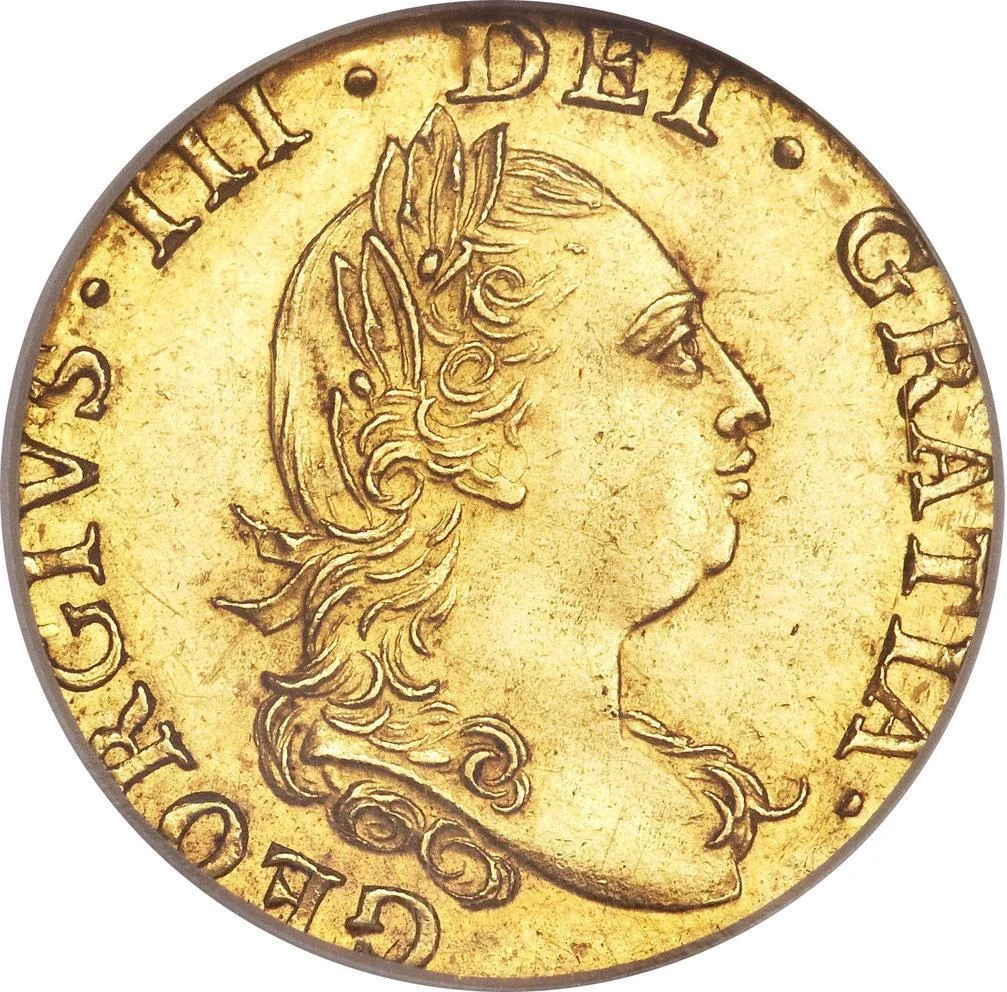
Obverse
Description:
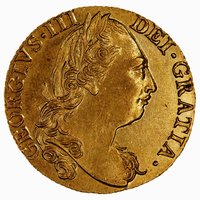
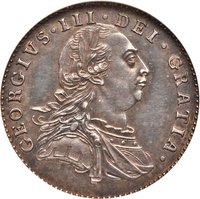
King George III right, legend around.
Inscription:
GEORGIVS·III·DEI·GRATIA·
Script: Latin
Engraver: Thomas Pingo
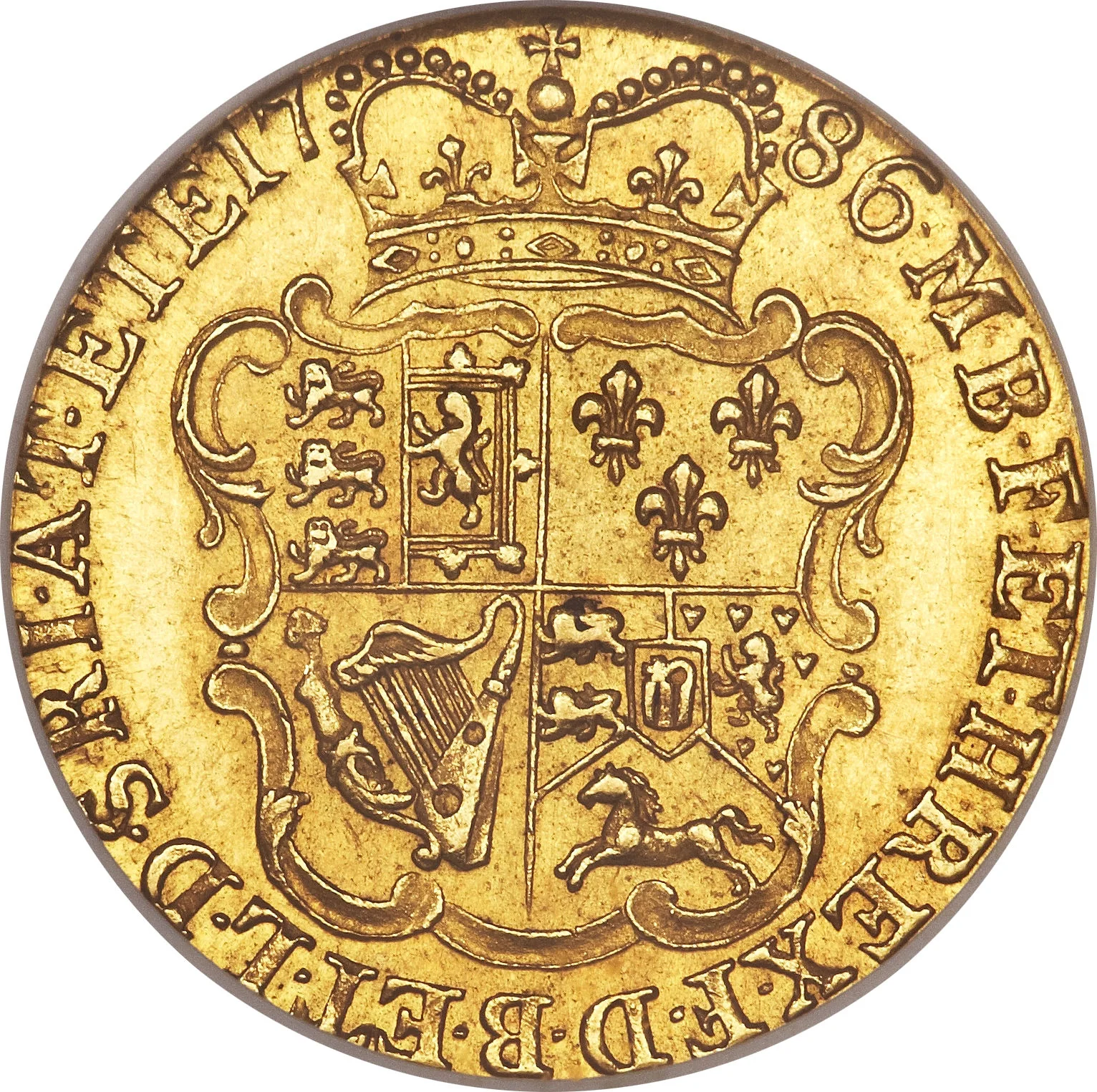
Reverse
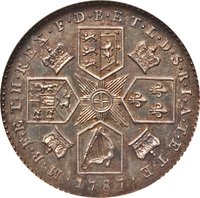
Description:
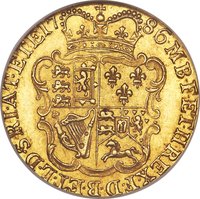
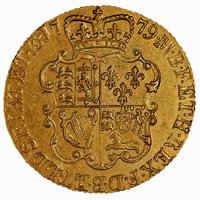
Crowned quartered shield, date above, legend around.
Inscription:
·M·B·F·ET·H·REX·F·D·B·ET·L·D·S·R·I·A·T·ET·E·17 86
Script: Latin
Engraver: John Tanner
Edge
Mintings
| Year | Mint Mark | Mintage | Quality | Collection |
|---|---|---|---|---|
| 1775 | — | — | ||
| 1775 | — | — | Proof | |
| 1776 | — | — | ||
| 1777 | — | — | ||
| 1778 | — | — | ||
| 1779 | — | — | ||
| 1781 | — | — | ||
| 1783 | — | — | ||
| 1784 | — | — | ||
| 1785 | — | — | ||
| 1786 | — | — |
Historical background
In 1775, the currency situation in the United Kingdom was complex, defined by a metallic standard and a chronic shortage of physical coinage for everyday transactions. The official monetary system was based on the pound sterling, a unit of account tied to a specific weight of silver. Gold coins, most notably the guinea (valued at 21 shillings), were also in circulation and played a major role in high-value commerce. However, the supply of official Royal Mint coinage, especially smaller denominations, was insufficient for the needs of a growing industrial and commercial economy, leading to widespread inconvenience.
This scarcity was alleviated by a patchwork of alternative currencies. Locally, traders and merchants issued token coins and promissory notes to facilitate small-scale trade. More significantly, hundreds of private country banks issued their own paper banknotes, which circulated alongside the limited notes of the Bank of England. These private notes were promises to pay the bearer in specie (gold or silver) on demand, but their value and acceptance were entirely dependent on the reputation and solvency of the issuing bank, making them vulnerable to instability.
The system faced underlying strains. The government financed its operations, including looming military expenditures for conflicts like the American Revolutionary War, through borrowing, which increased the national debt. While not yet causing inflation in 1775, this practice placed pressure on the Bank of England's reserves. Furthermore, the entire structure relied on public confidence; any crisis of trust could trigger a "run" on banks as holders rushed to convert paper into precious metal, a recurrent vulnerability in Britain's 18th-century financial system.
This scarcity was alleviated by a patchwork of alternative currencies. Locally, traders and merchants issued token coins and promissory notes to facilitate small-scale trade. More significantly, hundreds of private country banks issued their own paper banknotes, which circulated alongside the limited notes of the Bank of England. These private notes were promises to pay the bearer in specie (gold or silver) on demand, but their value and acceptance were entirely dependent on the reputation and solvency of the issuing bank, making them vulnerable to instability.
The system faced underlying strains. The government financed its operations, including looming military expenditures for conflicts like the American Revolutionary War, through borrowing, which increased the national debt. While not yet causing inflation in 1775, this practice placed pressure on the Bank of England's reserves. Furthermore, the entire structure relied on public confidence; any crisis of trust could trigger a "run" on banks as holders rushed to convert paper into precious metal, a recurrent vulnerability in Britain's 18th-century financial system.
✨ Legendary