

5 guineas – United Kingdom
Add to wishlist
United Kingdom
Context
Material
References
KM: #
Numista: #13124
Value
Bullion value: $5896.77
Obverse
Description:
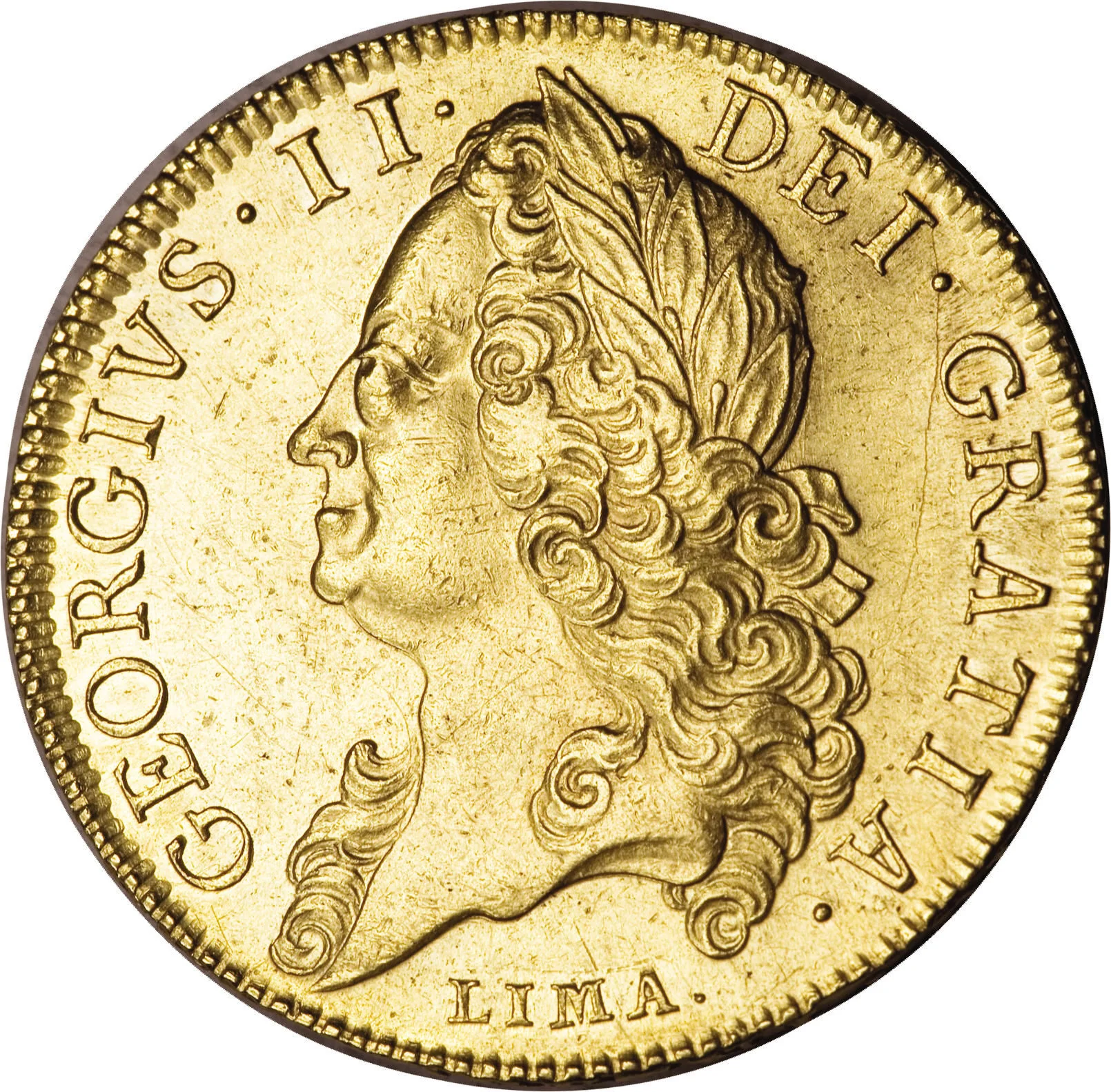
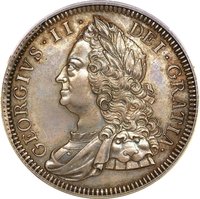
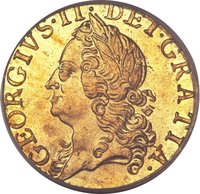
Older portrait of King George II left, legend encircling.
Inscription:
GEORGIUS·II· DEI·GRATIA·
LIMA.
LIMA.
Script: Latin
Engraver: John Tanner
Reverse
Description:
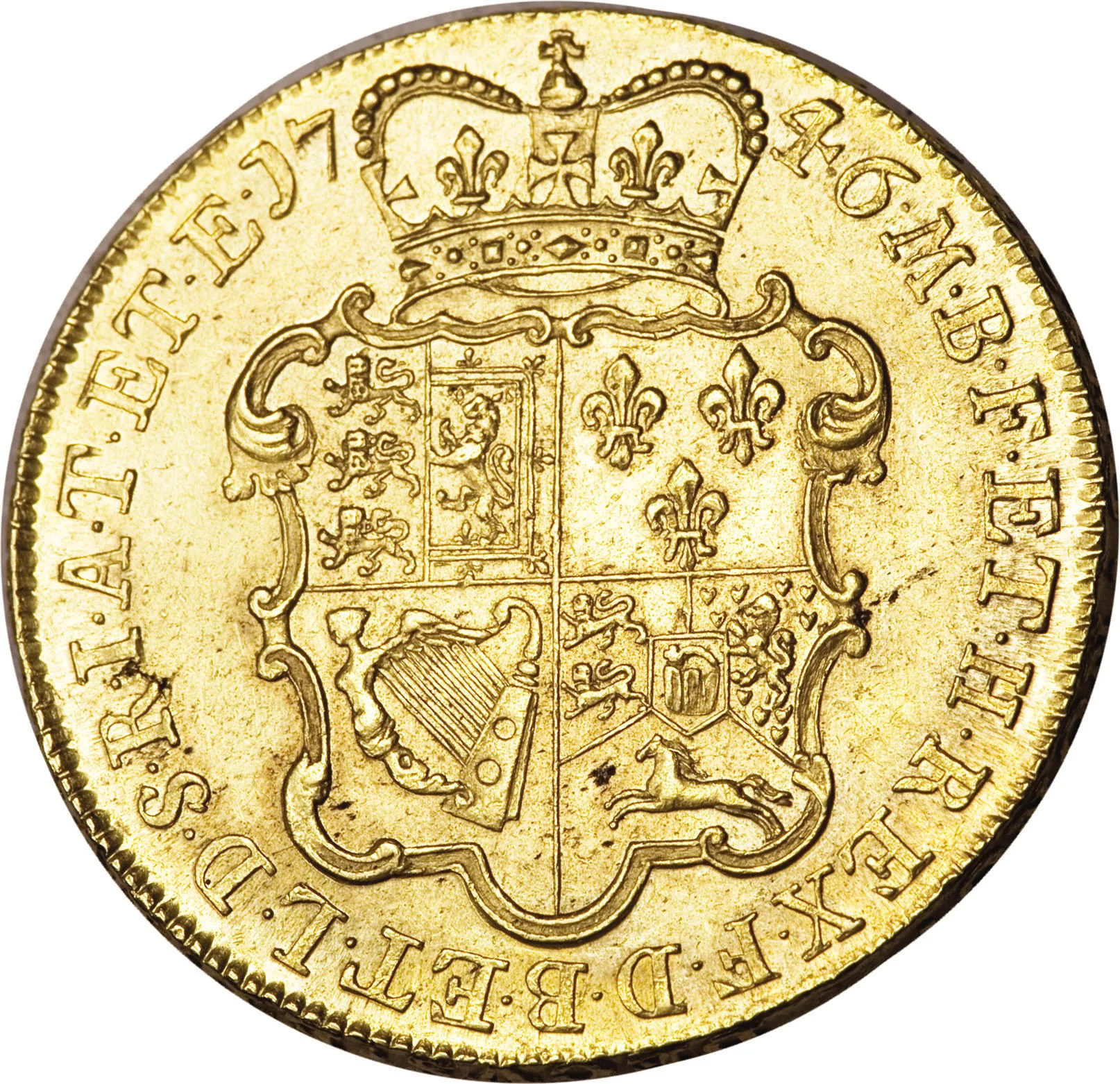
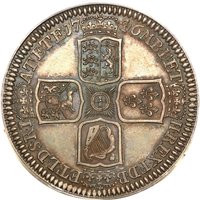
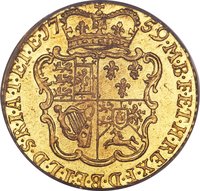
Quartered shield, date above, legend around.
Inscription:
M·B·F·ET·H·REX·F·D·B·ET·L·D·S·R·I·A·T·ET·E·1746·
Script: Latin
Engraver: John Croker
Edge
Inscribed with regnal year in words
Legend:
D. NONO
Mintings
| Year | Mint Mark | Mintage | Quality | Collection |
|---|---|---|---|---|
| 1746 | LIMA | — | BU | |
| 1748 | — | — | ||
| 1753 | — | — |
Historical background
In 1746, the United Kingdom operated under a complex and often chaotic bimetallic system, where both gold and silver were legal tender. The official mint price, set by Sir Isaac Newton as Master of the Mint in 1717, had inadvertently undervalued silver relative to gold. This meant it was more profitable for merchants and traders to export silver bullion to Europe or use it for international trade, leading to a chronic shortage of silver coinage in domestic circulation. Consequently, the everyday currency for most Britons was a motley assortment of worn, clipped, and often counterfeit silver shillings and sixpences, alongside a flood of foreign coins, particularly Spanish dollars and Portuguese moidores, which circulated out of necessity.
The shortage of official coinage was so severe that it stifered everyday commerce and wages. To bridge this gap, a vast array of private token coinage, issued by merchants, towns, and even public houses, was used for small transactions. Furthermore, the financial system was increasingly reliant on paper instruments. The Bank of England, founded in 1694, issued banknotes, but these were largely for high-value transactions among the wealthy and mercantile classes in London. Outside the capital, provincial banknotes began to appear, though trust in them was variable. This created a stark divide between the sophisticated paper-based financial world of the state and commerce and the unreliable, fragmented metallic currency used by the general populace.
The year 1746 itself fell during the War of the Austrian Succession (1740-1748), which placed immense strain on public finances. The government funded the war largely through borrowing, expanding the national debt and further entrenching the role of the Bank of England and London's financial markets. While the war did not directly cause the currency problems, it exacerbated them by increasing the demand for bullion for military spending abroad and distracting from any potential monetary reform. The situation would remain largely unresolved until the Great Recoinage of 1774, which finally addressed the deplorable state of the silver coinage.
The shortage of official coinage was so severe that it stifered everyday commerce and wages. To bridge this gap, a vast array of private token coinage, issued by merchants, towns, and even public houses, was used for small transactions. Furthermore, the financial system was increasingly reliant on paper instruments. The Bank of England, founded in 1694, issued banknotes, but these were largely for high-value transactions among the wealthy and mercantile classes in London. Outside the capital, provincial banknotes began to appear, though trust in them was variable. This created a stark divide between the sophisticated paper-based financial world of the state and commerce and the unreliable, fragmented metallic currency used by the general populace.
The year 1746 itself fell during the War of the Austrian Succession (1740-1748), which placed immense strain on public finances. The government funded the war largely through borrowing, expanding the national debt and further entrenching the role of the Bank of England and London's financial markets. While the war did not directly cause the currency problems, it exacerbated them by increasing the demand for bullion for military spending abroad and distracting from any potential monetary reform. The situation would remain largely unresolved until the Great Recoinage of 1774, which finally addressed the deplorable state of the silver coinage.
✨ Legendary