

½ Guinea – United Kingdom
United Kingdom
Context

Material
References
KM: #Click to copy to clipboard560
Numista: #13090
Value
Bullion value: $643.24
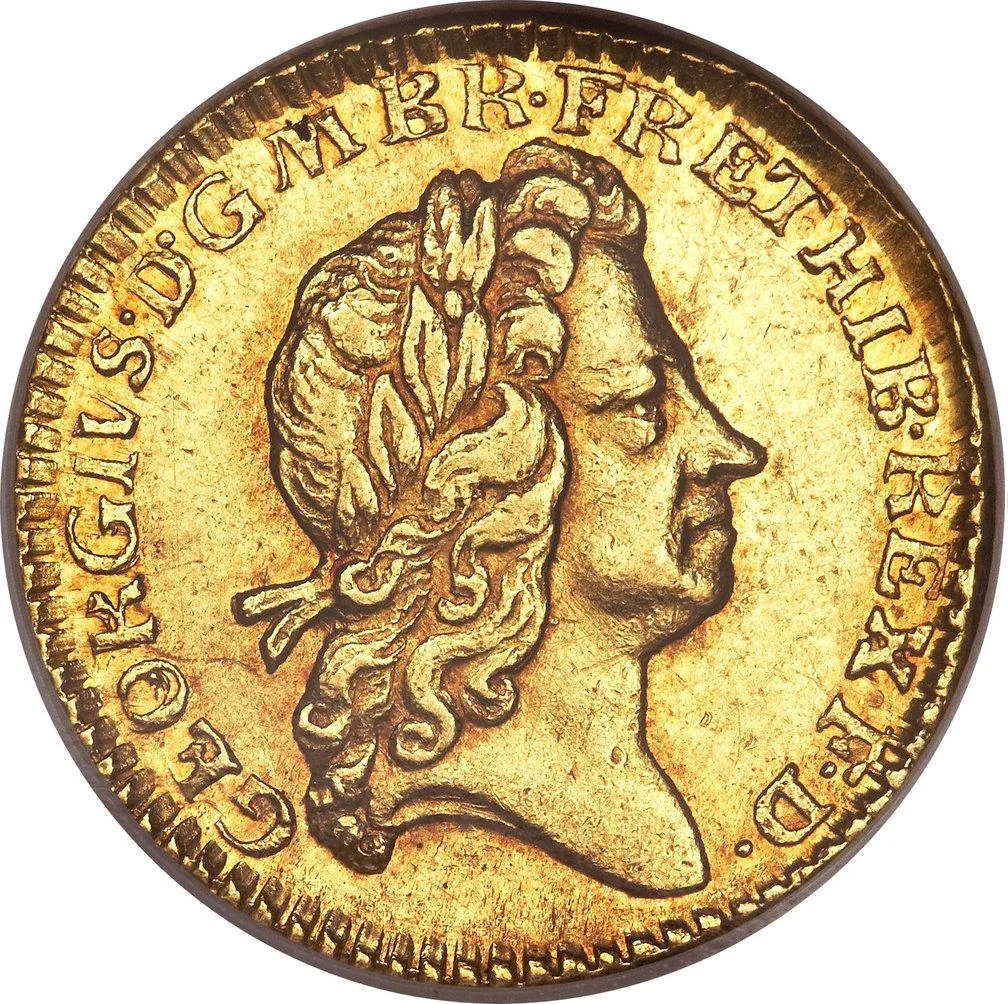
Obverse
Description:
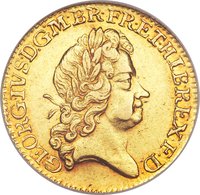
King George I, older portrait facing right, encircled by legend.
Inscription:
GEORGIVS·D:G·M·BR·FR:ET:HIB·REX·F·D·
Script: Latin
Engraver: John Croker
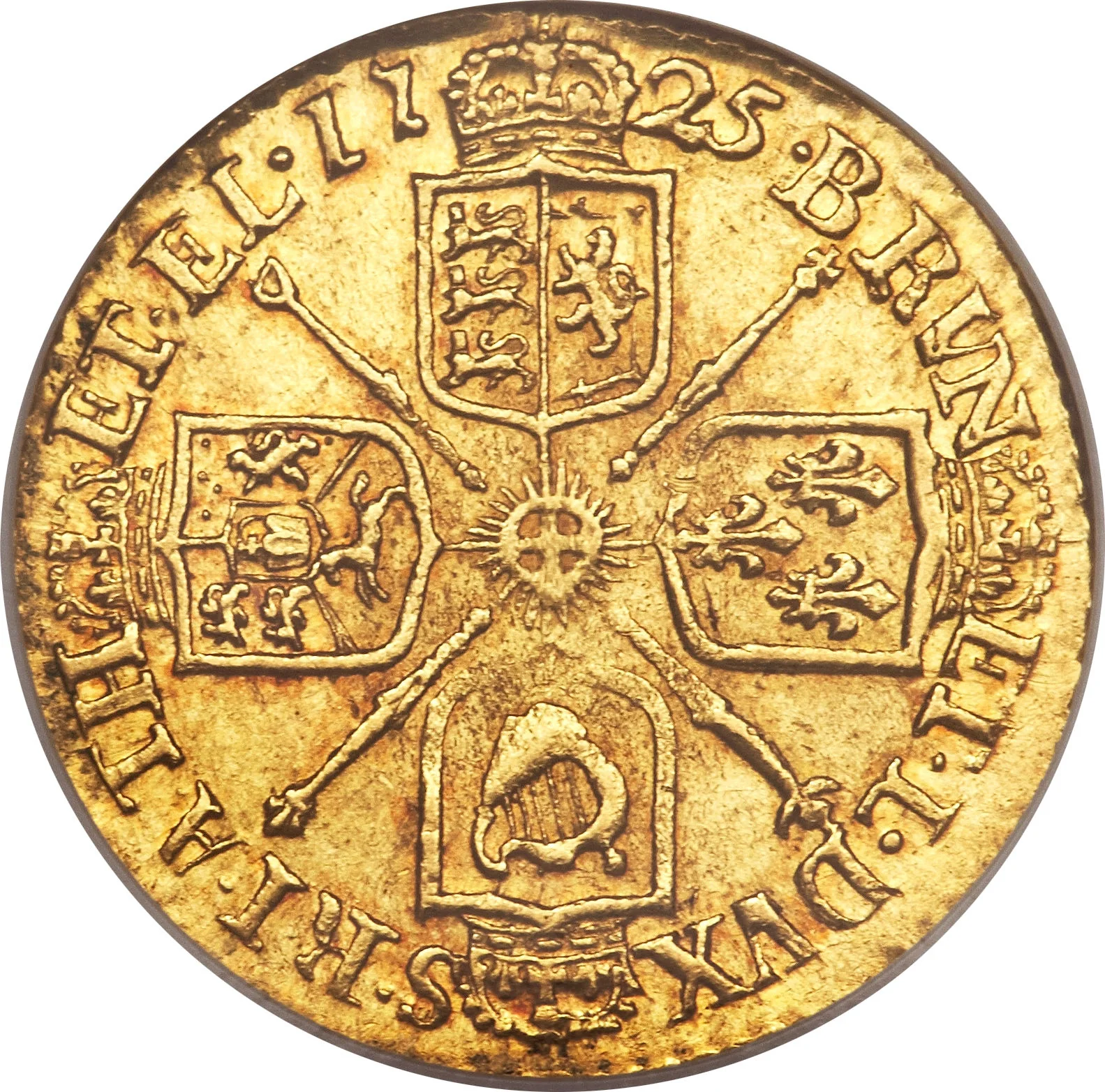
Reverse
Description:
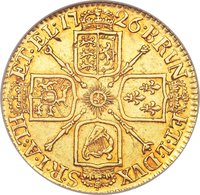
Crowned shields flank a central Garter star; sceptres in angles, date above, legend around.
Inscription:
BRVN ET·L·DVX S·I·R·A·TH ET·EL
·17 25·
·17 25·
Script: Latin
Engraver: Johann Ochs
Edge
Mintings
| Year | Mint Mark | Mintage | Quality | Collection |
|---|---|---|---|---|
| 1725 | — | — | ||
| 1726 | — | — | ||
| 1727 | — | — |
Historical background
In 1725, the currency situation in the United Kingdom was one of relative stability but underlying complexity, shaped by the transformative recoinage of 1696. Following the monetary chaos of the "Great Recoinage," which replaced clipped and degraded silver coins with new, milled-edge currency, Britain operated under a de facto gold standard. Silver coins, though still legal tender, were undervalued at the Mint relative to their market value as bullion, causing them to be exported or melted down. Consequently, the domestic circulation relied heavily on gold guineas and a patchwork of often worn silver and copper coins, creating a persistent shortage of reliable small change for everyday transactions.
The system was fundamentally bimetallic, with the values of gold and silver fixed by law. However, the official ratio (15.07 to 1) did not align with the higher European market value of silver, perpetuating the outflow of full-weight silver coins. This effectively left gold as the principal standard for large-scale commerce and state finance. The currency was further supplemented by a growing variety of paper instruments, including Bank of England notes (founded in 1694) and notes from provincial "country bankers," which facilitated trade and government borrowing but were not yet legal tender and carried some risk.
Overall, the currency landscape in 1725 was functional for a nation on the cusp of commercial and imperial expansion, yet it was marked by structural flaws. The shortage of sound subsidiary coinage was a daily inconvenience, while the bimetallic system was mechanically unstable. This arrangement, reliant on gold and an expanding credit system, would endure for decades but contained the tensions that would later lead to the formal establishment of the gold standard in the early 19th century.
The system was fundamentally bimetallic, with the values of gold and silver fixed by law. However, the official ratio (15.07 to 1) did not align with the higher European market value of silver, perpetuating the outflow of full-weight silver coins. This effectively left gold as the principal standard for large-scale commerce and state finance. The currency was further supplemented by a growing variety of paper instruments, including Bank of England notes (founded in 1694) and notes from provincial "country bankers," which facilitated trade and government borrowing but were not yet legal tender and carried some risk.
Overall, the currency landscape in 1725 was functional for a nation on the cusp of commercial and imperial expansion, yet it was marked by structural flaws. The shortage of sound subsidiary coinage was a daily inconvenience, while the bimetallic system was mechanically unstable. This arrangement, reliant on gold and an expanding credit system, would endure for decades but contained the tensions that would later lead to the formal establishment of the gold standard in the early 19th century.
✨ Legendary