

¼ Guinea – United Kingdom
United Kingdom
Context

Material
References
KM: #Click to copy to clipboard555
Numista: #13086
Value
Bullion value: $320.97
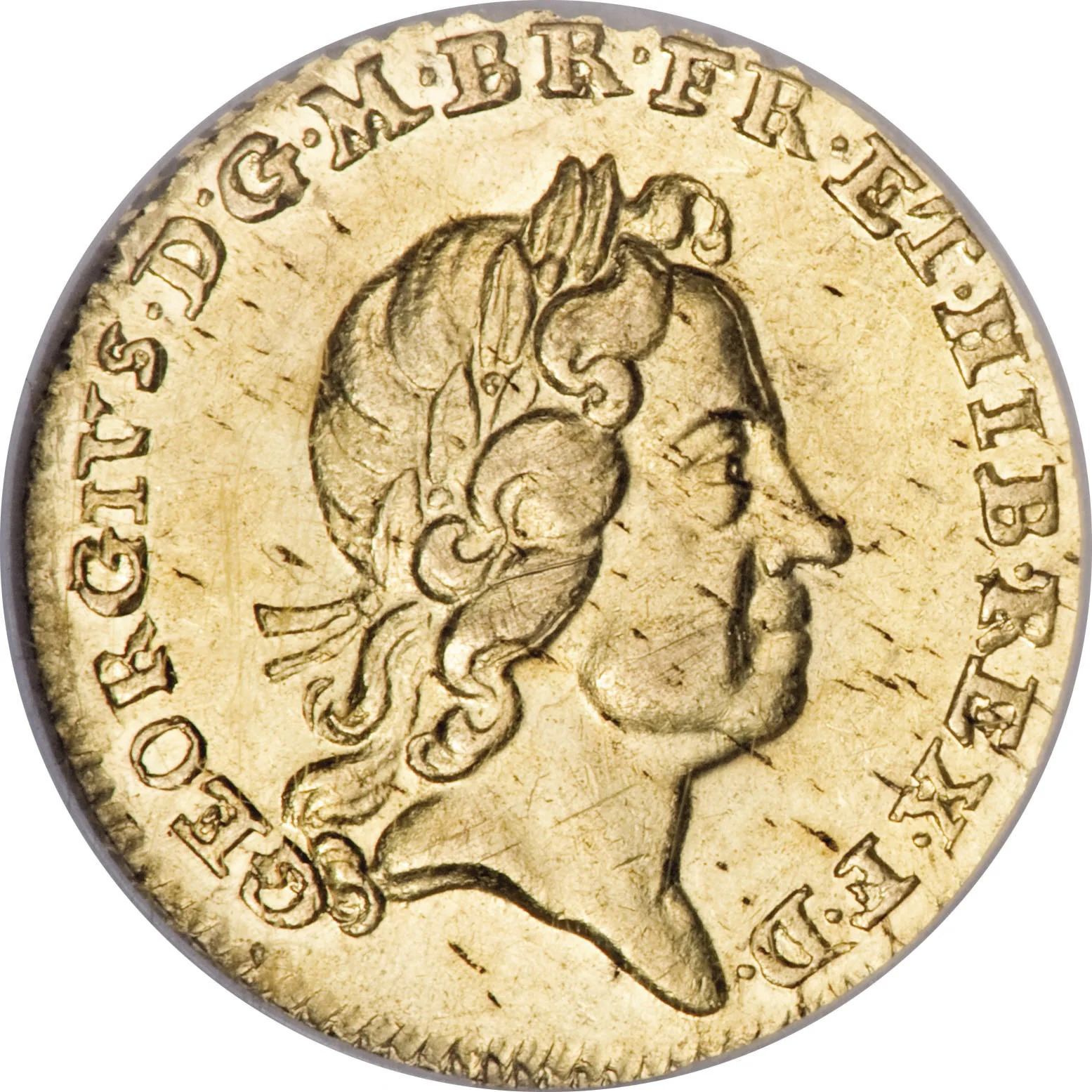
Obverse
Description:
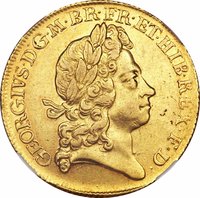
King George I laureate portrait right, legend surrounding.
Inscription:
GEORGIVS·D:G·M·BR·FR:ET:HIB·REX·F·D·
Script: Latin
Engraver: John Croker
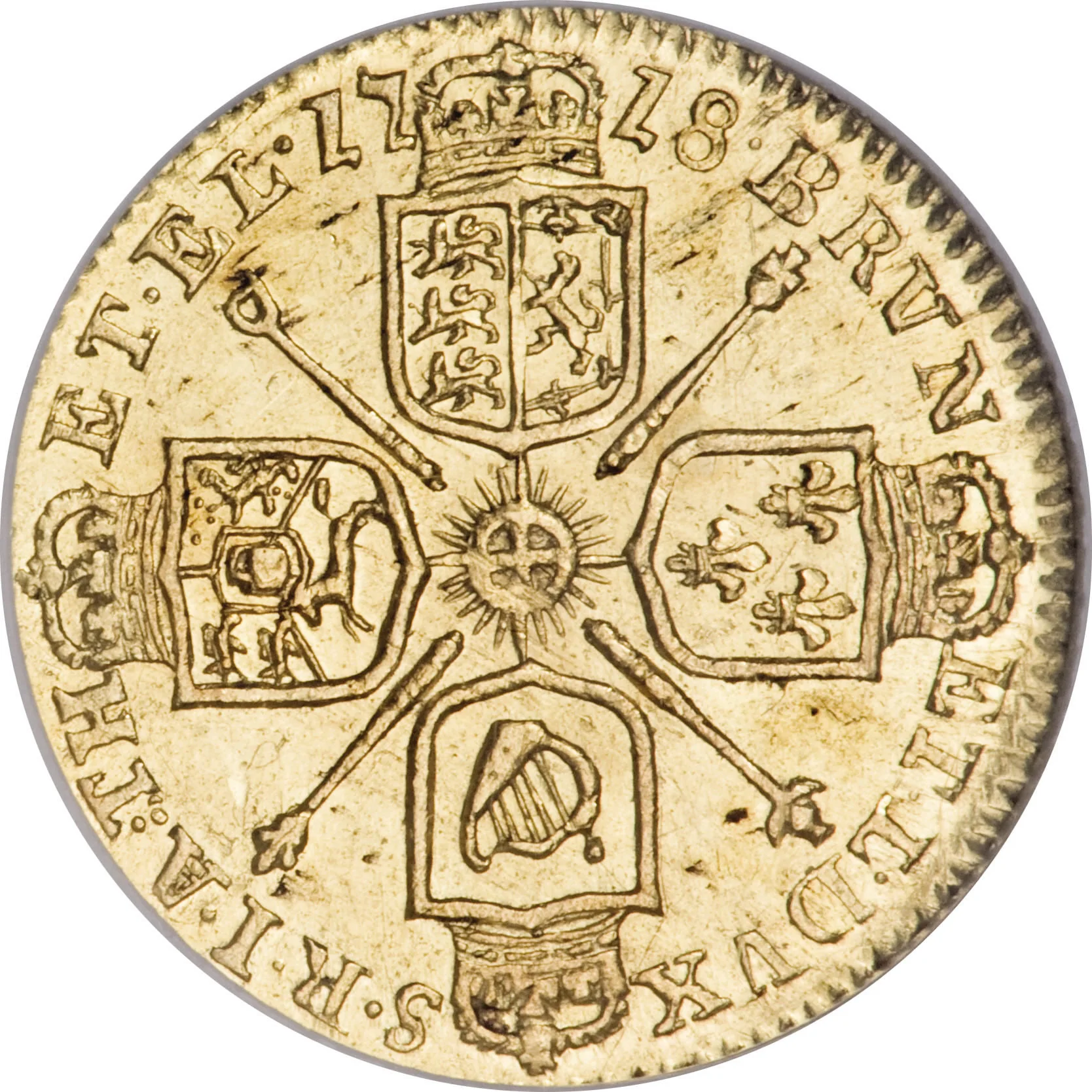
Reverse
Description:
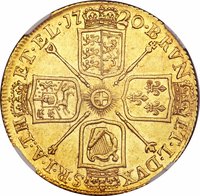
Crowned shields flank a central Garter star; sceptres in angles, date above, legend around.
Inscription:
BRVN ET·L·DVX S·I·R·A·TH ET·EL
·1718·
·1718·
Script: Latin
Engraver: Johann Ochs
Edge
Mintings
| Year | Mint Mark | Mintage | Quality | Collection |
|---|---|---|---|---|
| 1718 | — | — |
Historical background
In 1718, the United Kingdom was grappling with a severe currency crisis rooted in the physical deterioration of its silver coinage. Following the Great Recoinage of 1696, which had aimed to replace clipped and worn coins, the new silver coins began to rapidly leave the country. This was due to a fundamental imbalance: the official mint price of silver was set lower than its market value in Europe. Consequently, it was profitable for merchants and bullion dealers to melt down full-weight British silver coins and export the metal to the Continent, leaving only the oldest and most worn coins in domestic circulation. This shortage of reliable specie severely hampered everyday trade and created economic uncertainty.
The government, led by Prime Minister Robert Walpole and the Chancellor of the Exchequer, John Aislabie, was acutely aware of the problem but was determined to avoid the immense cost and disruption of another full recoinage. Their policy, therefore, was one of cautious management rather than radical intervention. The focus remained on maintaining the gold standard, which had been de facto established with Sir Isaac Newton’s evaluation of the guinea in 1717, setting it at 21 shillings. This act officially overvalued gold in relation to silver, inadvertently exacerbating the silver drain but providing a more stable high-value currency in gold.
Thus, the currency situation in 1718 was a tense stalemate. The silver coinage in public hands was degraded and insufficient, while full-weight silver continued to be exported. The state treasury, or the Exchequer, often held better coins, but these did not filter into general use. The economy increasingly relied on a patchwork of alternatives: gold guineas for large transactions, foreign coins (especially Spanish dollars), promissory notes, and credit. This unsatisfactory environment set the stage for the eventual rise of paper money and banking, as the physical currency system proved inadequate for a growing commercial empire.
The government, led by Prime Minister Robert Walpole and the Chancellor of the Exchequer, John Aislabie, was acutely aware of the problem but was determined to avoid the immense cost and disruption of another full recoinage. Their policy, therefore, was one of cautious management rather than radical intervention. The focus remained on maintaining the gold standard, which had been de facto established with Sir Isaac Newton’s evaluation of the guinea in 1717, setting it at 21 shillings. This act officially overvalued gold in relation to silver, inadvertently exacerbating the silver drain but providing a more stable high-value currency in gold.
Thus, the currency situation in 1718 was a tense stalemate. The silver coinage in public hands was degraded and insufficient, while full-weight silver continued to be exported. The state treasury, or the Exchequer, often held better coins, but these did not filter into general use. The economy increasingly relied on a patchwork of alternatives: gold guineas for large transactions, foreign coins (especially Spanish dollars), promissory notes, and credit. This unsatisfactory environment set the stage for the eventual rise of paper money and banking, as the physical currency system proved inadequate for a growing commercial empire.
💎 Extremely Rare