

1 Farthing – United Kingdom
United Kingdom
Context
Year: 1714
Issuer: United Kingdom 
Ruler: Anne
Currency:
(1158—1970)
Demonetization: 31 December 1869
Material
References
KM: #Click to copy to clipboard537
Numista: #13073
Obverse
Description:
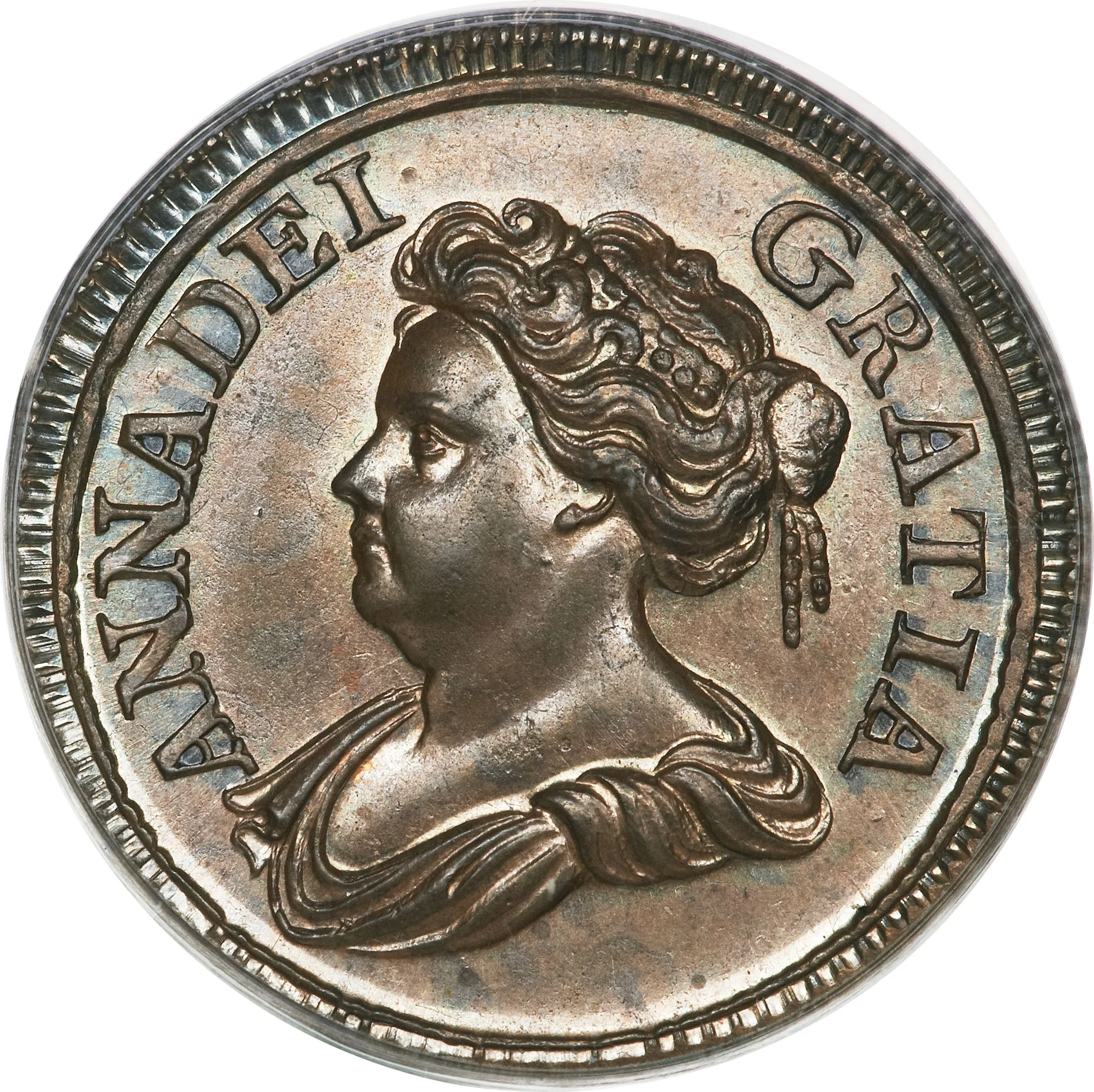
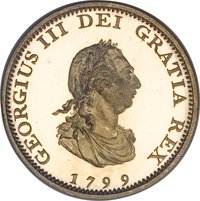
Queen Anne left-facing bust, legend encircling.
Inscription:
ANNA DEI GRATIA
Script: Latin
Engraver: John Croker
Reverse
Description:
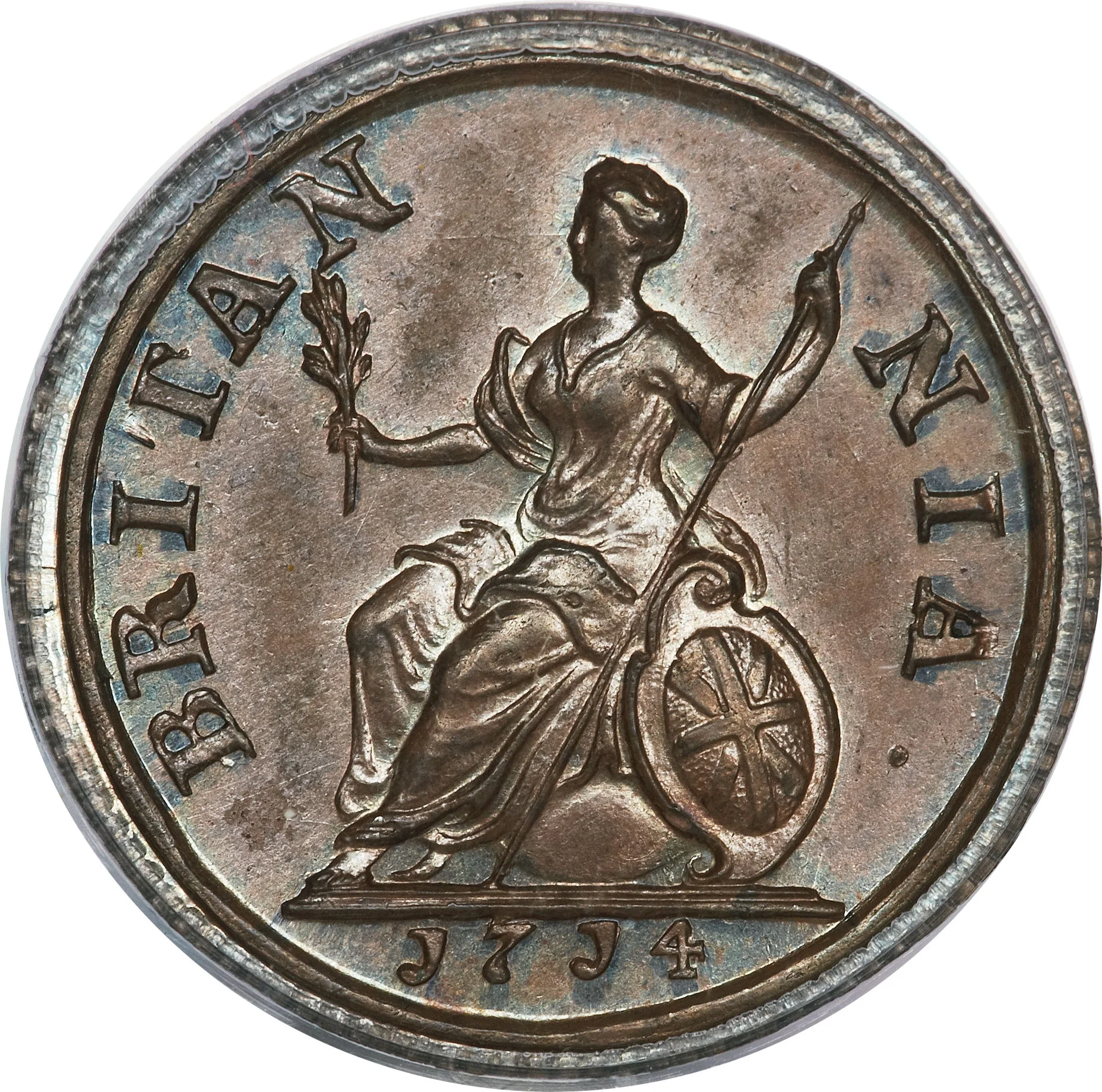
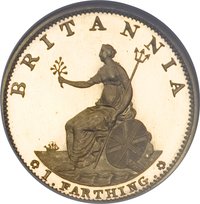
Britannia seated left, holding trident and olive branch, shield with Union flag beside, legend around, date below.
Inscription:
BRITAN NIA ·
1714
1714
Script: Latin
Edge
Plain
Mints
| Name | Mark |
|---|---|
| Royal Mint (Tower of London) | — |
Mintings
| Year | Mint Mark | Mintage | Quality | Collection |
|---|---|---|---|---|
| 1714 | — | — | Proof |
Historical background
In 1714, the United Kingdom’s currency system was in a state of profound crisis, a legacy of the financially draining War of the Spanish Succession. The core problem was the severe degradation of the silver coinage, which formed the backbone of everyday commerce. Decades of wear, clipping (shaving metal from the edges), and counterfeiting had left most circulating silver coins significantly underweight. While they were legally valued by their face, their intrinsic silver content was far lower, leading to Gresham’s Law in action: "bad money drives out good." Hoarders and exporters melted down or exported the few remaining full-weight coins for their bullion value, leaving only the poorest specimens in domestic circulation. This made everyday transactions fraught, as merchants were reluctant to accept clipped coins at face value, causing trade friction and public mistrust.
The government, under Queen Anne and then the newly ascended King George I, faced a complex dilemma. A full recoinage, as undertaken in 1696 under William III, was considered but rejected due to its enormous cost and the disruption it had caused previously. The official exchange rate between silver and gold, set by Sir Isaac Newton as Master of the Mint in 1717, inadvertently exacerbated the problem by slightly overvaluing gold relative to silver on the European continent. This policy further encouraged the export of silver bullion, steadily transforming Britain onto a de facto gold standard, even though silver remained the legal standard of value. The practical monetary system was thus a messy bimetallism, with a shortage of viable silver coinage and an increasing reliance on gold guineas for larger transactions.
Consequently, the economy relied on a patchwork of substitutes. People used foreign coins, bank tokens, and promissory notes, while the wealthy increasingly turned to the paper instruments of the fledgling financial sector. The Bank of England, founded in 1694, issued banknotes, but these were for high denominations used by merchants and the state. For the majority of the population, the currency shortage was a daily inconvenience, stifling small-scale trade. This unstable environment set the stage for the eventual great recoinage of silver in the 1770s and cemented gold’s central role, paving the way for the formal gold standard established later in the century.
The government, under Queen Anne and then the newly ascended King George I, faced a complex dilemma. A full recoinage, as undertaken in 1696 under William III, was considered but rejected due to its enormous cost and the disruption it had caused previously. The official exchange rate between silver and gold, set by Sir Isaac Newton as Master of the Mint in 1717, inadvertently exacerbated the problem by slightly overvaluing gold relative to silver on the European continent. This policy further encouraged the export of silver bullion, steadily transforming Britain onto a de facto gold standard, even though silver remained the legal standard of value. The practical monetary system was thus a messy bimetallism, with a shortage of viable silver coinage and an increasing reliance on gold guineas for larger transactions.
Consequently, the economy relied on a patchwork of substitutes. People used foreign coins, bank tokens, and promissory notes, while the wealthy increasingly turned to the paper instruments of the fledgling financial sector. The Bank of England, founded in 1694, issued banknotes, but these were for high denominations used by merchants and the state. For the majority of the population, the currency shortage was a daily inconvenience, stifling small-scale trade. This unstable environment set the stage for the eventual great recoinage of silver in the 1770s and cemented gold’s central role, paving the way for the formal gold standard established later in the century.
💎 Extremely Rare