

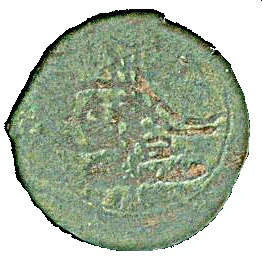
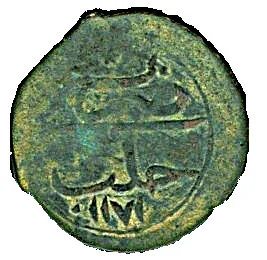
5 Para – Aleppo Eyalet
Syria
Context
Year: 1758
Islamic (Hijri) Year: 1171
Country: Syria 
Issuer: Aleppo Eyalet
Ruler: Mustafa III
Currency:
(1688—1844)
Demonetized: Yes
Material
References
KM: #Click to copy to clipboard65
Numista: #103002
Mints
| Name | Mark |
|---|---|
| Haleb | — |
Mintings
| Year | Mint Mark | Mintage | Quality | Collection |
|---|---|---|---|---|
| 1758 | — | — |
Historical background
In 1758, the currency situation in Aleppo Eyalet, a vital Ottoman province encompassing much of northern Syria, was characterized by severe instability and complexity. The primary unit of account was the Ottoman kuruş (piastre), but the actual circulating medium was a chaotic mix of foreign and debased coins. Spanish eight-real pieces (Spanish dollars), Dutch lion thalers, and other European silver coins circulated widely due to their reliable silver content, alongside a plethora of older and heavily clipped Ottoman akçes and provincial issues. This created a dual system where large-scale trade was conducted in stable foreign currency, while daily transactions suffered from unreliable small change.
The root of the instability lay in the Ottoman Empire's chronic fiscal difficulties and debasement. The central mint in Istanbul frequently reduced the silver content of newly minted kuruş to finance state expenses, leading to Gresham's Law in action: "bad" debased coinage drove "good" full-weight foreign and older Ottoman coins out of circulation into hoards or the melting pot. Furthermore, local authorities and money-changers (sarrafs) in Aleppo played an outsized role, manipulating exchange rates and premiums between the myriad coin types, adding a layer of profiteering and uncertainty to all commercial transactions.
This monetary chaos had a direct and damaging impact on Aleppo's economy, which was a historic hub for the caravan trade between the Mediterranean, Anatolia, and the East. Merchants faced significant transaction costs and exchange risks, undermining confidence and complicating tax collection, as the state demanded payment in specific, often scarce, coinage. The situation in 1758 was thus a symptom of broader imperial decline, where the lack of a uniform and trustworthy currency hampered commerce and reflected the weakening of central Ottoman control over its provincial economies.
The root of the instability lay in the Ottoman Empire's chronic fiscal difficulties and debasement. The central mint in Istanbul frequently reduced the silver content of newly minted kuruş to finance state expenses, leading to Gresham's Law in action: "bad" debased coinage drove "good" full-weight foreign and older Ottoman coins out of circulation into hoards or the melting pot. Furthermore, local authorities and money-changers (sarrafs) in Aleppo played an outsized role, manipulating exchange rates and premiums between the myriad coin types, adding a layer of profiteering and uncertainty to all commercial transactions.
This monetary chaos had a direct and damaging impact on Aleppo's economy, which was a historic hub for the caravan trade between the Mediterranean, Anatolia, and the East. Merchants faced significant transaction costs and exchange risks, undermining confidence and complicating tax collection, as the state demanded payment in specific, often scarce, coinage. The situation in 1758 was thus a symptom of broader imperial decline, where the lack of a uniform and trustworthy currency hampered commerce and reflected the weakening of central Ottoman control over its provincial economies.

✨ Legendary