

1 Ducat – Russian Empire
Russia
Context

Material
References
KM: #Click to copy to clipboard133
Numista: #102790
Value
Bullion value: $560.76
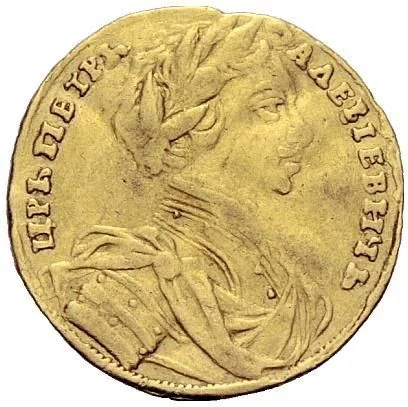
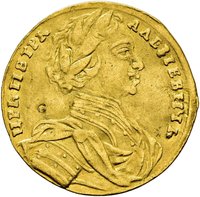
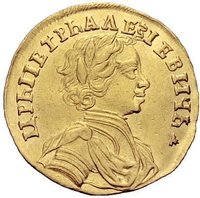
Obverse
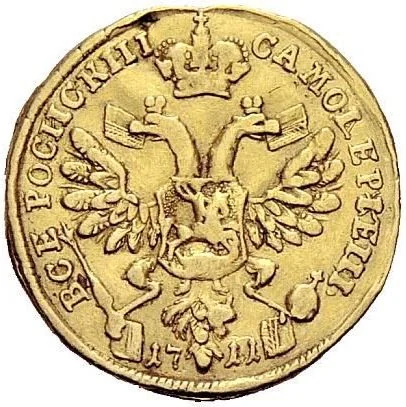
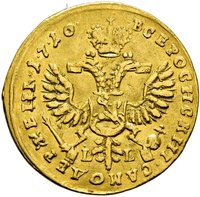
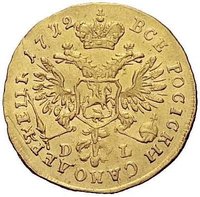
Reverse
Edge
Plain
Mintings
| Year | Mint Mark | Mintage | Quality | Collection |
|---|---|---|---|---|
| 1710 | G | — | ||
| 1710 | L | — | ||
| 1711 | — | — |
Historical background
By 1710, the currency situation in the Russian Empire was dire and defined by a severe financial crisis, a direct consequence of Tsar Peter I’s relentless military campaigns during the Great Northern War. The immense cost of maintaining a modern army and navy, coupled with the loss of traditional silver revenue from trade due to the war, had drained the state treasury. In desperation, the government had drastically debased the silver kopeck coinage since 1701, reducing its silver content by nearly half while maintaining its face value. This was a short-term measure to mint more coins from dwindling bullion reserves, effectively creating inflation to fund the war effort.
The primary circulating coins were the silver kopeck and its fractions, but the 1710 monetary landscape was chaotic. The new, lighter-weight coins circulated alongside older, full-weight pre-Petrine "wire money" kopecks, causing confusion and distrust. Furthermore, Peter’s earlier introduction of large-denomination copper coins (polushkas, denga, and kopecks) in 1700-1704 to facilitate everyday trade had begun to flood the market with base metal currency. The simultaneous devaluation of silver and the increase in copper coinage led to a rapid depreciation of money, soaring prices, and widespread economic hardship for the population, particularly those on fixed incomes like soldiers and officials.
This crisis underscored the fundamental inadequacy of Russia’s archaic monetary system, which lacked standardized minting and higher denominations necessary for a modernizing state. The situation in 1710 represented the painful tipping point that would force Peter the Great to pursue a radical and systematic overhaul. Just a few years later, in 1718, he would begin his landmark monetary reform, finally introducing a decimal-based system with regular coinage in gold, silver, and copper, including the new ruble as a standard unit. Thus, 1710 stands as a year of financial strain that made profound reform inevitable.
The primary circulating coins were the silver kopeck and its fractions, but the 1710 monetary landscape was chaotic. The new, lighter-weight coins circulated alongside older, full-weight pre-Petrine "wire money" kopecks, causing confusion and distrust. Furthermore, Peter’s earlier introduction of large-denomination copper coins (polushkas, denga, and kopecks) in 1700-1704 to facilitate everyday trade had begun to flood the market with base metal currency. The simultaneous devaluation of silver and the increase in copper coinage led to a rapid depreciation of money, soaring prices, and widespread economic hardship for the population, particularly those on fixed incomes like soldiers and officials.
This crisis underscored the fundamental inadequacy of Russia’s archaic monetary system, which lacked standardized minting and higher denominations necessary for a modernizing state. The situation in 1710 represented the painful tipping point that would force Peter the Great to pursue a radical and systematic overhaul. Just a few years later, in 1718, he would begin his landmark monetary reform, finally introducing a decimal-based system with regular coinage in gold, silver, and copper, including the new ruble as a standard unit. Thus, 1710 stands as a year of financial strain that made profound reform inevitable.
✨ Legendary