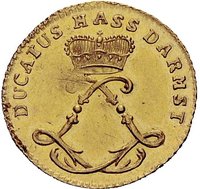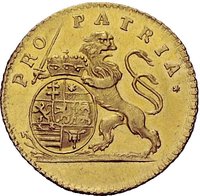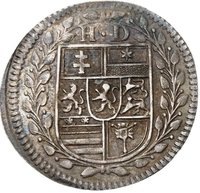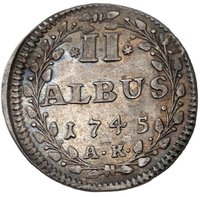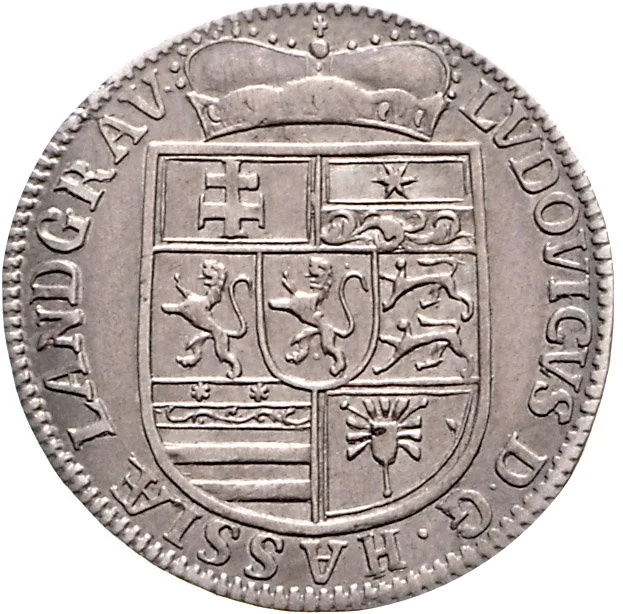
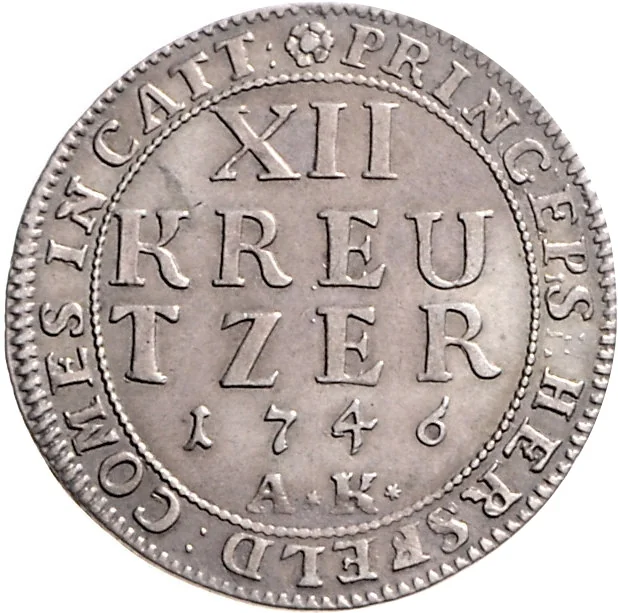
In 1745, the currency situation in the Landgraviate of Hesse-Darmstadt was complex and challenging, typical of the fragmented Holy Roman Empire. The landgravate did not have a monopoly on coinage within its own borders, as it operated within a wider regional monetary system dominated by the
Reichsthaler as a common accounting unit. However, numerous other German states, imperial cities, and even ecclesiastical territories circulated their own coins, leading to a chaotic mix of physical currency with fluctuating values and metal contents. This proliferation of coinage, combined with frequent debasement by various authorities, created chronic instability for trade and public finance.
Internally, Landgrave Louis VIII (reigned 1739-1768) faced significant fiscal pressures, including the costs of maintaining a modest court and administrative state. While not engaged in major war in 1745, the broader War of the Austrian Succession (1740-1748) created economic turbulence and military obligations that strained the treasury. These pressures incentivized the manipulation of currency as a source of revenue. The practice of
"Kippermünze"—the issuance of lightweight, debased subsidiary coins—was a persistent temptation, though Louis VIII generally showed more restraint than some contemporaries, seeking to maintain a degree of monetary reliability.
Consequently, daily commerce in Hesse-Darmstadt relied on a cumbersome system of constant evaluation and exchange. Merchants and officials required published
"mint parity tables" to convert the myriad of circulating coins—such as kreuzers, albuses, and gulden—into stable accounting thalers. The real value of money was often separated from its nominal value, leading to confusion, fraud, and economic inefficiency. This fragmented system underscored the landgravate's limited sovereign power in monetary matters and acted as a brake on economic development, a reality Ludwig VIII could only manage rather than fundamentally reform.