

6 Pence – England
United Kingdom
Context
Years: 1693–1694
Country: United Kingdom 
Issuer: England 
Ruler: Mary II
Currency:
(1158—1970)
Demonetized: Yes
Material
References
KM: #Click to copy to clipboard481
Numista: #12964
Value
Bullion value: $7.85
Obverse
Description:
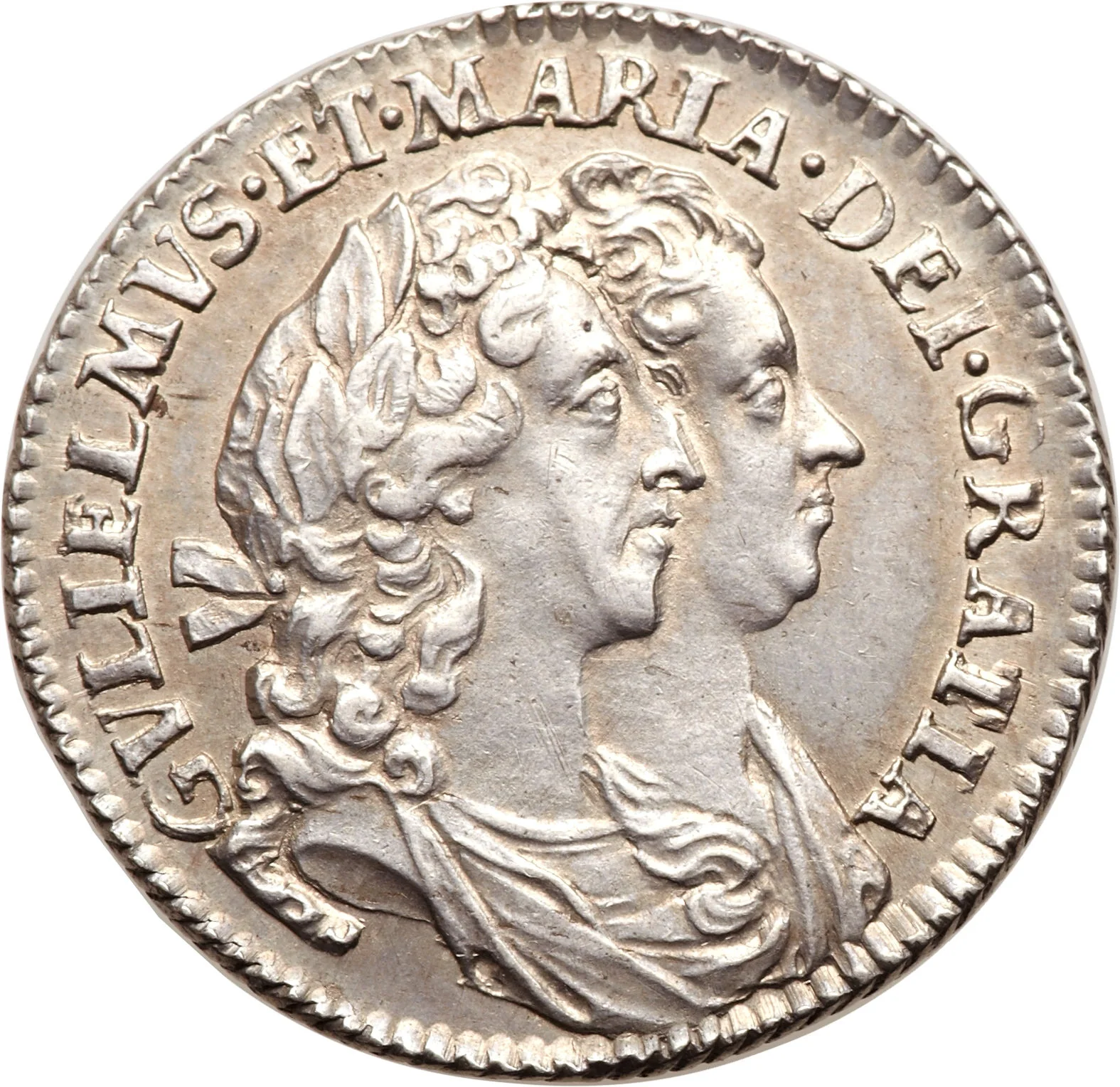
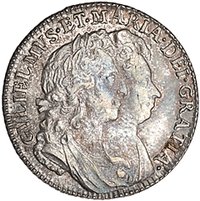
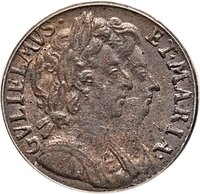
Conjoined busts of William and Mary right, draped, with surrounding legend.
Inscription:
GVLIELMVS·ET·MARIA·DEI·GRATIA
Script: Latin
Reverse
Description:
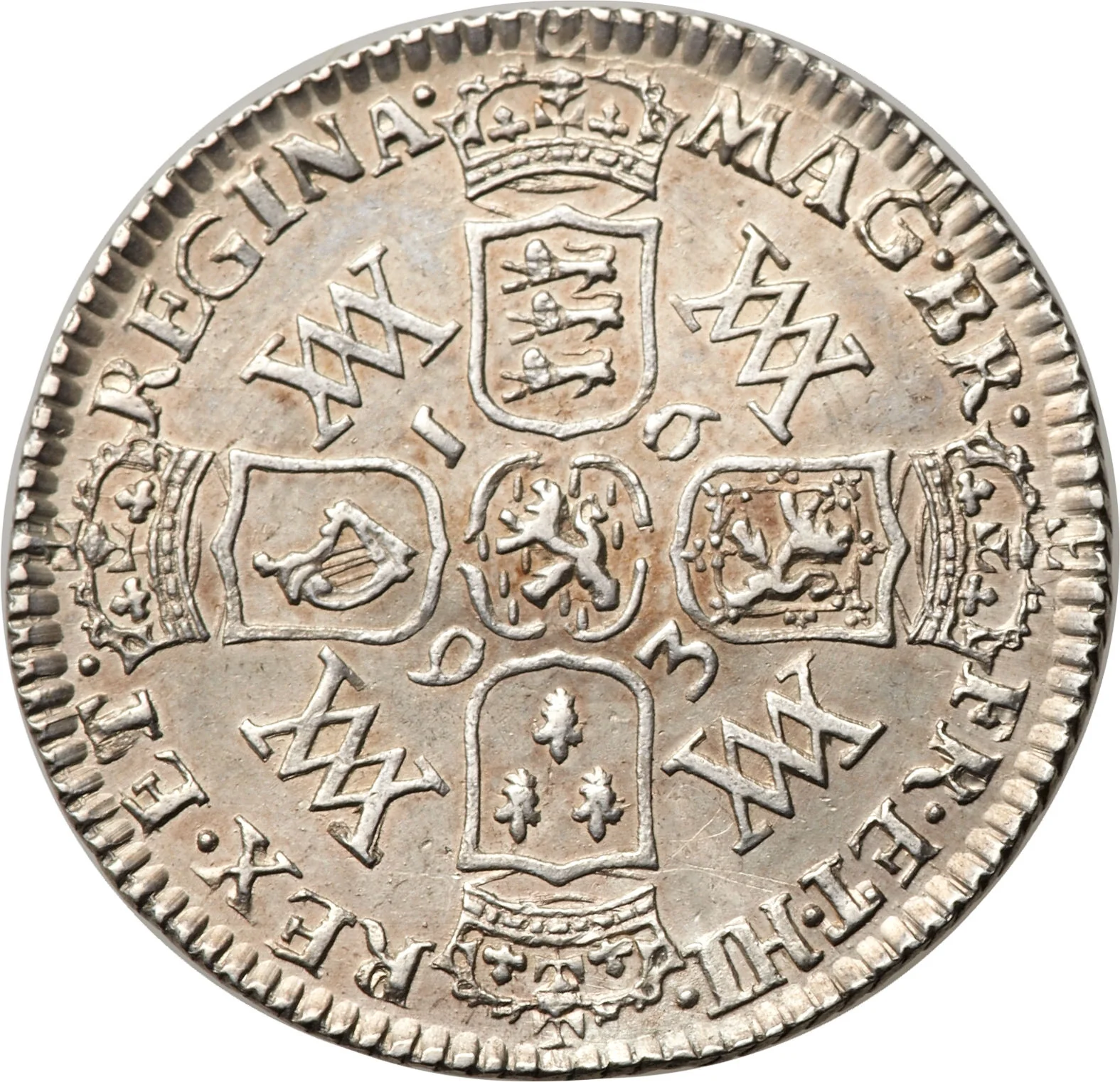
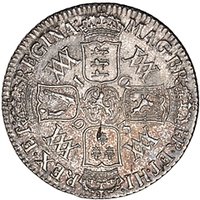
Crowned shields flank a central lion, with cypher, date, and legend surrounding.
Inscription:
MAG·BR· FR·ET·HI· REX·ET· REGINA·
WM WM WM WM
1 6 9 3
WM WM WM WM
1 6 9 3
Script: Latin
Edge
Mintings
| Year | Mint Mark | Mintage | Quality | Collection |
|---|---|---|---|---|
| 1693 | — | — | ||
| 1694 | — | — |
Historical background
In 1693, England’s currency system was under severe strain, caught between the demands of a major European war and a deep monetary crisis. The country was engaged in the Nine Years' War (1688–1697) against France, a conflict that drained the Treasury and led King William III's government to borrow heavily. The primary coinage in circulation was silver, but its official face value was lower than its market value as bullion. This discrepancy, exacerbated by worn and clipped coins in circulation, led to widespread hoarding and melting down of full-weight silver coins, leaving the economy with a degraded and unreliable medium of exchange. The situation crippled trade and state finances, as the government struggled to pay its soldiers and sailors with trustworthy money.
The core of the problem was the failure of the "hammered" silver coinage, produced by the old method of striking blanks with a hammer. This process created irregular coins that were easily clipped around the edges, reducing their silver content while they still passed at face value. By 1693, the average silver coin in circulation had lost perhaps half of its metal content. While various stopgap measures were attempted, there was a growing consensus that a complete recoinage was necessary. However, the government hesitated, daunted by the colossal cost and logistical challenge of recalling and reminting the entire silver currency during a costly war.
Therefore, 1693 represents a critical juncture, the tense calm before a monumental reform. The financial pressures of the war ultimately forced the issue, leading to the establishment of the Bank of England in 1694 to manage war debt and, finally, the Great Recoinage of 1696. This latter project, masterminded by Sir Isaac Newton as Warden of the Mint, introduced machine-milled coins with marked edges to prevent clipping and firmly established a gold standard in practice. Thus, the chaotic currency situation of 1693 was the direct catalyst for the financial and institutional revolutions that would underpin England’s rise as a global economic power.
The core of the problem was the failure of the "hammered" silver coinage, produced by the old method of striking blanks with a hammer. This process created irregular coins that were easily clipped around the edges, reducing their silver content while they still passed at face value. By 1693, the average silver coin in circulation had lost perhaps half of its metal content. While various stopgap measures were attempted, there was a growing consensus that a complete recoinage was necessary. However, the government hesitated, daunted by the colossal cost and logistical challenge of recalling and reminting the entire silver currency during a costly war.
Therefore, 1693 represents a critical juncture, the tense calm before a monumental reform. The financial pressures of the war ultimately forced the issue, leading to the establishment of the Bank of England in 1694 to manage war debt and, finally, the Great Recoinage of 1696. This latter project, masterminded by Sir Isaac Newton as Warden of the Mint, introduced machine-milled coins with marked edges to prevent clipping and firmly established a gold standard in practice. Thus, the chaotic currency situation of 1693 was the direct catalyst for the financial and institutional revolutions that would underpin England’s rise as a global economic power.
💎 Extremely Rare