

4 Zecchini – Malta
Malta
Context
Material
References
KM: #Click to copy to clipboard185
Numista: #129623
Value
Bullion value: $2263.74
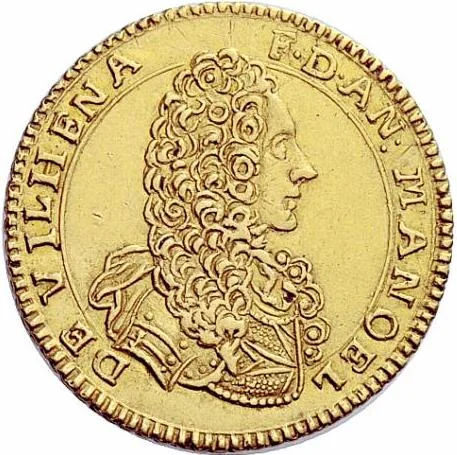
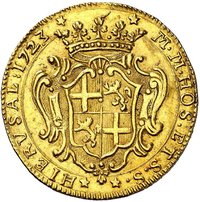
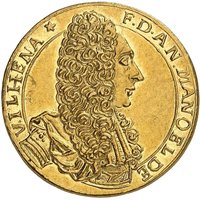
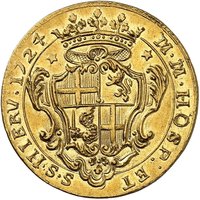
Obverse
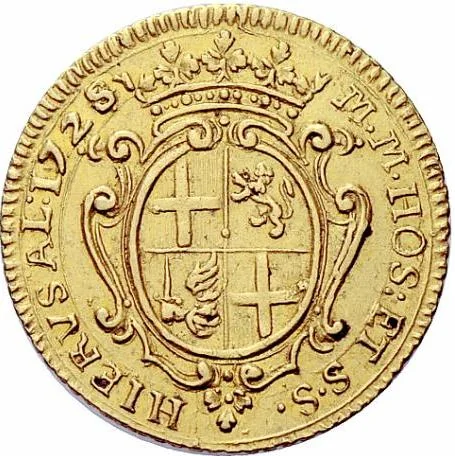
Reverse
Edge
Mintings
| Year | Mint Mark | Mintage | Quality | Collection |
|---|---|---|---|---|
| 1724 | — | — | ||
| 1725 | — | — |
Historical background
In 1724, Malta's currency situation was complex and challenging, reflecting its strategic position as a bustling Mediterranean hub under the rule of the Knights of St. John. The primary unit of account was the Maltese scudo, but the actual circulating medium was a chaotic mix of physical coins from across Europe and the Levant. Spanish pieces of eight (reales), Venetian sequins, French écus, and Turkish piastres all jostled in merchants' hands, their values fluctuating based on weight, metal content, and wear. This proliferation of foreign specie was a direct result of the island's international trade, naval activities, and the Knights' extensive financial networks across Christendom.
This monetary disorder created significant problems for both daily commerce and the Order's treasury. The lack of a standardized, locally minted coinage in sufficient quantities led to confusion, fraud, and constant disputes over exchange rates. Debasement and clipping of foreign coins were common, eroding trust. Furthermore, the Knights often struggled to procure enough bullion to mint their own higher-value scudi and tari, which were essential for large-scale transactions and paying their troops and galley crews. This scarcity frequently forced the Treasury to resort to overvaluing certain foreign coins by official decree, a temporary fix that often distorted the local economy.
Consequently, 1724 fell within a period of ongoing monetary experimentation and frustration for the Order. While the Knights periodically issued ordinances to fix exchange rates, these measures were difficult to enforce and provided only temporary relief. The underlying issue—dependence on an unstable influx of foreign coin—would persist until Grand Master Manuel Pinto da Fonseca (ruled 1741-1773) later in the century implemented more decisive reforms, including a major recoinage and the establishment of a public bank. Thus, in 1724, Malta remained entangled in a monetary system as mixed and turbulent as the sea that surrounded it.
This monetary disorder created significant problems for both daily commerce and the Order's treasury. The lack of a standardized, locally minted coinage in sufficient quantities led to confusion, fraud, and constant disputes over exchange rates. Debasement and clipping of foreign coins were common, eroding trust. Furthermore, the Knights often struggled to procure enough bullion to mint their own higher-value scudi and tari, which were essential for large-scale transactions and paying their troops and galley crews. This scarcity frequently forced the Treasury to resort to overvaluing certain foreign coins by official decree, a temporary fix that often distorted the local economy.
Consequently, 1724 fell within a period of ongoing monetary experimentation and frustration for the Order. While the Knights periodically issued ordinances to fix exchange rates, these measures were difficult to enforce and provided only temporary relief. The underlying issue—dependence on an unstable influx of foreign coin—would persist until Grand Master Manuel Pinto da Fonseca (ruled 1741-1773) later in the century implemented more decisive reforms, including a major recoinage and the establishment of a public bank. Thus, in 1724, Malta remained entangled in a monetary system as mixed and turbulent as the sea that surrounded it.
✨ Legendary