

5 réis – Brazil
Add to wishlist
Brazil
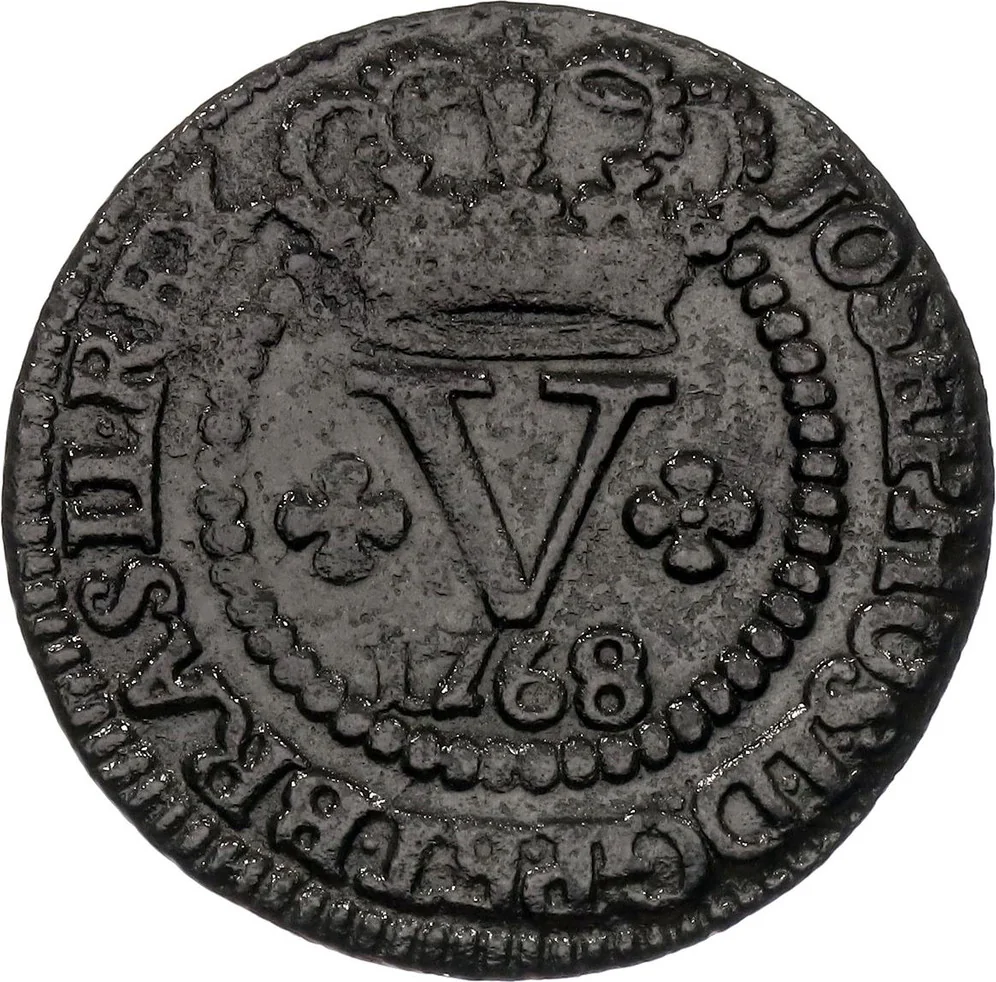
Obverse
Description:
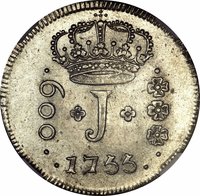
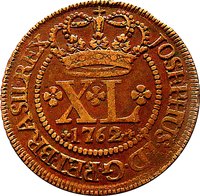
Crowned pearl circle with flowers, date, and value "V."
Inscription:
JOSEPHUS.I.D.G.P.ET.BRASIL.REX
+ V +
1769
+ V +
1769
Script: Latin
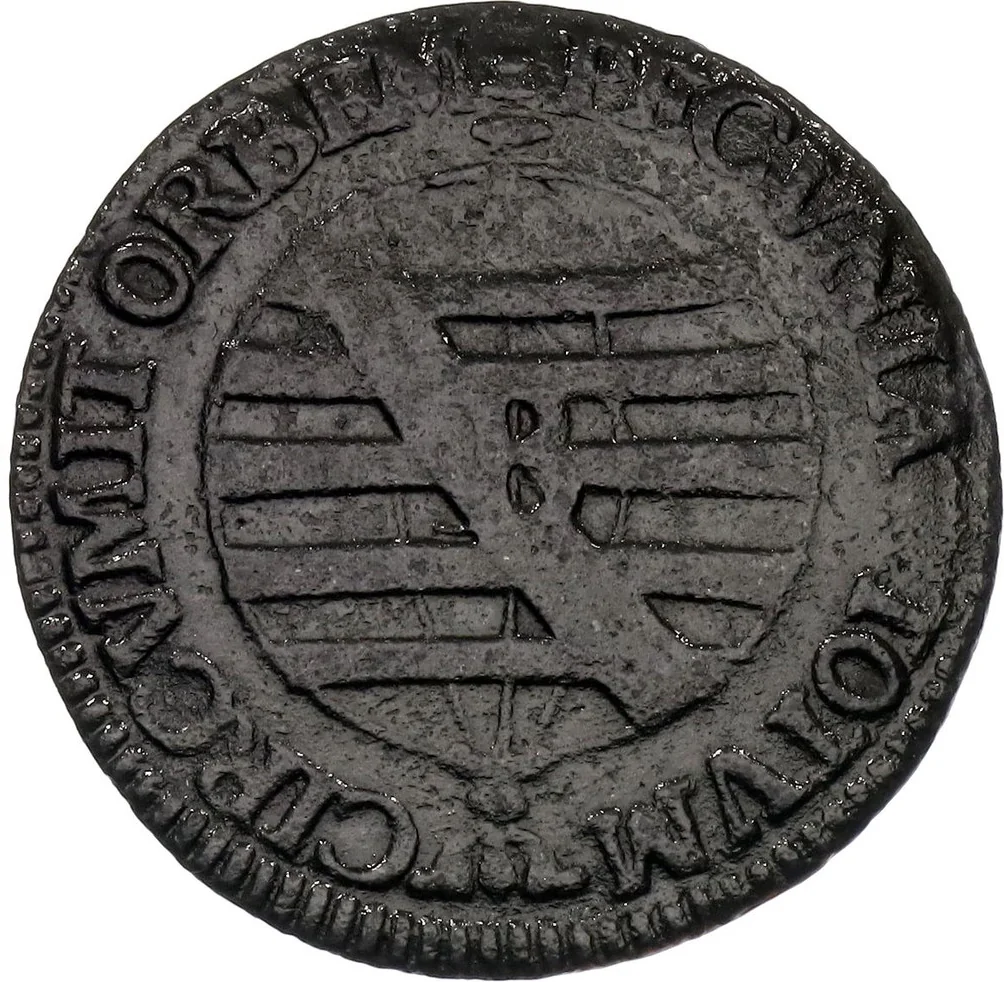
Reverse
Edge
Plain
Mints
| Name | Mark |
|---|---|
| Bahia | B |
Historical background
In 1762, Brazil's currency situation was characterized by scarcity, fragmentation, and the persistent challenges of a vast colonial economy. As a Portuguese colony, Brazil lacked a unified national mint; the first official mint, the Casa da Moeda do Brasil, had only been established in Salvador da Bahia in 1694 and was later relocated to Rio de Janeiro in 1702. The primary official coin was the Portuguese real (plural: réis), but in practice, the money supply was a chaotic mix of scarce Portuguese coins, a variety of foreign currencies (particularly Spanish-American pesos and coins from other European empires used in regional trade), and even commodity money like sugar, tobacco, and cacao, which served as informal currency in many areas.
This monetary disorder was exacerbated by Portugal's mercantilist policies, which aimed to extract wealth—primarily gold from the recently discovered deposits in Minas Gerais—while limiting the colony's economic autonomy. Much of the gold produced was either smuggled out or officially shipped to Portugal, where it was coined, rather than circulating within Brazil itself. Furthermore, to facilitate local transactions in the face of coin shortages, colonial authorities often resorted to issuing paper notes, known as papel-moeda, which were essentially promissory notes backed by expected tax revenues or commodity values. These notes were prone to depreciation and loss of public confidence.
The year 1762 falls within the pivotal administration of the Marquis of Pombal, Portugal's powerful Secretary of State, who was implementing sweeping reforms across the empire. While his focus in Brazil included tightening administrative control and combating smuggling, the fundamental currency problems of scarcity and fragmentation remained largely unaddressed at this specific date. The monetary landscape was therefore one of inherent instability, hindering internal commerce and reflecting Brazil's dependent colonial status, where the economic system was designed more for extraction than for integrated development.
This monetary disorder was exacerbated by Portugal's mercantilist policies, which aimed to extract wealth—primarily gold from the recently discovered deposits in Minas Gerais—while limiting the colony's economic autonomy. Much of the gold produced was either smuggled out or officially shipped to Portugal, where it was coined, rather than circulating within Brazil itself. Furthermore, to facilitate local transactions in the face of coin shortages, colonial authorities often resorted to issuing paper notes, known as papel-moeda, which were essentially promissory notes backed by expected tax revenues or commodity values. These notes were prone to depreciation and loss of public confidence.
The year 1762 falls within the pivotal administration of the Marquis of Pombal, Portugal's powerful Secretary of State, who was implementing sweeping reforms across the empire. While his focus in Brazil included tightening administrative control and combating smuggling, the fundamental currency problems of scarcity and fragmentation remained largely unaddressed at this specific date. The monetary landscape was therefore one of inherent instability, hindering internal commerce and reflecting Brazil's dependent colonial status, where the economic system was designed more for extraction than for integrated development.
⭐ Rare