

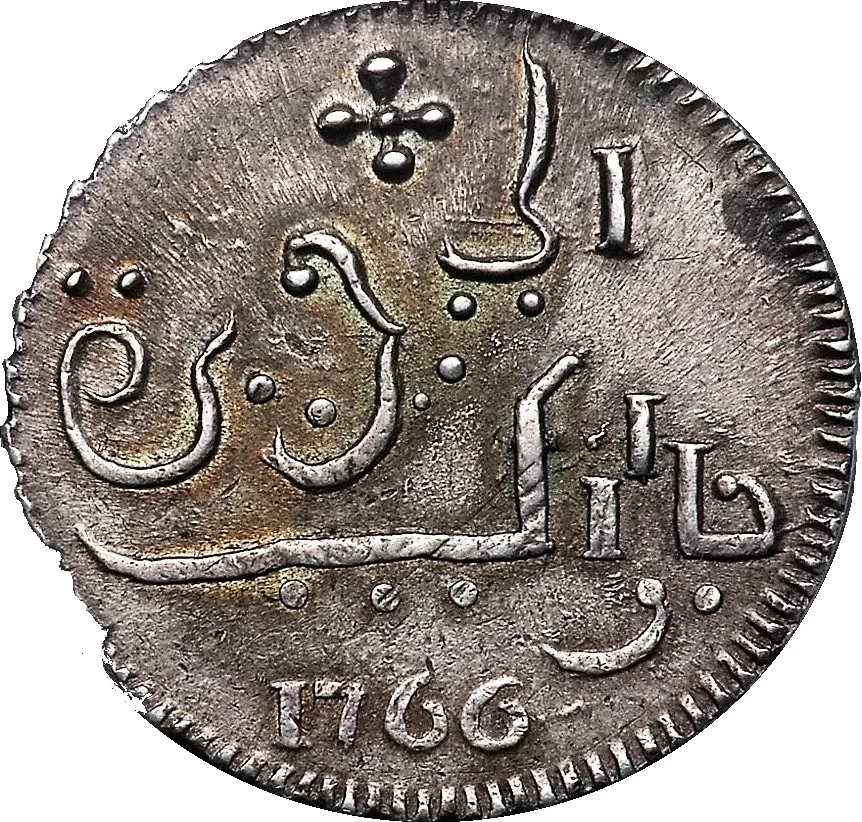
Obverse
Description:
Crude Arabic script, Gregorian date.
Inscription:
إلى جزيرة
جوى الكبير
1766
جوى الكبير
1766
Script: Arabic
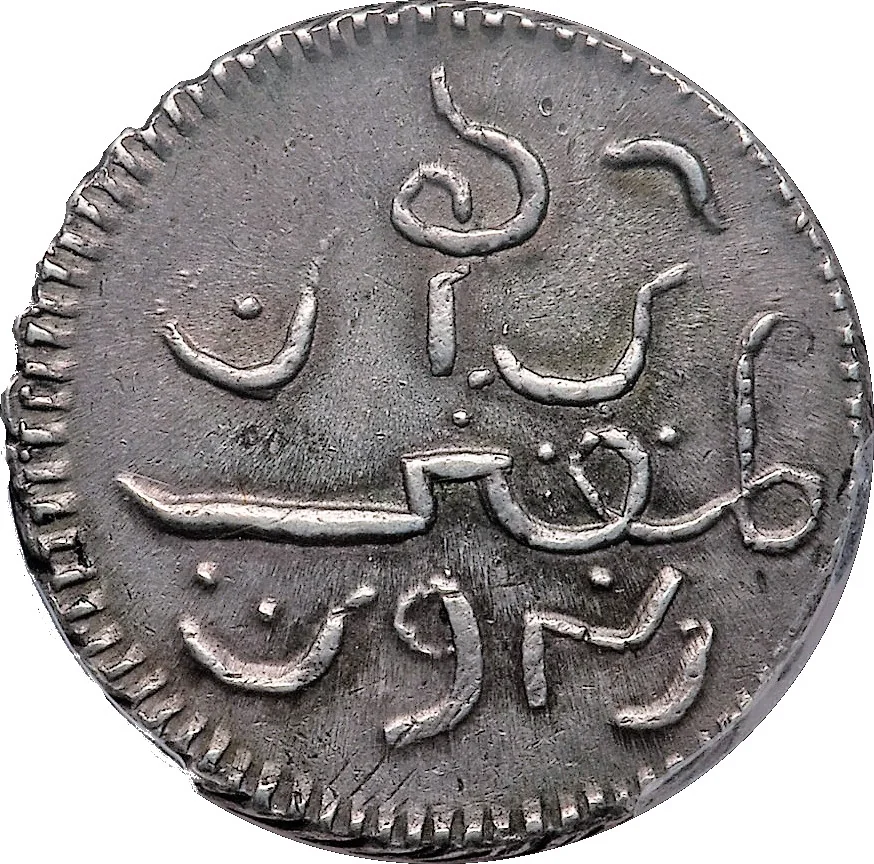
Reverse
Description:
Three lines of rough Arabic script.
Inscription:
درهام مين
كومباني
ولنداوي
كومباني
ولنداوي
Script: Arabic
Edge
Reeded
Mints
| Name | Mark |
|---|---|
| Batavia | — |
Mintings
| Year | Mint Mark | Mintage | Quality | Collection |
|---|---|---|---|---|
| 1764 | — | — | ||
| 1765 | — | — | ||
| 1766 | — | — | ||
| 1767 | — | — | ||
| 1782 | — | — | ||
| 1783 | — | — | ||
| 1784 | — | — | ||
| 1785 | — | — | ||
| 1786 | — | — | ||
| 1787 | — | — | ||
| 1788 | — | — |
Historical background
In 1764, Java’s currency situation was a complex and turbulent reflection of its colonial economy under the Dutch East India Company (VOC). The island operated on a dual monetary system where imported European silver coins, like the rijksdaalder and ducaton, coexisted with a vast array of locally circulating copper duit coins and traditional commodity monies. The VOC, facing severe financial strain and a chronic shortage of precious metals, had increasingly resorted to minting and importing massive quantities of low-value copper coinage to finance its operations and trade. This led to a severe imbalance, as the copper coins were legally overvalued against silver, causing Gresham’s Law (“bad money drives out good money”) to take full effect: silver coins were hoarded or exported, leaving the economy flooded with depreciating copper.
This monetary chaos was exacerbated by rampant counterfeiting, both locally and abroad, particularly of the copper duit. The VOC’s own mints in Holland, Japan, and later in Batavia produced coins that often varied in weight and alloy, further undermining public trust. The result was severe inflation and a bewildering patchwork of exchange rates that differed not only between regions but also between transactions in markets, tax payments, and Company accounts. For Javanese peasants and Chinese merchants alike, this instability created daily hardship, distorted local trade, and facilitated exploitation by corrupt officials and money changers.
The crisis culminated in 1744-1764 with a series of drastic and poorly received monetary decrees from the VOC administration in Batavia. In an attempt to stabilize the system and extract revenue, the Company repeatedly announced sudden devaluations of the copper currency, effectively demonetizing vast quantities of coins in public hands. These heavy-handed interventions, particularly the major recall and re-coinage of 1744 and subsequent measures, functioned as a brutal form of taxation, eroding what little remained of commercial confidence and contributing to widespread economic distress across Java on the eve of the Company’s eventual bankruptcy in 1799.
This monetary chaos was exacerbated by rampant counterfeiting, both locally and abroad, particularly of the copper duit. The VOC’s own mints in Holland, Japan, and later in Batavia produced coins that often varied in weight and alloy, further undermining public trust. The result was severe inflation and a bewildering patchwork of exchange rates that differed not only between regions but also between transactions in markets, tax payments, and Company accounts. For Javanese peasants and Chinese merchants alike, this instability created daily hardship, distorted local trade, and facilitated exploitation by corrupt officials and money changers.
The crisis culminated in 1744-1764 with a series of drastic and poorly received monetary decrees from the VOC administration in Batavia. In an attempt to stabilize the system and extract revenue, the Company repeatedly announced sudden devaluations of the copper currency, effectively demonetizing vast quantities of coins in public hands. These heavy-handed interventions, particularly the major recall and re-coinage of 1744 and subsequent measures, functioned as a brutal form of taxation, eroding what little remained of commercial confidence and contributing to widespread economic distress across Java on the eve of the Company’s eventual bankruptcy in 1799.
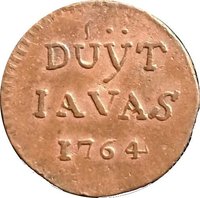
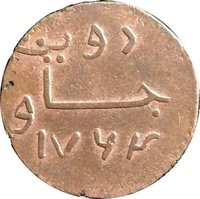

💎 Extremely Rare