

1 Kreuzer – Austrian Empire
Austria

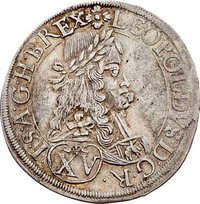
Obverse
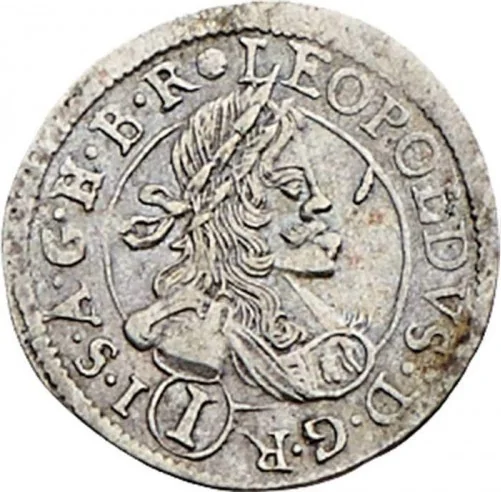
Description:
Bust portrait, right profile.
Inscription:
LEOPOLDVS D G R (I) I S A G H B R
Script: Latin
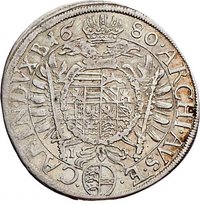
Reverse
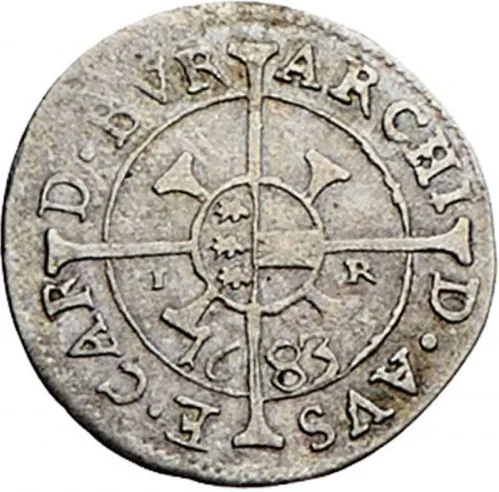
Description:
Smaller round shield, date digits offset by 2.
Inscription:
ARCHI // D AVS // ET CAR // D BVR
Script: Latin
Edge
Mints
| Name | Mark |
|---|---|
| Sankt Veit | — |
Mintings
| Year | Mint Mark | Mintage | Quality | Collection |
|---|---|---|---|---|
| 1679 | IR | — | ||
| 1681 | IR | — | ||
| 1682 | IR | — | ||
| 1683 | IR | — | ||
| 1685 | IR | — | ||
| 1689 | IR | — | ||
| 1693 | GCS | — | ||
| 1695 | CS | — | ||
| 1696 | cc | — | ||
| 1700 | IP | — |
Historical background
In 1679, the currency system of the Habsburg Monarchy, often referred to as the Austrian Empire, was in a state of profound crisis and transition. The empire was grappling with the immense financial strain of near-continuous warfare, particularly the ongoing Franco-Dutch War (1672–1678) and conflicts with the Ottoman Empire. To fund these military campaigns, the state resorted to the debasement of its primary silver coin, the Reichsthaler, and its smaller denominations. This involved reducing the precious metal content while maintaining the same face value, a short-term measure that flooded the economy with unstable currency and eroded public trust.
The situation was exacerbated by a complex and fragmented monetary landscape. While the central authorities in Vienna issued coinage, various constituent lands (such as Bohemia, Hungary, and Inner Austria) also retained significant minting rights, leading to a bewildering variety of coins of differing standards circulating simultaneously. Furthermore, the empire was subject to the disruptive inflow of vastly overvalued foreign coins, especially Kipper and Wipper pennies from the German states, which were intentionally debased. This created a classic "bad money drives out good" scenario, where older, full-value silver coins were hoarded or melted down, leaving the economy reliant on inferior currency.
The immediate consequence was rampant inflation, soaring prices for basic goods, and severe economic hardship for the population, particularly those on fixed incomes. Recognizing the destabilizing effects, Emperor Leopold I's government had begun attempts at reform. The pivotal Münzordnung (Coinage Ordinance) of 1671 aimed to standardize the Reichsthaler and establish a fixed relationship between silver and copper coinage, but its implementation was slow and the pressures of war quickly undermined its principles. Thus, in 1679, the monetary system remained chaotic, caught between the dire legacy of wartime finance and the fledgling, struggling efforts to impose order and stability.
The situation was exacerbated by a complex and fragmented monetary landscape. While the central authorities in Vienna issued coinage, various constituent lands (such as Bohemia, Hungary, and Inner Austria) also retained significant minting rights, leading to a bewildering variety of coins of differing standards circulating simultaneously. Furthermore, the empire was subject to the disruptive inflow of vastly overvalued foreign coins, especially Kipper and Wipper pennies from the German states, which were intentionally debased. This created a classic "bad money drives out good" scenario, where older, full-value silver coins were hoarded or melted down, leaving the economy reliant on inferior currency.
The immediate consequence was rampant inflation, soaring prices for basic goods, and severe economic hardship for the population, particularly those on fixed incomes. Recognizing the destabilizing effects, Emperor Leopold I's government had begun attempts at reform. The pivotal Münzordnung (Coinage Ordinance) of 1671 aimed to standardize the Reichsthaler and establish a fixed relationship between silver and copper coinage, but its implementation was slow and the pressures of war quickly undermined its principles. Thus, in 1679, the monetary system remained chaotic, caught between the dire legacy of wartime finance and the fledgling, struggling efforts to impose order and stability.
✨ Legendary