

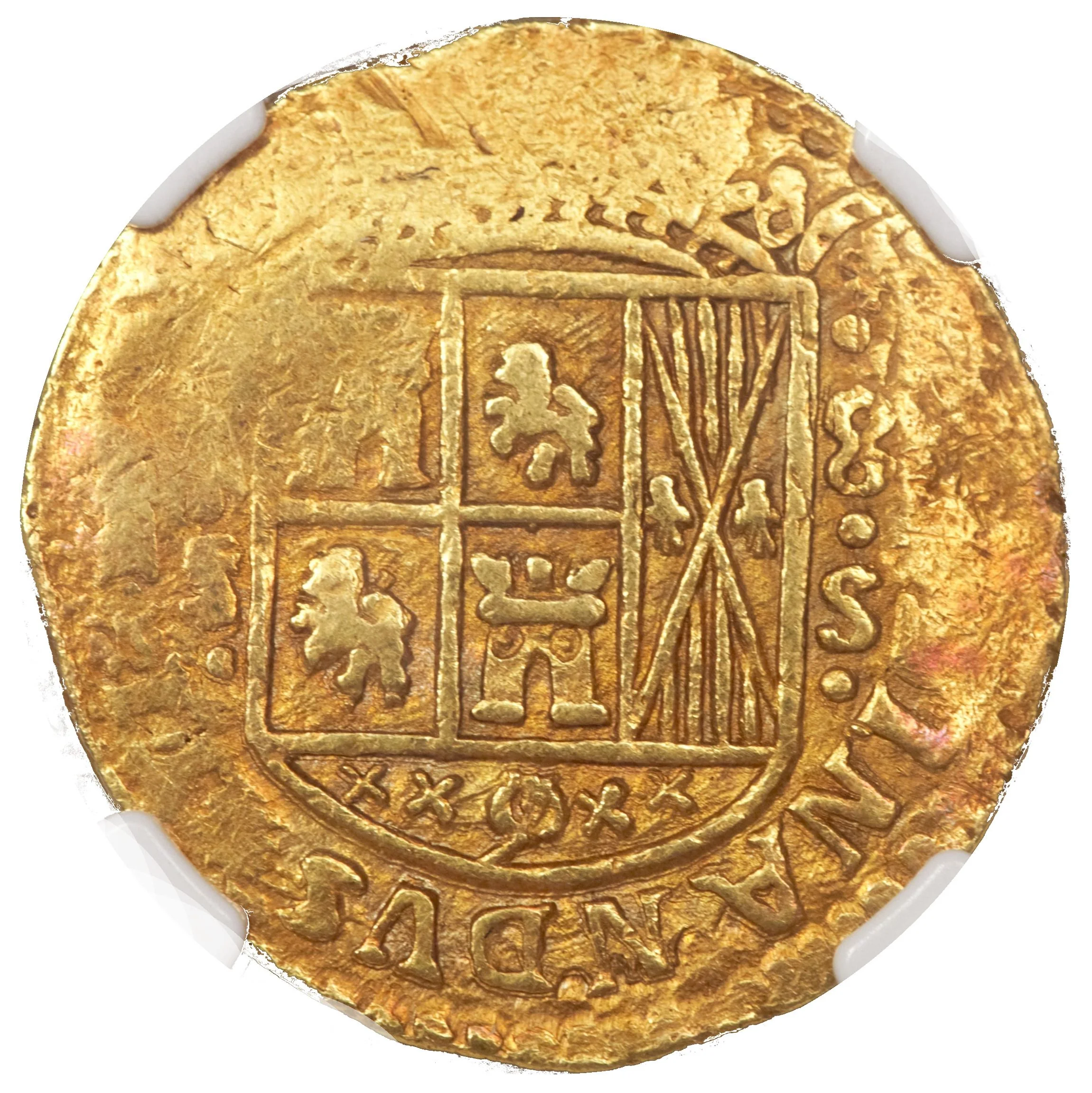

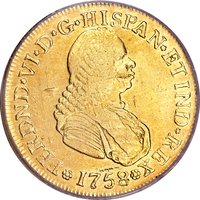
Obverse
Description:
Heraldic emblem
Script: Latin
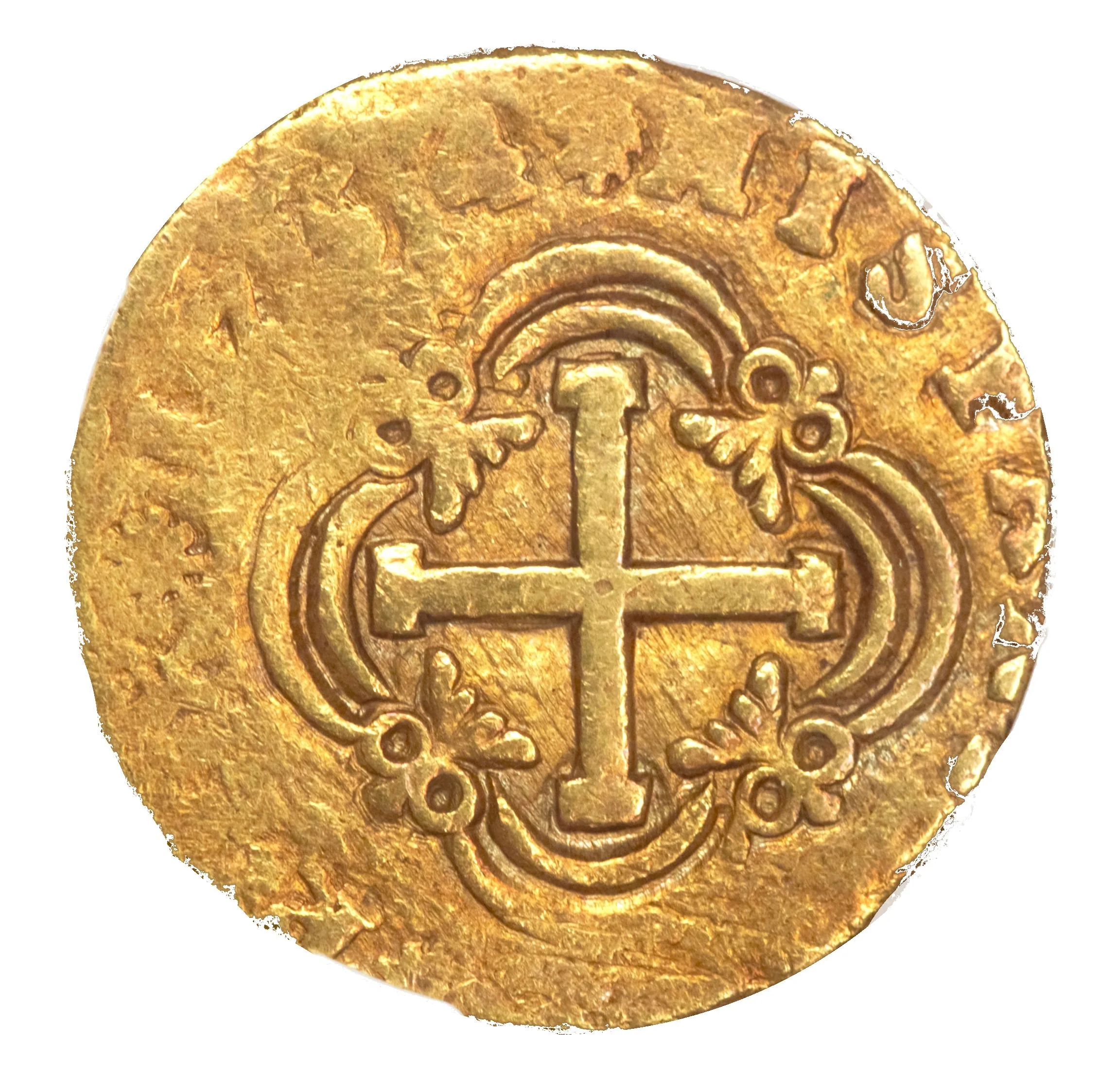
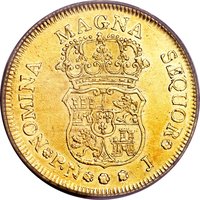
Reverse
Description:
Jerusalem Cross
Script: Latin
Edge
Categories
| Symbols> Coat of Arms |
Mintings
| Year | Mint Mark | Mintage | Quality | Collection |
|---|---|---|---|---|
| 1747 | S | — | ||
| 1748 | S | — | ||
| 1749 | S | — | ||
| 1749 | SF | — | ||
| 1750 | SF | — | ||
| 1751 | SF | — | ||
| 1752 | SF | — | ||
| 1753 | SF | — | ||
| 1754 | SF | — | ||
| 1755 | SF | — | ||
| 1756 | SF | — |
Historical background
In 1747, the currency situation in the Kingdom of New Granada (modern-day Colombia) was characterized by chronic scarcity, rampant counterfeiting, and administrative confusion. The primary unit of account was the silver real, with eight reales equaling one peso. However, the physical supply of officially minted coinage was insufficient for the needs of the local economy, leading to widespread use of cut and fragmented coins (known as macuquina), which were often irregular in weight and purity. This scarcity was exacerbated by Spain's mercantilist policies, which drained silver and gold to the metropolis, and by the fact that much of the gold produced in the colony's mines was minted into coins in other viceregal capitals like Lima or Mexico City.
The vacuum created by this shortage was filled by a flood of debased and counterfeit coins. Criminals would shave precious metal from the edges of legitimate coins or produce crude forgeries, while even merchants and citizens would cut coins into halves and quarters to make small change. The most significant problem, however, was the massive influx of low-quality silver coins from the mint in Potosí (in modern Bolivia), which contained less silver than their face value. These coins, known by their distinctive "pillar" design, circulated at a forced, artificial value, distorting trade and causing public distrust. The colonial government issued repeated tasas (official valuation rates) trying to regulate the exchange between different coin types, but these were largely ineffective.
Frustrated by the chaotic monetary environment, local authorities and merchants in Santa Fe de Bogotá had long petitioned the Spanish Crown for the establishment of a local mint. This persistent demand was finally answered when King Ferdinand VI granted the authorization for the Casa de la Moneda de Santa Fe de Bogotá in 1753. Therefore, the year 1747 represents a pivotal moment just before this critical reform. It was the culmination of decades of monetary disorder, with the economy operating on a fragile system of heterogeneous and unreliable currency, setting the stage for the creation of a national mint that would begin to bring order to the colony's finances in the following decade.
The vacuum created by this shortage was filled by a flood of debased and counterfeit coins. Criminals would shave precious metal from the edges of legitimate coins or produce crude forgeries, while even merchants and citizens would cut coins into halves and quarters to make small change. The most significant problem, however, was the massive influx of low-quality silver coins from the mint in Potosí (in modern Bolivia), which contained less silver than their face value. These coins, known by their distinctive "pillar" design, circulated at a forced, artificial value, distorting trade and causing public distrust. The colonial government issued repeated tasas (official valuation rates) trying to regulate the exchange between different coin types, but these were largely ineffective.
Frustrated by the chaotic monetary environment, local authorities and merchants in Santa Fe de Bogotá had long petitioned the Spanish Crown for the establishment of a local mint. This persistent demand was finally answered when King Ferdinand VI granted the authorization for the Casa de la Moneda de Santa Fe de Bogotá in 1753. Therefore, the year 1747 represents a pivotal moment just before this critical reform. It was the culmination of decades of monetary disorder, with the economy operating on a fragile system of heterogeneous and unreliable currency, setting the stage for the creation of a national mint that would begin to bring order to the colony's finances in the following decade.
✨ Legendary